Gnostic Reformation, Clear and Simple
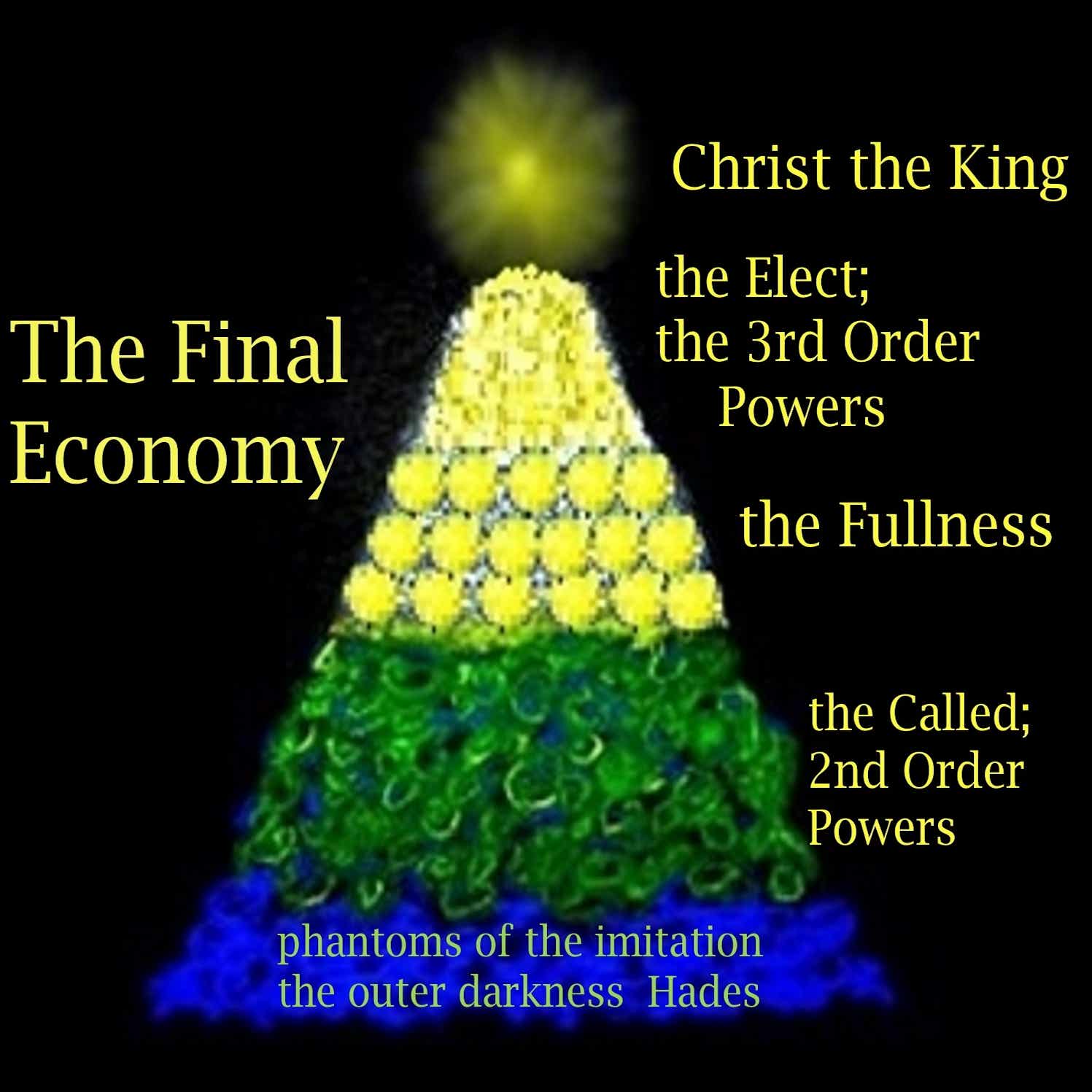
Gnostic Reformation, Clear and Simple
Podcast Description
Most of the gnosis presented here comes from the Tripartite Tractate of the Nag Hammadi codices. My retelling of the mythos is just good news for modern man. It is not hermetic; it is not a translation of wisdom from an Egyptian God. It is not New Age. This Gnostic Gospel is simply the story of who we are and where we come from.
The gnosis I am sharing here honors God the Father and, as you begin to remember this inherent truth, you will experience a more joyful life. When we use our free will to remember our true inheritance, the god of this fallen universe loses its power to control us. When we turn our eyes upward to the Father--the God Above All Gods--we are freed from the burdens of this world.
Once you begin to remember that you are truly loved by our heavenly Father, you will suffer less. When you begin to walk with virtue rather than embracing vice, you will be happier; you will be joyful. Not all of the time. Bad things do happen. But suffering as a response to life’s challenges is unnecessary. We are living in a fallen world, and that, I suppose, is another gnostic heresy. For some reason, modern Christians want to insist that this world is blessed by God and is blessedly perfect. But we all know this world we live in isn’t perfect and when you deny that fact you become unduly frustrated and sad, even to the point of depression. Pharmaceuticals are not the solution--gnosis is.
Gnosis means knowing. This sort of knowing is not related to book learning. Gnosis refers to remembering what you already know. The point of spiritual study is not to learn new things but to mine what you already possess deep inside of you. When you study new ideas, you must continually weigh the information you are taking in against your own discernment. The purpose of this podcast is not so much to teach you about Gnosticism; the purpose is to stimulate your own innate gnosis. And there is really only one gnosis that matters in the end—remembering the Father, your cosmic origin, and the purpose of being alive. cydropp.substack.com
Podcast Insights
Content Themes
The podcast explores various themes centering around Gnostic teachings, personal spiritual growth, consciousness, and the nature of God, including the discussion of memes of Jesus, units of consciousness, and the differences between ego and Self, alongside interpretations of scripture from a Gnostic perspective.
Most of the gnosis presented here comes from the Tripartite Tractate of the Nag Hammadi codices. My retelling of the mythos is just good news for modern man. It is not hermetic; it is not a translation of wisdom from an Egyptian God. It is not New Age. This Gnostic Gospel is simply the story of who we are and where we come from.
The gnosis I am sharing here honors God the Father and, as you begin to remember this inherent truth, you will experience a more joyful life. When we use our free will to remember our true inheritance, the god of this fallen universe loses its power to control us. When we turn our eyes upward to the Father–the God Above All Gods–we are freed from the burdens of this world.
Once you begin to remember that you are truly loved by our heavenly Father, you will suffer less. When you begin to walk with virtue rather than embracing vice, you will be happier; you will be joyful. Not all of the time. Bad things do happen. But suffering as a response to life’s challenges is unnecessary. We are living in a fallen world, and that, I suppose, is another gnostic heresy. For some reason, modern Christians want to insist that this world is blessed by God and is blessedly perfect. But we all know this world we live in isn’t perfect and when you deny that fact you become unduly frustrated and sad, even to the point of depression. Pharmaceuticals are not the solution–gnosis is.
Gnosis means knowing. This sort of knowing is not related to book learning. Gnosis refers to remembering what you already know. The point of spiritual study is not to learn new things but to mine what you already possess deep inside of you. When you study new ideas, you must continually weigh the information you are taking in against your own discernment. The purpose of this podcast is not so much to teach you about Gnosticism; the purpose is to stimulate your own innate gnosis. And there is really only one gnosis that matters in the end—remembering the Father, your cosmic origin, and the purpose of being alive.
Welcome back to Gnostic Insights and to the Gnostic Reformation on Substack. Recently, we’ve been looking at verses out of the Tao Te Ching by Lao Tzu.
And for those of you who are new to the podcast, I explain the method by which I am arriving at this gnosis, the method by which I translate these verses from the ancient Chinese pictograms into the gnosis that I share with you here. I described that process in an episode from September 26th of 2026. So all of these episodes are archived, and you can go back and read or listen to them as you wish.
And did you know I recently activated the universal translation feature in Substack? So if you are not an English as a first language reader, and you read your posts in a different language, if Substack carries that translation feature, these now will be automatically translated into your native language. However, I warn you that there are a lot of subtleties in this Gnostic approach that I share with you here. And I don’t know that the universal translator can pick up on those subtleties. So it’s always best to read these posts in the native English that I have written, because I am not able to proofread the translations. And I know that the AI gets things wrong quite frequently.
So I suggest you go back to September 26th, 2026. The episode was called Mining Gnosis Through the Tao Te Ching, verse 40, because we began with verse 40. There’s 81 verses altogether. And I said I would keep up sharing these Tao verses with you, as long as there was interest. And indeed, I have been getting a lot of thumbs up and comments when I share these verses. So we’ll continue on with it.
The world around us is comprised of false memes, basically. And they get into your head, and they tell you things that aren’t true. The memes that we want to stick with are the ones that come directly from the ethereal plane, from the Father, through the Son, through the Fullness of God. We’re born with those memes. And what are those memes called, those godly memes? Those are virtues. Those are the virtues—the meaning of love, the meaning of justice, the meaning of loyalty, the meaning of truth. and so on.
What we find around us here in the world—and especially now, it’s become heightened in the past few years with social media—is that the words that are actually virtuous words, like love or truth have been changed. They are degraded. They are not true. They are worldly versions, or what we would call demiurgic versions. So you think that you can substitute actual love that encompasses the very nature of God, the Father. We were born in true love.
But now, what is called love is not love. What is called love is sexual attraction or covetousness over material items. That’s not love.
So don’t think that just because you use a certain word, you know what its actual eternal meaning is. And that’s why the memes are so important, because the memes that you cling to, the memes that you hold on to, constitute not your true nature, your underlying Self that you were born with, but they constitute your worldly persona. They attach to your ego and cause you to act in certain ways.
They’re chains and control mechanisms put out by the Demiurge. So when you cling to worldly memes, like, I gotta have this, I gotta have that, basically is what it all comes down to, isn’t it? That’s not the eternal memes. And that’s what today’s episode is going to be about.
It’s verse 16 of the Tao Te Ching, and I’m going to read you three versions of it. First, I’ll read you Jonathan Star’s translation, his version. Then I’ll read you David Bentley Hart’s version, and then I will read to you my version of the same verse.
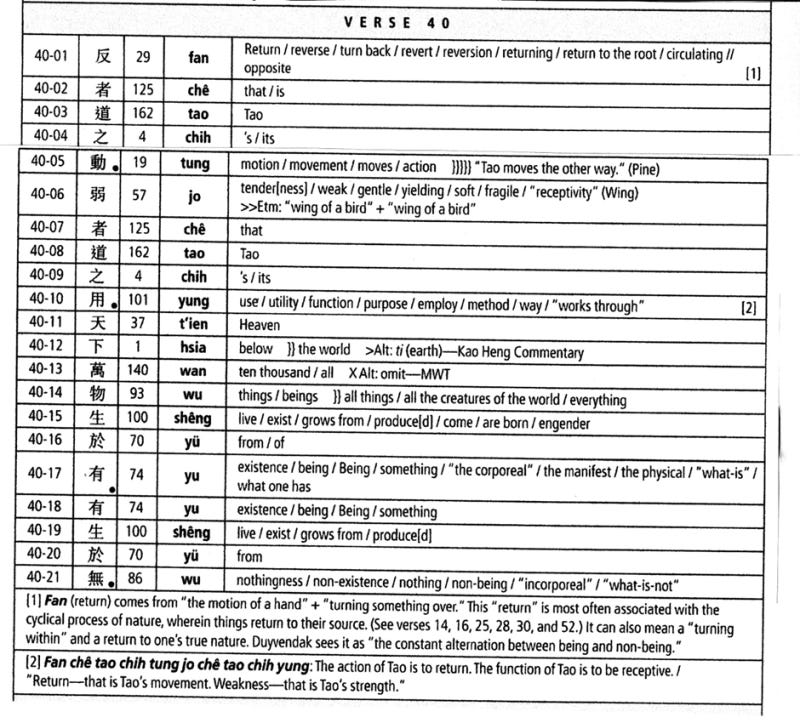
And again, I take my version from the actual pictograms themselves and the array of translations for each and every pictogram. Those are provided in a chart at the back of Jonathan Star’s edition of the Tao Te Ching called the Definitive Version. He provides an extensive pictogram matrix that shows you the possible translations of every picture in that Tao Te Ching verse, because these aren’t written as language words like we are accustomed to in the West. They’re abstract drawings of concepts, and their interpretation is wide open.
So let’s start with Jonathan Star’s interpretation of Verse 16 of the Tao Te Ching.
Become totally empty.Quiet the restlessness of the mind.Only then will you witness everything unfolding from emptiness.See all things flourish and dance in endless variation, and once again merge back into perfect emptiness, their true repose, their true nature.Emerging, flourishing, dissolving back again, this is the eternal process of return. To know this process brings enlightenment. To miss this process brings disaster.Be still. Stillness reveals the secrets of eternity.Eternity embraces the all-possible.The all-possible leads to a vision of oneness.A vision of oneness brings about universal love.Universal love supports the great truth of nature.The great truth of nature is Tao. Whoever knows this truth lives forever. The body may perish, deeds may be forgotten, but he who has Tao has all eternity.
That’s verse 16. And when we speak of Tao here at Gnostic Insights and the Gnostic Reformation, Tao is the Way of the Father. Tao means the Way, and it is the eternal Way, the original source. And we here interpret that as the Source, the One, the Father.
Now let’s hear that verse again the way David Bentley Hart translates it.
Become utterly empty.Preserve a constant stillness.All the myriad things arise together, and we witness them return to their Source once more. All creatures flourish and grow, and then each returns to the Source.The name for this return to the Source is finding repose.The name for this repose is the destined return.The name for this destiny is the eternal.And knowledge of the eternal is called enlightenment.Not to know the eternal leads only to error and calamity, but knowing the eternal makes one able to comprehend all things.To comprehend all things makes one just and disinterested.Disinterested justice makes one noble and regal.Regal nobility unites one to heaven. The heavenly state is in accordance with the Way.The Way leads on to a long life, unburdened by death, and to the last free from every peril.
My version of verse 16 is longer because I go line by line, and I’m trying to be quite true to the possible interpretations at each and every pictogram. So here’s the full version of verse 16.
Attain the ultimate emptiness.Abide in the deepest still point.All creatures arise and flourish in the same manner.Our Self witnesses the universe and thus recognizes the cyclic return.Truly, every living thing grows and flourishes in abundance before returning to the source from which it sprang.Returning to the root of stillness means finding peace, rest, and harmony.This restores one’s nature, cycling back to our original, unchanging nature.Understanding the eternal is called gnosis.Not understanding the eternal leads to reckless behavior that causes misfortune and misery.Gnosis makes one open-minded and tolerant. This all-encompassing perspective makes one impartial and unprejudiced.Impartiality leads to nobility.Nobility leads to union with the divine.Divinity is the way of the Father.Being in accord with the Father means living forever in the eternal.The passing of the body frees us from danger, decay, and exhaustion.
I was reading the Tao Te Ching extensively and doing these interpretations prior to ever reading any of the Gnostic material, such as the Nag Hammadi. And so, for many years I thought of myself as a Taoist Christian, because this perspective of the Tao influenced my interpretation of the Bible and Christianity.
Nowadays, of course, I consider myself a Gnostic Christian. But the Tao is still in there, because the Tao informed my Simple Explanation of Absolutely Every…
This is a public episode. If you’d like to discuss this with other subscribers or get access to bonus episodes, visit cydropp.substack.com/subscribe
Disclaimer
This podcast’s information is provided for general reference and was obtained from publicly accessible sources. The Podcast Collaborative neither produces nor verifies the content, accuracy, or suitability of this podcast. Views and opinions belong solely to the podcast creators and guests.
For a complete disclaimer, please see our Full Disclaimer on the archive page. The Podcast Collaborative bears no responsibility for the podcast’s themes, language, or overall content. Listener discretion is advised. Read our Terms of Use and Privacy Policy for more details.