The in-between trust podcast
The in-between trust podcast
Podcast Description
The in-between trust podcast explores how we build, break, and rebuild trust in a world shaped by accelerating technology. Hosted by Eva Simone Lihotzky, the podcast holds space for in-depth conversations at the intersection of AI, business, ethics, and human connection. Through interdisciplinary voices - from business and politics to neuroscience to tech and systems thinking in organizations - it invites reflection over performance and makes room for ambiguity, emotion, and meaningful deep dives into one of the complex topics we need to solve as a society and beyond.
Podcast Insights
Content Themes
The podcast tackles complex themes surrounding the building and breaking of trust, with episode topics including the neurochemistry of trust, humane design in circular innovation, responsible AI ethics, and the impact of leadership on trust within AI systems. Specific episodes dive into how empathy enhances scientific discourse, the role of emotional intelligence in AI leadership, and the interaction between biological timelines and technological advancement.
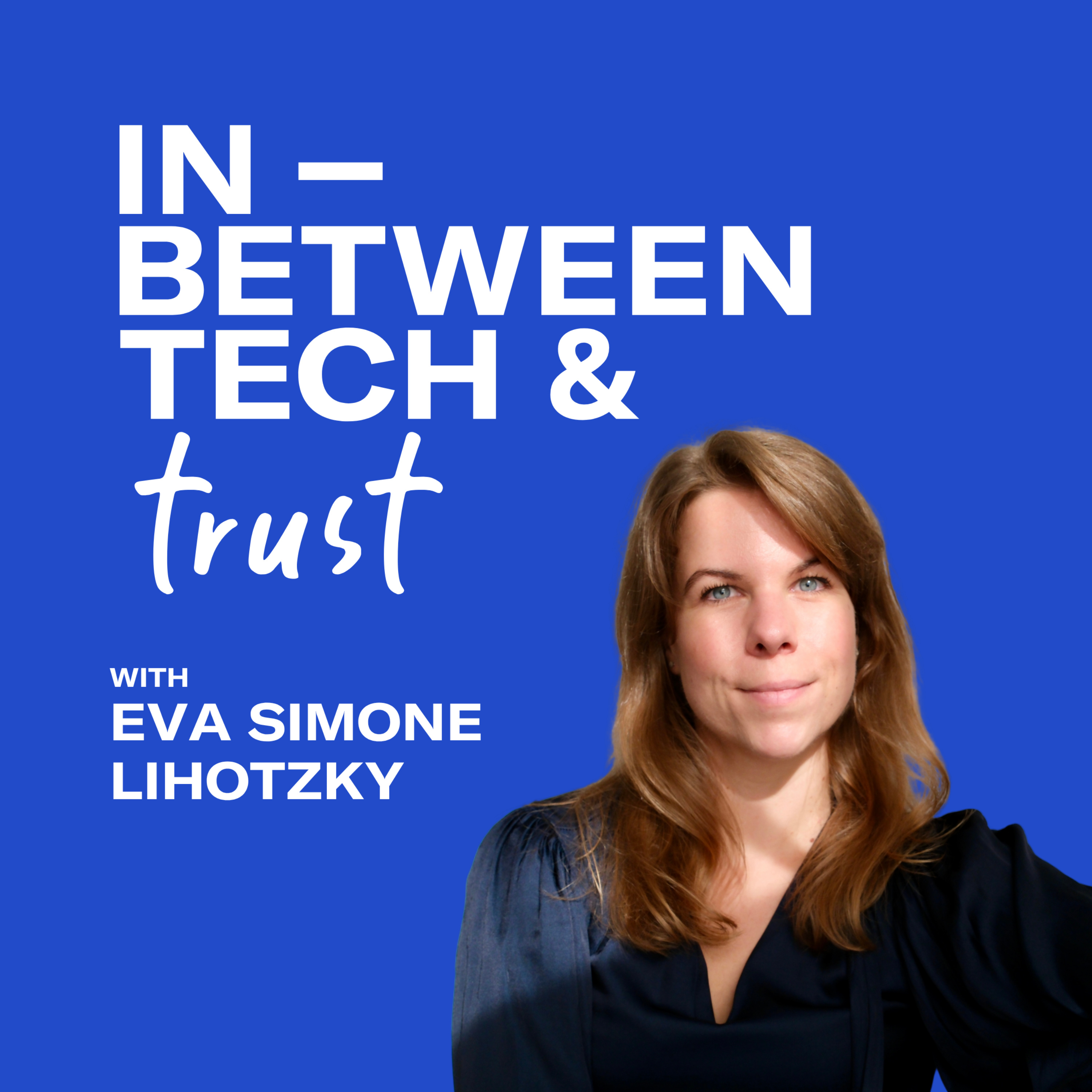
How do we build, break, and rebuild trust in a world shaped by technologies? The In-Between Tech & Trust is a weekly conversation about the human side of tech. Host Eva Simone Lihotzky, founder of raidiant (responsible AI advisory), talks with guests from business, politics, neuroscience, and tech about what they have learned about trust, and what they would pass on to you. Eva was formerly co-founder and MD of the Serviceplan AI Lab, holds the Global Moral Chair at the Value AI Institute and co-authored “10 Moral Questions: How to Design Tech & AI Responsibly”.
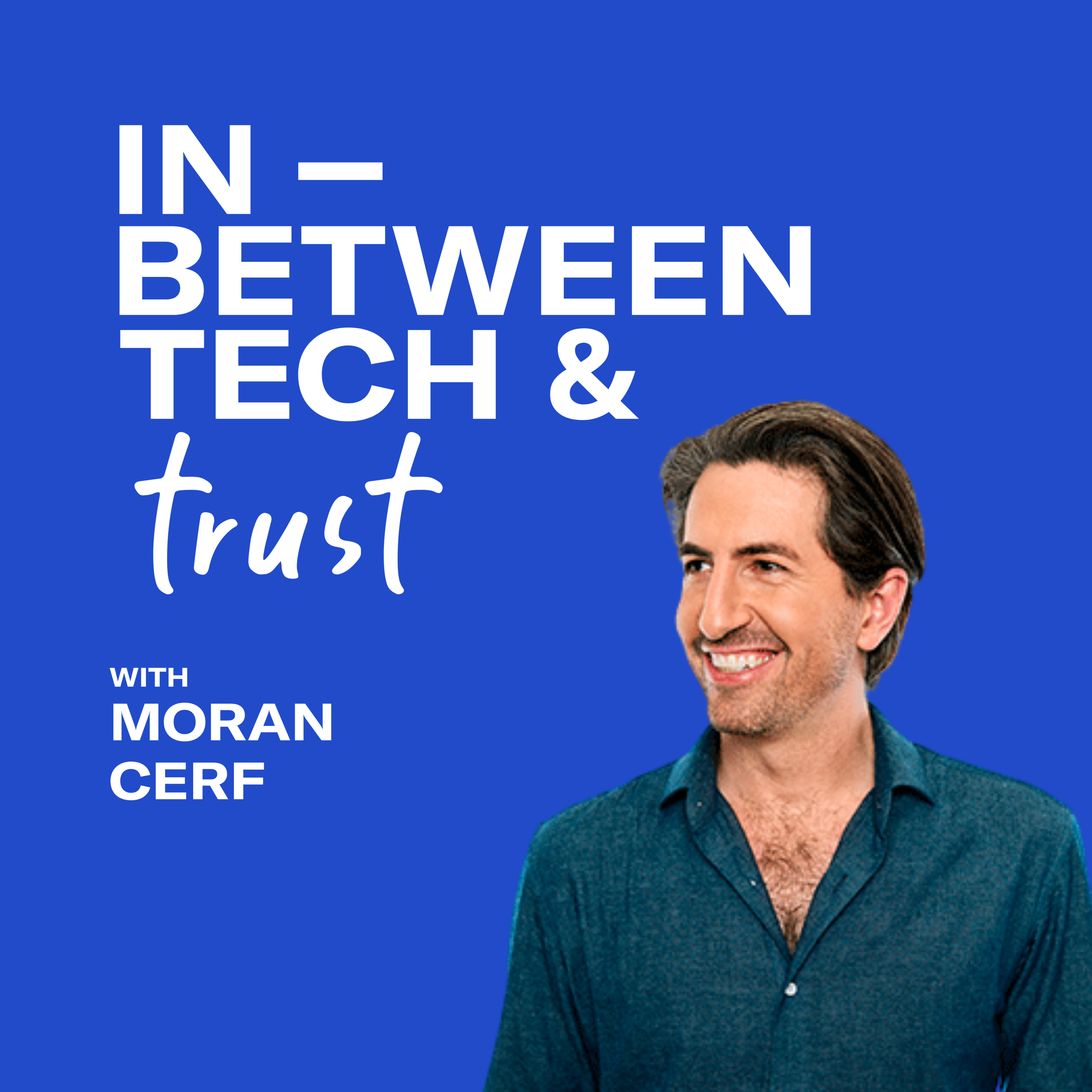
🎙️ Moran Cerf, Neuroscientist and Professor, Columbia Business School
Moran Cerf, a neuroscientist and professor at Columbia Business School, studies what happens in our brains when we talk, decide and get persuaded, and lately what happens when the other side of the conversation is AI. His research shows AI can read people remarkably well: from recordings of speed dates, it predicted who liked each other better than human observers did. The same skill worries him: we raise our guard when a person tries to sell us something, but not when AI does it in much the same way.
🎧 Episode overview
Moran's starting point is neural: in a human conversation, brain waves tune to each other and a nod or a glance carries much of the meaning, while a question-and-answer exchange with AI holds about a fifth of that information. His verdict on AI's influence is blunt: ”We're a lot simpler than we think we are,” and purchase times, flight bookings and browsing history are enough for AI to infer personality and nudge even political views. Eva pushes on teams that give AI agents human names: helpful in a Ferrari pit stop, he says, and a hindrance in a boardroom, where too often ”if AI says do this, we end up doing this.” On trust, he draws a line between the many mundane choices AI already handles well and the rare ones that define us, like a partner or a profession, and warns that our trust spills from the first to the second. His reason for hope is practical: when the world or our life changes, the AI twin trained on our past fails, and we get called back in.
💡 Key themes
- Why AI can read and persuade people better than people can, and why we don't notice
- When a human name for an AI agent helps a team, and when it distorts a decision
- What the AI backlash has inherited from fifteen years of social media
- Which choices to trust AI with, and how that trust spills over to the ones that define us
- Whether control handed over for convenience comes back when life changes
👤 About the guest
Moran Cerf is a neuroscientist and professor at Columbia Business School whose work spans decision-making, persuasion and neural implants. He began by recording individual neurons to understand how the brain works, and several of his former PhD students now research AI at companies like Anthropic and OpenAI, which puts him right where brain science and AI meet.
⏱ Chapters
- 00:00 The feedback loop AI can't join
- 05:46 AI reads attraction, then learns to persuade
- 16:01 From neural implants to brain-like AI
- 29:22 Trust it with groceries, not with a partner
- 37:07 Giving up control, and the retwin
- 42:29 In-between moments
🔗 Links
- Moran Cerf on LinkedIn – https://www.linkedin.com/in/moran-cerf-407187/
- Eva Simone Lihotzky on LinkedIn – https://www.linkedin.com/in/evalihotzky/
- Columbia Business School – https://business.columbia.edu/staff/people/moran-cerf
- Moran Cerf's website – https://www.morancerf.com/
- Anthropic research Moran describes – https://www.anthropic.com/research/global-workspace
- Related episode – AI and The Cognitive Atrophy Trap: What Happens When We Let Tech Shortcut the Hard Parts of Learning – Tobias Burkhardt (EP 28) – https://open.spotify.com/episode/2vdo5QFoTroSQlZgEuRQin
Disclaimer
This podcast’s information is provided for general reference and was obtained from publicly accessible sources. The Podcast Collaborative neither produces nor verifies the content, accuracy, or suitability of this podcast. Views and opinions belong solely to the podcast creators and guests.
For a complete disclaimer, please see our Full Disclaimer on the archive page. The Podcast Collaborative bears no responsibility for the podcast’s themes, language, or overall content. Listener discretion is advised. Read our Terms of Use and Privacy Policy for more details.