Digesting Food Studies
Digesting Food Studies
Podcast Description
Digesting Food Studies is a podcast that helps break down research on food systems into manageable portions. It’s for listeners who are learning and teaching about food studies, for those working in fields and factories, and also for people in policy and politics, making the rules that govern and guide us. From food justice to sustainability to intercultural identity, from the technologies of agriculture to the relationships embedded in Indigenous foodways, each episode helps digest one big idea. As a tool for teaching, a guide for new researchers, or inspiration for practitioners and activists, Digesting Food Studies bridges the gap between academese and everyday eating.This podcast is supported in part by the Canadian Association for Food Studies and the Social Sciences and Humanities Research Council of Canada.Concentré d’études sur l’alimentation est un podcast qui vous aide à absorber la recherche sur les systèmes alimentaires une bouchée à la fois. Il s'adresse aux personnes qui apprennent et enseignent les études sur l'alimentation, à celles qui travaillent dans les champs et les usines, ainsi qu'aux personnes qui travaillent dans le domaine de la politique. De la justice alimentaire à la durabilité en passant par l'identité interculturelle, les technologies agricoles et la relationalité inhérente dans la connaissance autochtone, chaque épisode vous aidera à intégrer une grande idée. Outil d'enseignement, guide pour les nouveaux chercheurs ou source d'inspiration pour les praticiens et les activistes, Concentré d’études sur l’alimentation comble l’écart entre le monde universitaire et l’acte de manger.Ce podcast est soutenu en partie par l'Association canadienne des études sur l'alimentation et le Conseil de recherches en sciences humaines du Canada.
Podcast Insights
Content Themes
The podcast covers themes such as food justice, sustainability, intercultural identity, and Indigenous foodways, with episodes like analyzing urban farming policies and exploring traditional farming practices that address contemporary food security challenges.
Digesting Food Studies is a podcast that helps break down research on food systems into manageable portions. It’s for listeners who are learning and teaching about food studies, for those working in fields and factories, and for people in policy and politics, making the rules that govern and guide us. From food justice to sustainability to intercultural identity, from the technologies of agriculture to the relationships embedded in Indigenous foodways, each episode helps digest one big idea. As a tool for teaching, a guide for new researchers, or inspiration for practitioners and activists, Digesting Food Studies bridges the gap between academese and everyday eating.
This podcast is supported in part by the Social Sciences and Humanities Research Council of Canada, Lakehead University, and the Canadian Association for Food Studies.
Concentré d’études sur l’alimentation est un podcast qui vous aide à absorber la recherche sur les systèmes alimentaires une bouchée à la fois. Il s’adresse aux personnes qui apprennent et enseignent les études sur l’alimentation, à celles qui travaillent dans les champs et les usines, ainsi qu’aux personnes qui travaillent dans le domaine de la politique. De la justice alimentaire à la durabilité en passant par l’identité interculturelle, les technologies agricoles et la relationalité inhérente dans la connaissance autochtone, chaque épisode vous aidera à intégrer une grande idée. Outil d’enseignement, guide pour les nouveaux chercheurs ou source d’inspiration pour les praticiens et les activistes, Concentré d’études sur l’alimentation comble l’écart entre le monde universitaire et l’acte de manger.
Pour accéder aux notes sur les émissions ainsi que les transcriptions des épisodes traduites en français, visitez le site web de l’Association canadienne des études sur l’alimentation.
Ce podcast est soutenu en partie par le Conseil de recherches en sciences humaines du Canada, l’Université Lakehead, et l’Association canadienne des études sur l’alimentation.
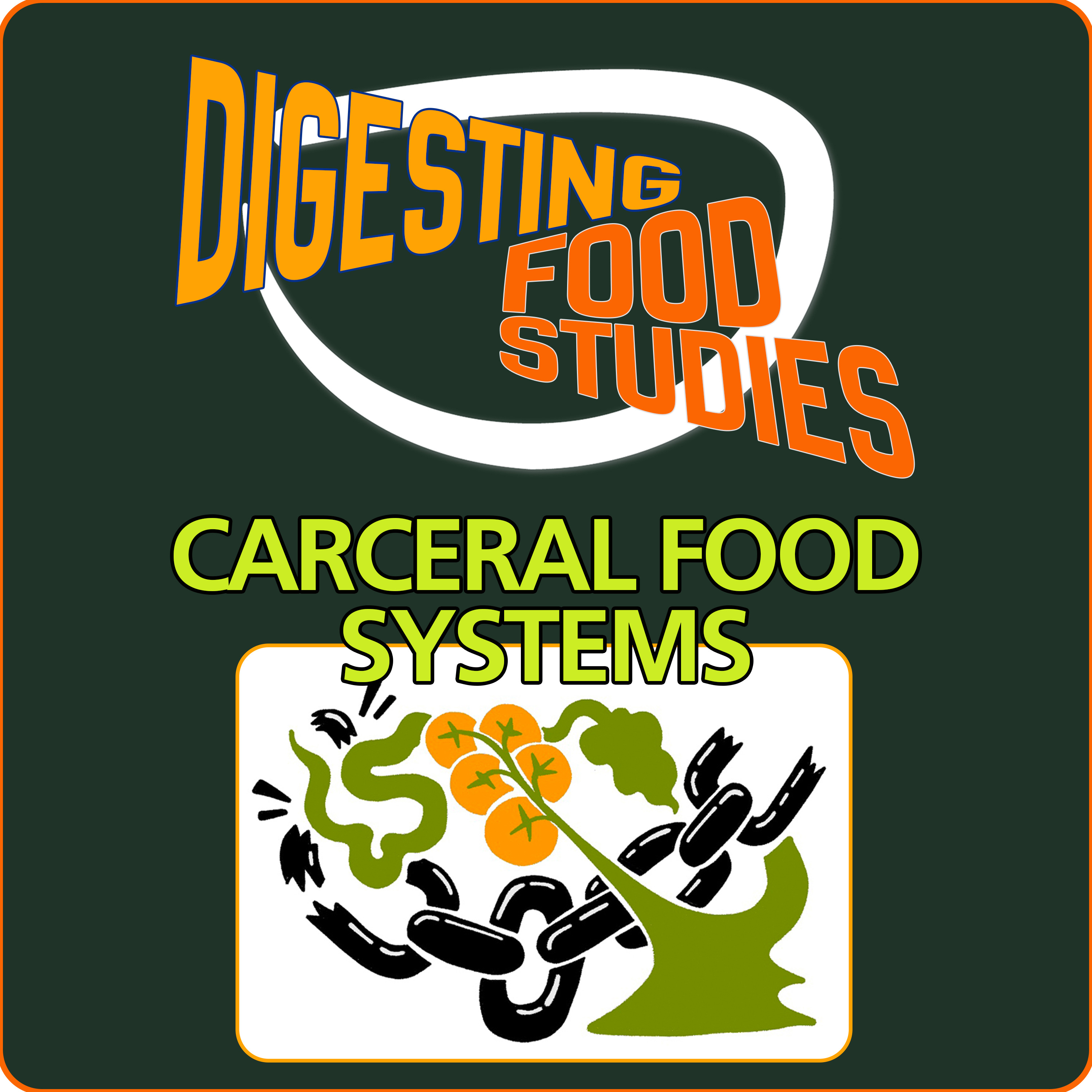
This episode considers carceral food systems and the roles food plays in expressing identity and liberty, as well as oppression and power. Alexia Moyer’s Amuse Bouche segment starts it off with a historical record of how WWII prisoners of war in Singapore dealt with hunger, privation, and the distribution of food labour. After that, Amanda Wilson discusses themes from the May 2025 themed section of Canadian Food Studies that she co-edited, “Exploring Carceral Food Systems” (Vol. 12, No. 1). And, closing things out, chef-activist-PhD student Joshna Maharaj responds to Kelsey Timler’s article, “Protest pizzas: Resisting carcerality with storytelling, community building, and an array of toppings”.
Alexia Moyer is co-Managing Editor of Canadian Food Studies and a founding member of the editorial collective, red line-ligne rouge, based in Montreal.
Amanda Wilson is an Associate Professor in the School of Social Innovation at Saint Paul University in Ottawa. Her research looks at food movements, alternative food networks, and carceral food systems, as well as “the politics of possibility.”
Joshna Maharaj is a chef, writer, and activist, and a current PhD student at Technological University Dublin. She is the author of the book, Take Back the Tray: Revolutionizing Food in Hospitals, Schools, and Other Institutions.
Mentioned in this episode:
– The Taste of Longing by Suzanne Evans
– Take Back the Tray by Joshna Maharaj
Credits:
Host/Producer: David Szanto
Executive Producers: Rachel Engler-Stringer, Laurence Godin, Charles Levkoe, Phil Loring, Kristen Lowitt
Audio consultant: Zélie Scherrer
Music: Alex Guz and Evgeny Bardyuzha on Pixabay
Sound Effects: Aviana_Phoenix, BenKirb, and freesound_community on Pixabay
Image: Paterson Hodgson
#DigestingFoodStudies
Digesting Food Studies is funded in part by the Social Sciences and Humanities Research Council of Canada, Lakehead University, and the Canadian Association for Food Studies.
Disclaimer
This podcast’s information is provided for general reference and was obtained from publicly accessible sources. The Podcast Collaborative neither produces nor verifies the content, accuracy, or suitability of this podcast. Views and opinions belong solely to the podcast creators and guests.
For a complete disclaimer, please see our Full Disclaimer on the archive page. The Podcast Collaborative bears no responsibility for the podcast’s themes, language, or overall content. Listener discretion is advised. Read our Terms of Use and Privacy Policy for more details.