Freight Broker Podcast
Freight Broker Podcast
Podcast Description
Interviewing the freight industry insiders.
Podcast Insights
Content Themes
Covers topics related to freight logistics, automation in operations, and company culture with episodes exploring the scaling journey of Axle Logistics, the impact of hybrid teams in freight, and strategies for maintaining relationships in an automated world.
The Freight Show brings stories of freight and logistics leaders who’ve shaped the industry. Through in-depth conversations, we explore their journeys, the challenges they’ve overcome, and the insights that have driven their success. Each episode uncovers the lessons, strategies, and wisdom of these freight leaders.
Forty-one years is a long time to run one software company. Tom McLeod started McLeod Software in 1985, five years after deregulation blew open an industry that had been run like a public utility, and he’s still at the helm today with 550 employees, no outside investors, and a product line that just went through a complete revamp. In the mid-80s, dozens of small software companies were all trying to build the operations platform for trucking. McLeod rose above the fray by the mid-90s, and Tom has a clear view of why.
That view matters right now because he sees the same pattern playing out again. Dozens of AI companies are springing up to serve transportation, the way dozens of software companies did forty years ago, and Tom’s read is that the winners will be decided by the same things: focus, picking the right customers, and not promising more than you can deliver and service. In this conversation he walks through the early years selling the first 50 systems himself, the decision to exit the brokerage software market for several years in order to win trucking first, how a group of 30 to 35 customers shaped the PowerBroker rewrite through biweekly sprint demos, and why he views freight brokers as America’s secret weapon for an efficient transportation system.
He also gets into why every attempt at a vertical technology stack in freight has failed, how McLeod is using AI inside its own development, testing, and support teams, and the one piece of advice he’d give any founder entering the market today.
What you’ll learn:
– Why deregulation created the software industry for trucking: how the end of franchise rights in 1980 turned manual, utility-style carriers into companies with a reason to get efficient
– Why brokers are the secret weapon of US freight: how a shipper’s top-20 carrier list runs out and a broker’s hundreds of carrier relationships fill the gap
– The case for focus over reach: why McLeod stepped away from brokerage software for years to win trucking first, then came back with PowerBroker in 2006
– How to run a customer advisory process that actually steers the roadmap: why one customer’s input is a trap, and how 30 to 35 companies watching sprint demos every two weeks reshaped the product
– Why fragmentation protects incumbents: how dozens of niche markets inside trucking make it hard for new entrants, and how configurability and an API answer that
– Why the vertical stack never works in freight: the mid-90s competitor that fell behind on integrations, and how mobile comm providers started bringing McLeod their customers
– How AI fits the 40-year arc of trucking software: why eliminating the manual work behind 40 to 50 percent of ops emails is the same job as automating the freight bill
– What building without outside capital made possible: the luxury of time, the long view, and the one loan McLeod ever took
– Tom’s formula for AI vendors entering freight: focus, pick the right customers, don’t outkick your coverage, sell a ton, and build great product
Time-stamped highlights:
– (00:00) Intro: 41 years of McLeod Software
– (01:01) Deregulation, turbulence, and why disruption creates opportunity
– (01:31) What trucking looked like under regulation: franchise rights to haul freight and the flood of new carriers after 1980
– (02:28) Dozens of software startups in the mid-80s and the parallel to today’s AI field
– (04:10) Why incumbents ran manual operations: regulated like a utility, entitled to a 15 percent profit
– (05:14) Early customers who ran both trucking and brokerage, and the first two TIA lifetime achievement winners
– (06:14) Brokers as America’s secret weapon and why shippers keep a top-20 list
– (07:38) Exiting the brokerage software market for several years to focus on trucking
– (08:36) The complete product rewrite and the launch of PowerBroker in 2006
– (10:44) What trucking and brokerage systems share and why separate teams build the operations tools
– (13:25) What separated McLeod from the pack: focus, blocking and tackling, and the long-term view
– (14:23) Choosing an industry that couldn’t be offshored
– (14:52) Building a development feedback loop with customers and an advisory council
– (15:50) Growing through the late 90s with zero unemployment in the computer field
– (16:49) Why you can’t let a single customer drive the roadmap
– (17:46) 30 to 35 companies watching sprint demos every two weeks during the PowerBroker rewrite
– (18:45) How customers flip McLeod’s internal development priorities
– (20:27) Niche markets inside trucking and why they make it hard for new players to attack
– (22:40) Focusing on flatbed, van, and refrigerated while adding configurability for liquid, heavy haul, and bulk
– (26:02) The API and how customers build bolt-on solutions
– (28:22) Tom’s view on AI: the same job as eliminating the typed freight bill and driver paycheck
– (29:48) Why 40 to 50 percent of ops emails require manual work
– (30:46) Dozens of AI startups and the greenfield of the mid-80s
– (32:31) Why vertical technology stacks haven’t worked in freight
– (33:01) The mid-90s competitor that fell behind on integrations and how mobile comm providers brought McLeod customers
– (35:30) The goal to demonstrate how to best use AI in a transportation operations product
– (36:58) How McLeod uses AI internally: developers, cybersecurity, testing, and 300 new knowledge base documents
– (39:42) Why McLeod never took venture capital, or as it was called then, vulture capital
– (41:07) The luxury of time and how it made long-term decisions easier
– (41:36) The one time McLeod borrowed money: the product rewrite during the 2001 recession
– (43:04) What keeps Tom energized after 41 years and 550 employees
– (44:34) From sales to programming, and selling the first 50 systems himself
– (46:57) Tom’s advice for AI vendors entering freight: focus and pick the right customers
– (48:26) Why PE groups are learning the value of sales orgs, and the problem of overestimated TAMs
– (49:24) Don’t outkick your coverage: why services matter as much as the product
– (49:52) Why getting an AI prompt to 70, 80, 90 percent is easy and the rest takes time
– (51:32) See you in Nashville at the 2026 McLeod User Conference
Guest:
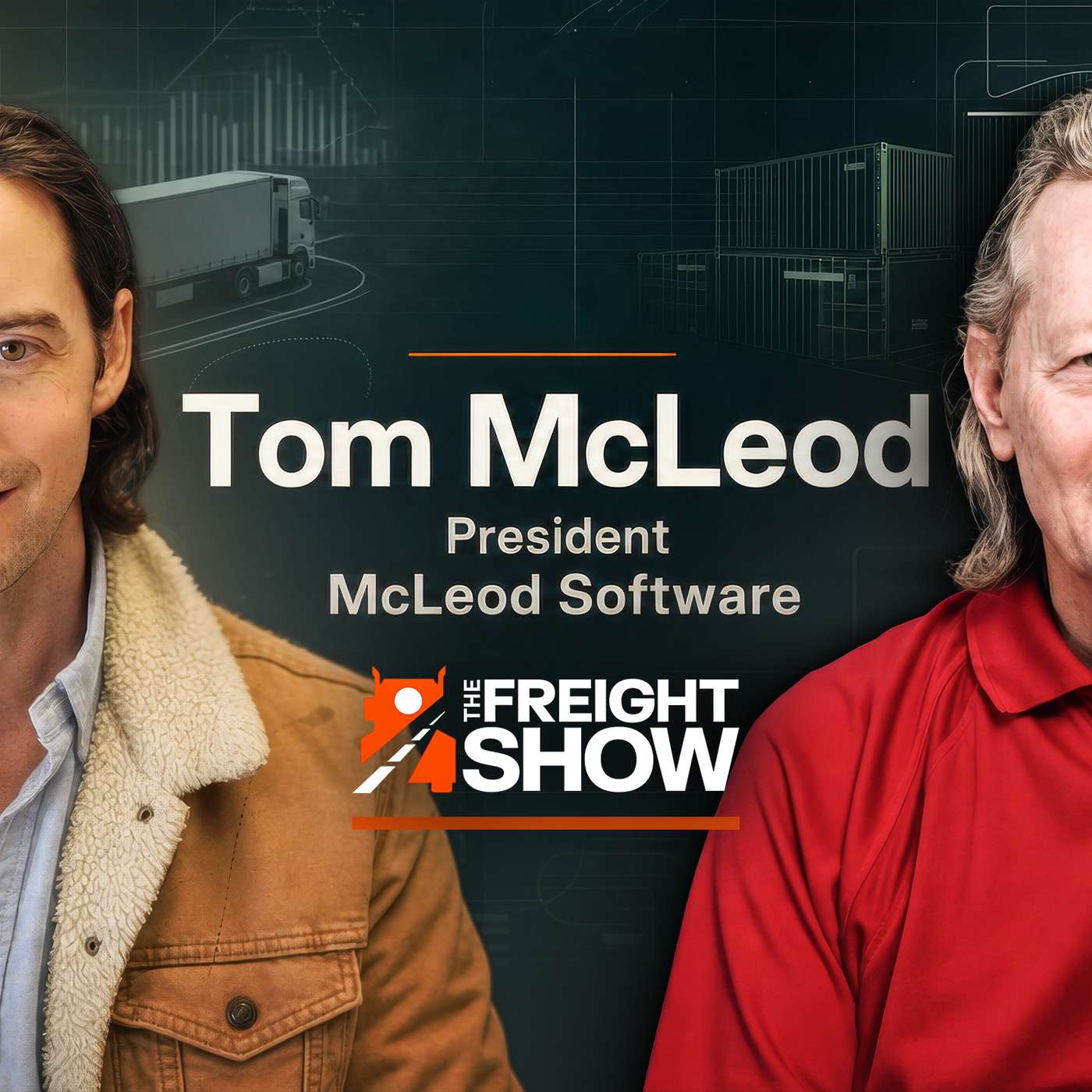
Tom McLeod — President, McLeod Software
Tom founded McLeod Software in 1985 and has led it for 41 years, growing it from a startup selling its first systems by hand into a 550-person company with a leading transportation management platform for carriers and brokers. He began his career in sales before moving into programming in the early 80s, and sold McLeod’s first 50 systems himself. He has never taken outside investment, and today he is leading the company through a full revamp of its product line and the integration of AI across its products and operations.
Disclaimer
This podcast’s information is provided for general reference and was obtained from publicly accessible sources. The Podcast Collaborative neither produces nor verifies the content, accuracy, or suitability of this podcast. Views and opinions belong solely to the podcast creators and guests.
For a complete disclaimer, please see our Full Disclaimer on the archive page. The Podcast Collaborative bears no responsibility for the podcast’s themes, language, or overall content. Listener discretion is advised. Read our Terms of Use and Privacy Policy for more details.