TrustTalk – It's all about Trust
TrustTalk - It's all about Trust
Podcast Description
Trust is the invisible force that shapes our world, and at TrustTalk, we're committed to exploring its many dimensions. Join us as we engage with thought leaders from all walks of life to discuss the role of trust in every aspect of our world. From personal relationships to business, technology, society, and beyond, we explore the wonders of this essential human emotion. It's a journey you won't want to miss.
Podcast Insights
Content Themes
The podcast covers a wide range of trust-related topics including organizational trust, trust in politics, trust in technology, and trust in personal relationships. Episodes delve into contemporary issues such as the impact of AI on trust, the relationship between trust and immigration, and the role of trust in global trade, with specific discussions on the nature of distrust when it comes to companies caught in scandals or the implications of false narratives in media.
Trust is the invisible force that shapes our world, and at TrustTalk, we’re committed to exploring its many dimensions. Join us as we engage with thought leaders from all walks of life to discuss the role of trust in every aspect of our world. From personal relationships to business, technology, society, and beyond, we explore the wonders of this essential human emotion. It’s a journey you won’t want to miss.
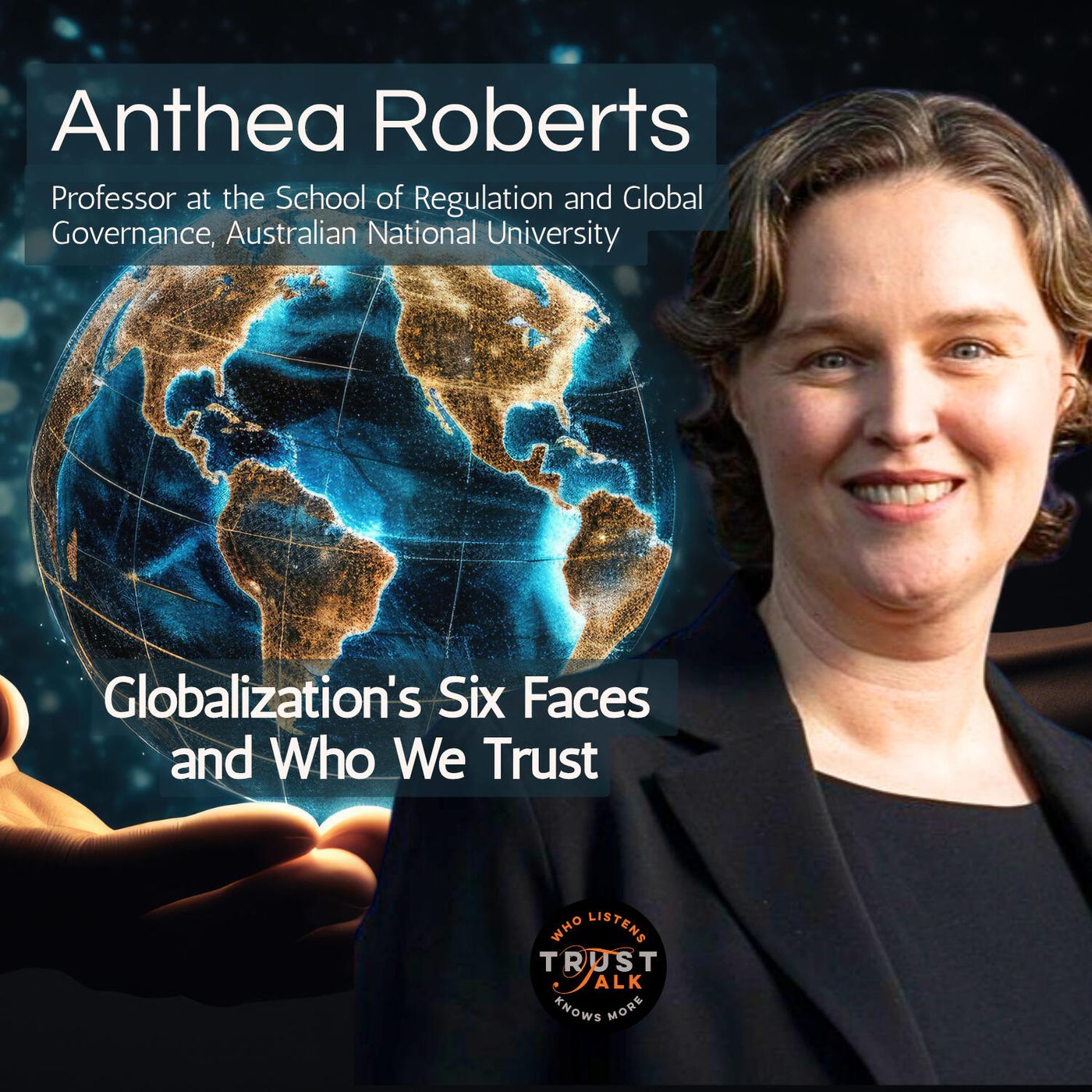
Two people can look at the very same trade deal, the same tariff, the same wave of globalization, and walk away with opposite conclusions about who’s winning and who’s losing. Anthea Roberts, professor at the Australian National University and one of the world’s leading scholars of global governance, has spent her career studying exactly why: not who’s right, but why we’re all arguing from such different stories in the first place. Her book, Six Faces of Globalization, argues that most of our fights over trade and technology aren’t really about the facts; they’re about six competing stories, and most of us are only fluent in one. We go through all six: establishment, left- and right-wing populist, corporate power, geoeconomic, and global threats. We talk about Australia’s own trust dilemma, caught between the country that protects it and the country that pays its bills. And we end somewhere unexpected: whether artificial intelligence can actually help us disagree better, or make us more set in our ways.
Disclaimer
This podcast’s information is provided for general reference and was obtained from publicly accessible sources. The Podcast Collaborative neither produces nor verifies the content, accuracy, or suitability of this podcast. Views and opinions belong solely to the podcast creators and guests.
For a complete disclaimer, please see our Full Disclaimer on the archive page. The Podcast Collaborative bears no responsibility for the podcast’s themes, language, or overall content. Listener discretion is advised. Read our Terms of Use and Privacy Policy for more details.