SHOP TALK WITH WRITERS

SHOP TALK WITH WRITERS
Podcast Description
Elena Lappin in conversation with leading authors about the stories behind their books.Email: [email protected]: @shoptalkwithwritersRead more about each featured writer on elenalappin.substack.com,Connect with us here or on our website https://shows.acast.com./shop-talk-with-writers Thank you for listening! Hosted on Acast. See acast.com/privacy for more information.
Podcast Insights
Content Themes
The podcast explores a variety of themes related to literature, such as the influence of personal experiences on writing, identity, and the complexities of human relationships. Episodes highlight specific works and authors, including André Aciman's exploration of memory and belonging in Room on the Sea and Caroline O'Donoghue's unique take on genre in her book Shipshock.

Host Elena Lappin in conversation with leading and emerging authors about the stories behind their books.
Publicity: Katherine Stroud
Audio producer: Tom Pooley
Original music score copyright: Tom Pooley
Email: [email protected]
Instagram: @shoptalkwithwriters
Newsletter: /s/shop-talk-with-writers-newsletter
Connect with us here or on our website https://shows.acast.com./shop-talk-with-writers
Thank you for listening!
Hosted on Acast. See acast.com/privacy for more information.
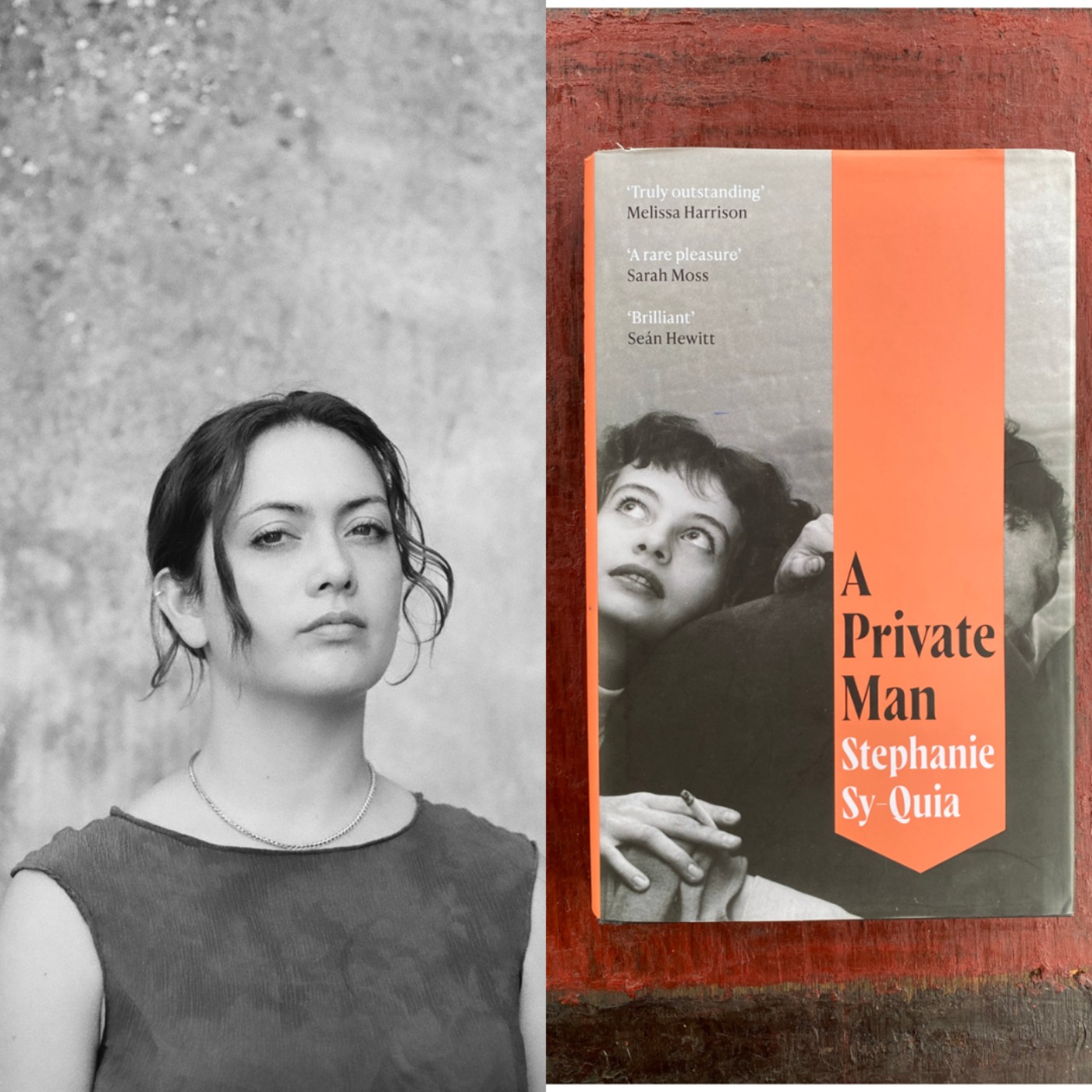
A Private Man with Stephanie Sy Quia
Stephanie Sy Quia talks to host Elena Lappin about her debut novel, A Private Man, and the personal history that shaped it. The conversation moves between family memory, Catholicism, generational trauma, dementia, and the challenge of writing fiction that feels emotionally precise without becoming extractive.We discuss how she turned a real family lineage into art, why she wrote from the public edges of family history rather than interrogating relatives directly, and how teaching Shakespeare fed back into her novel writing. She also reflects on care work, the aging of the baby boomer generation, and why she writes about the hard-to-categorize parts of life.
Key topics
- A Private Man as a novel shaped by family history, Catholicism, and forbidden love
- Writing about relatives without being extractive or forcing personal testimony
- The emotional and ethical tension of claiming a family story as your own
- The Notre Dame fire as an influence on a key scene in the novel
- How generational trauma and family memory can belong to more than one person
- The contrast between poetry and prose, and how she keeps every sentence purposeful
- Margaret and David as characters shaped by community, institution, and sexual restraint
- Vatican II, Catholic reform, and the disappointment of unrealized hope
- Writing historically specific male sexuality through institutional life, boarding school, and war
- Dementia, care, and the intimacy of witnessing the end of a life
- How teaching Antony and Cleopatra informed her sense of romantic and emotional dynamics
- Why she is drawn to slippery, hard-to-label identities and experiences
Timestamps
(00:00) Family history, generational trauma, and why not to be extractive
(01:15) Introduction to Stephanie Sy Quia and A Private Man
(02:24) Notre Dame fire inspiration and a scene between grandson and grandmother
(06:39) Cathedral restoration, sacred materials, and the idea of stone “singing”
(08:05) Reading from the novel ends and the interview begins
(09:07) Her family background: priest grandfather, theologian grandmother, and exile
(11:27) Writing from public family history instead of interrogating relatives
(13:52) Poetry versus prose and making every word earn its place
(15:21) Margaret and David: community, desire, and different relationships to Catholicism
(18:05) Hope, cynicism, and the failure of Vatican II to deliver change
(20:16) Writing a male character through institutional British masculinity
(22:42) Sex, war, and the high stakes of intimacy in an earlier era
(23:39) Writing her grandmother through memory, truth, and preemptive grief
(25:41) Teaching Antony and Cleopatra and bringing its energy into the novel
(27:05) Food, passion, and why the novel makes the reader feel hungry
(28:25) Aging, caregiving, and the demographic burden on younger generations
(30:54) Why she writes: slippery identities, care, and frankness about decline
Notable quotes
Copy
“I was very keen not to be too extractive about how I gathered family information.”
Copy
“Family history both does and does not belong to you.”
Copy
“I wanted to write about the process of caring for someone at the end of their life.”
SHOP TALK WITH WRITERS is a unique conversation with each author, about the stories behind their books.
Subscribe to our monthly newsletter to find out more about each episode, and to engage with our conversations with authors
Hosted on Acast. See acast.com/privacy for more information.
Disclaimer
This podcast’s information is provided for general reference and was obtained from publicly accessible sources. The Podcast Collaborative neither produces nor verifies the content, accuracy, or suitability of this podcast. Views and opinions belong solely to the podcast creators and guests.
For a complete disclaimer, please see our Full Disclaimer on the archive page. The Podcast Collaborative bears no responsibility for the podcast’s themes, language, or overall content. Listener discretion is advised. Read our Terms of Use and Privacy Policy for more details.