Signal & Noise

Signal & Noise
Podcast Description
Join advertising industry veterans Brett House and Rio Longacre as they share regular updates and analysis on the changing world of marketing and technology. You’ll hear real talk from thought leaders across industries about the media, technology, and data strategies having the biggest impact on our jobs… and lives.
Podcast Insights
Content Themes
Focuses on the intersection of marketing, technology, and data strategies with episodes covering critical issues such as digital ad fraud, AI integration in marketing, and the evolving landscape for publishers. Examples include in-depth discussions on ad fraud with Dr. Augustine Fou and the implications of agentic AI for SaaS with Ben Wilde, highlighting both challenges and opportunities within the industry.
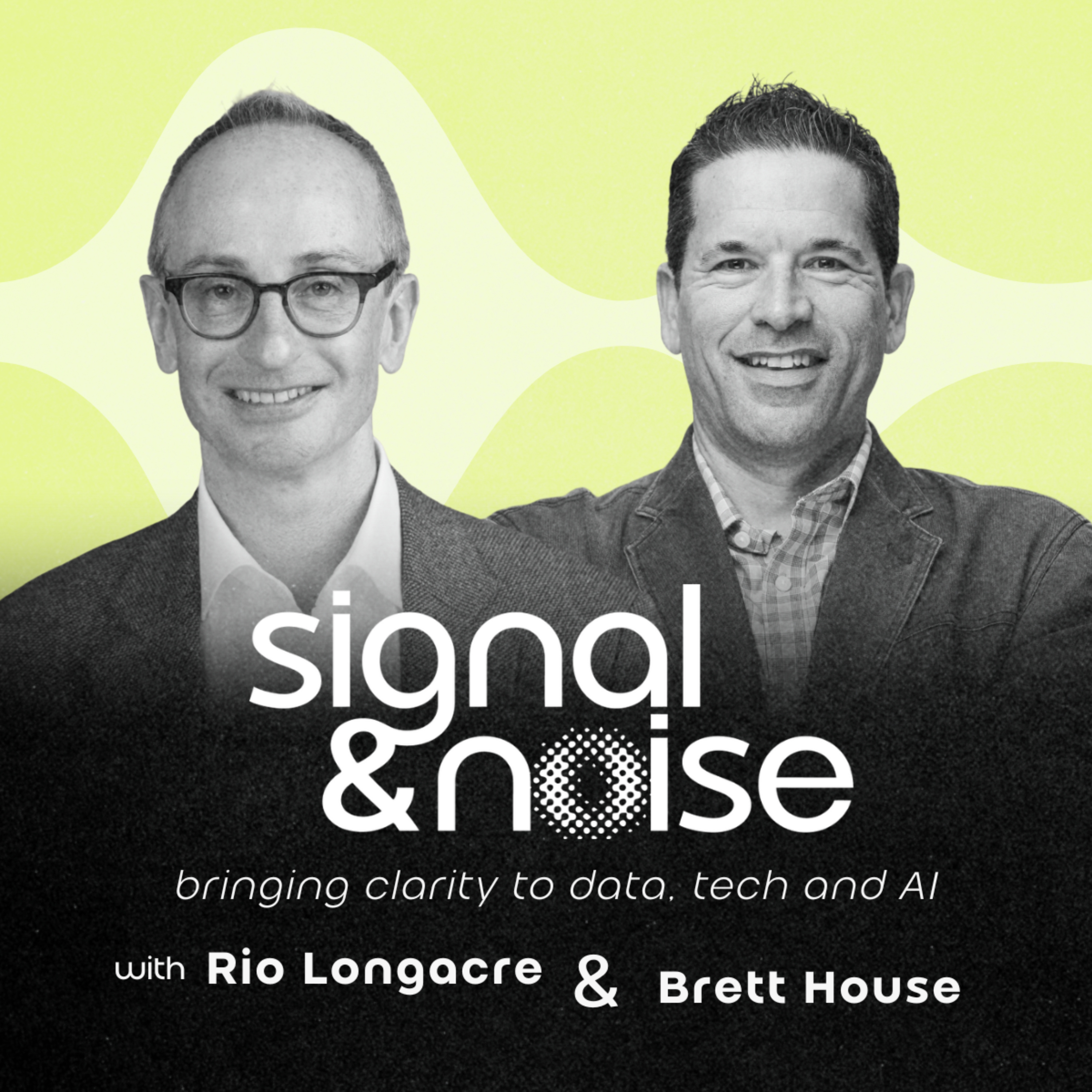
Join advertising industry veterans Brett House and Rio Longacre as they share regular updates and analysis on the changing world of data, tech, and AI. You’ll hear real talk from thought leaders across industries about the latest trends having the biggest impact on our jobs… and lives. Signal & Noise means no BS – only straight talk and first-hand insights from leading operators, creators, and founders.
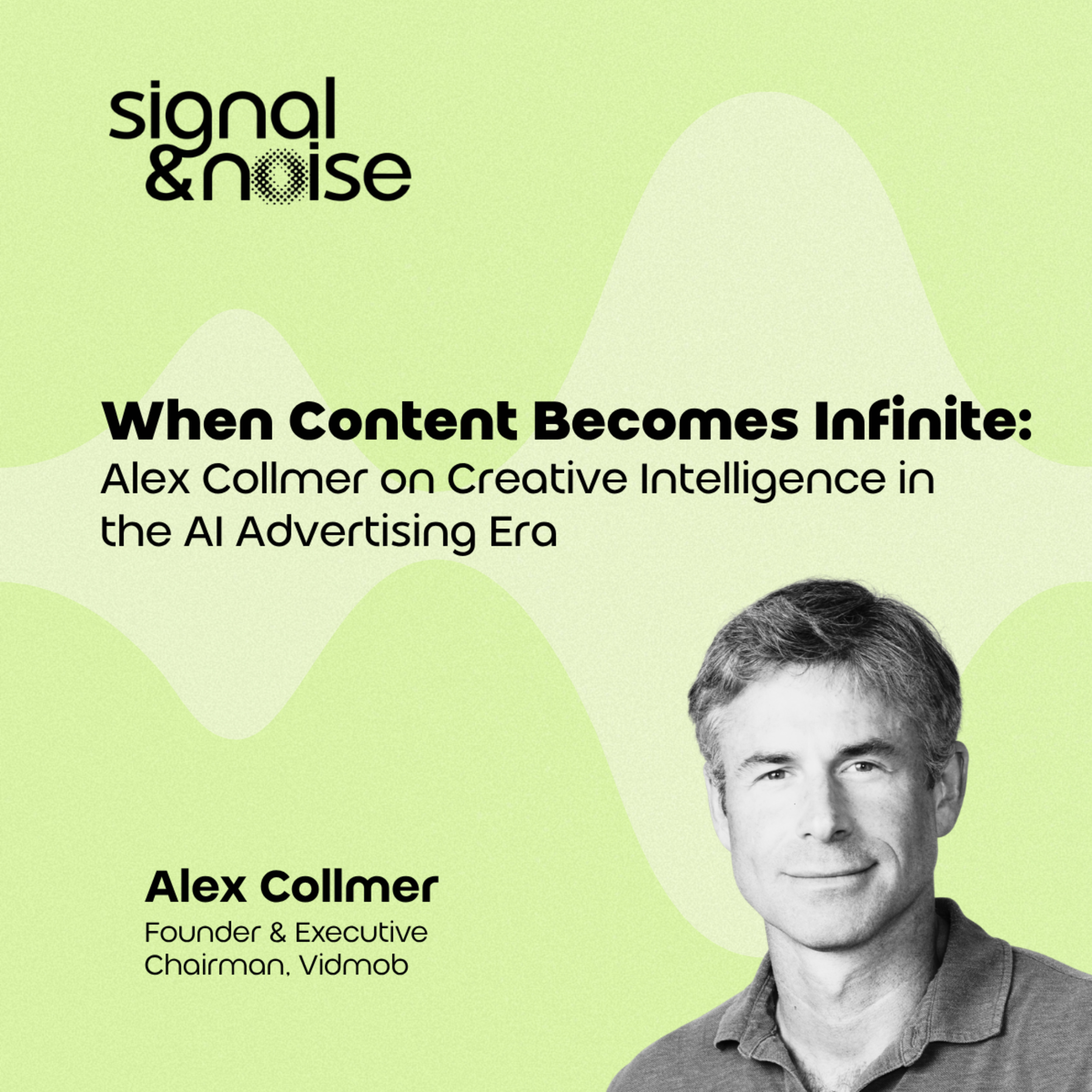
Generative AI has made it radically easier—and cheaper—to create advertising. But if every brand can suddenly produce infinite variations using the same models, what creates competitive advantage?
In this episode of Signal & Noise, Rio Longacre and Brett House sit down with Alex Collmer, Founder & Executive Chairman of Vidmob, to explore why the next battleground in advertising may not be content generation. It may be the intelligence that determines what to create, why it works, and what brands learn from every ad they put into market.
Alex traces Vidmob’s evolution from a marketplace connecting marketers with video creators into what it now calls a creative data company. The turning point came when Vidmob connected its production systems directly to advertising platforms and suddenly gained access to performance data. That exposed a major disconnect: marketers spent years optimizing audiences, bids, identity, attribution, geography, and media—but creative remains one of advertising’s most important and least-instrumented variables.
Alex explains what creative data means: a structured understanding of the thousands of decisions contained within an ad—from messaging and narrative arc to logo placement, pacing, framing, imagery, and brand cues—and how those decisions correlate with business and campaign outcomes.
The conversation turns to generative AI. Alex argues foundation models themselves are rapidly becoming commodities. If every competitor has access to the same technology, simply having better AI won’t create a durable advantage. The differentiator is proprietary intelligence brands bring into those systems: what they know about their creative, customers, performance, and how their brand communicates effectively.
That raises an even bigger strategic question: Should brands allow platforms to own that intelligence—or build and control it themselves?
Alex discusses Vidmob360 and the shift from static dashboards to APIs, MCP services, assistants, and agents that make creative intelligence actionable inside existing marketing workflows. Instead of receiving a PowerPoint weeks after a campaign launches, marketers can interrogate live creative performance, identify fatigue, understand why assets are succeeding or failing, generate better briefs, and connect insights directly to production and media decisioning.
Rio, Brett, and Alex also tackle the danger of creative sameness. Generative AI can produce thousands of variations, but volume isn't originality. Continuous optimization can easily become a feedback loop in which every brand learns from yesterday's winners and gradually begins looking and sounding the same.
They also explore what all of this means for designers and creative professionals. Alex sees AI less as a replacement for great creatives than another powerful tool—and argues the best technically literate creators may enter an entirely new playing field. Real-time performance feedback can also finally give creative teams something they've historically lacked: a direct learning loop between what they make and how audiences respond.
Plus: why Alex once raced humans against horses, why click-through rate is the creative metric he'd eliminate tomorrow, and the human capability he believes becomes even more valuable as AI improves: storytelling.
Topics include: Creative intelligence • Creative data • Generative AI • Vidmob360 • MCP and AI agents • Creative optimization • Brand sovereignty • Walled gardens • Creative measurement • Content abundance • Advertising automation • Creative fatigue • Human creativity • The changing role of designers
#SignalAndNoise #AlexCollmer #Vidmob #CreativeIntelligence #CreativeData #GenerativeAI #Advertising #AdTech #Marketing #MarketingTechnology #CreativeTechnology #AIAdvertising #AgenticAI #AIAgents #MCP #BrandStrategy #DigitalAdvertising #CreativeOptimization #MarketingAI #Media #PerformanceMarketing #CreativeStrategy #FutureOfAdvertising #ContentCreation #BrandMarketing
Disclaimer
This podcast’s information is provided for general reference and was obtained from publicly accessible sources. The Podcast Collaborative neither produces nor verifies the content, accuracy, or suitability of this podcast. Views and opinions belong solely to the podcast creators and guests.
For a complete disclaimer, please see our Full Disclaimer on the archive page. The Podcast Collaborative bears no responsibility for the podcast’s themes, language, or overall content. Listener discretion is advised. Read our Terms of Use and Privacy Policy for more details.