Terms of Engagement

Terms of Engagement
Podcast Description
From rank-choice voting to reconciliation, American democracy is headline news. Let’s talk about it.
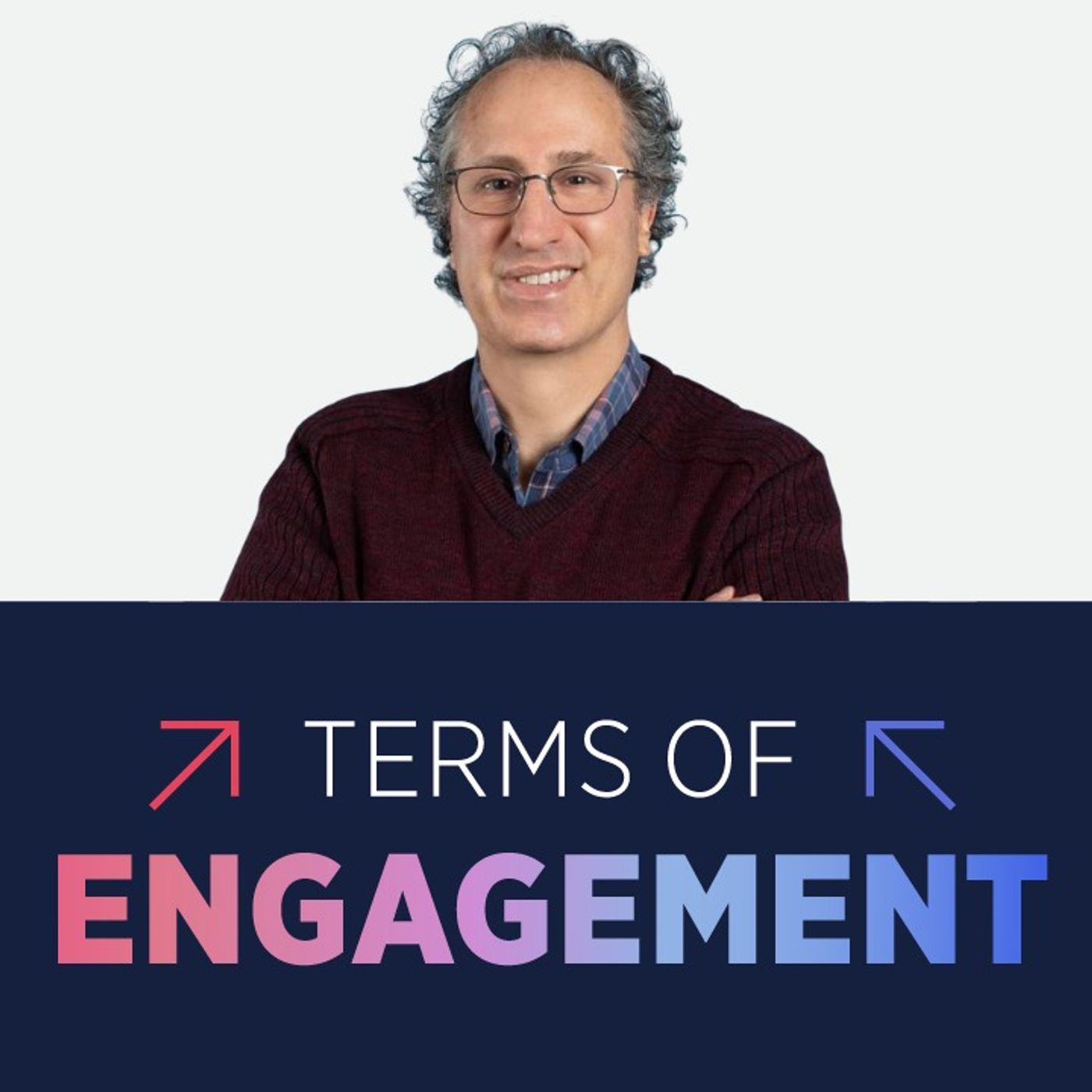
Join Harvard Ash Center's Archon Fung and Stephen Richer for a weekly conversation about the latest developments in American politics. Blending perspectives from both the political right and left, Terms of Engagement addresses breaking news, providing insights from research and practice to deliver a unique perspective you won’t hear anywhere else.
Podcast Insights
Content Themes
The podcast focuses on a variety of political topics including rank-choice voting, immigration policy, government accountability, and democracy trends. For instance, the inaugural episode dives into the expansion of ICE, ongoing deportations, and public protests, analyzing their implications for democratic governance and citizen engagement.
From rank-choice voting to reconciliation, American democracy is headline news. Let’s talk about it.
Join Harvard Ash Center’s Archon Fung and Stephen Richer for a weekly conversation about the latest developments in American politics. Blending perspectives from both the political right and left, Terms of Engagement addresses breaking news, providing insights from research and practice to deliver a unique perspective you won’t hear anywhere else.
With the 2026 midterms approaching, a troubling question surfaces: are we living in two completely different realities?
Professor Matthew Baum of Harvard Kennedy School joins Archon Fung and Stephen Richer to examine new research from the Shorenstein Center in collaboration with the Ash Center for Democratic Governance and Innovation on Americans’ knowledge of voting regulations in the 2026 Voting Information Trends report.
The findings reveal significant gaps in understanding when asked about their state’s voting regulations:
- 34% of respondents correctly answered questions about their state’s voting rules.
- 36% were unsure.
- 30% answered incorrectly.
With the midterms approaching, this episode offers timely insight into how voters get information—and how different information environments may influence what they believe about the voting process.
About Terms of Engagement
From rank-choice voting to reconciliation, American democracy is headline news. Let’s talk about it.
Join Harvard Ash Center’s Archon Fung and Stephen Richer for a weekly conversation about the latest developments in American politics. Blending perspectives from both the political right and left, Terms of Engagement addresses breaking news, providing insights from research and practice to deliver a unique perspective you won’t hear anywhere else.
Contact Us
Send questions, ideas, and feedback to us at [email protected].
About the Hosts
Archon Fung is the Winthrop Laflin McCormack Professor of Citizenship and Self-Government at the Harvard Kennedy School and the Director of the Ash Center for Democratic Governance and Innovation. His research explores policies, practices, and institutional designs that deepen the quality of democratic governance with a focus on public participation, deliberation, and transparency. He has authored five books, four edited collections, and over fifty articles appearing in professional journals. He received two S.B.s — in philosophy and physics — and his Ph.D. in political science from MIT.
Stephen Richer is the former elected Maricopa County Recorder, responsible for voter registration, early voting administration, and public recordings in Maricopa County, Arizona, the fourth largest county in the United States. Prior to being an elected official, Stephen worked at several public policy think tanks and as a business transactions attorney. Stephen received his J.D. and M.A. from The University of Chicago and his B.A. from Tulane University.
Stephen has been broadly recognized for his work in elections and American Democracy. In 2021, the Arizona Republic named Stephen “Arizonan of the Year.” In 2022, the Maricopa Bar Association awarded Stephen “Public Law Attorney of the Year.” In 2023, Stephen won “Leader of the Year” from the Arizona Capitol Times. And in 2024, Time Magazine named Stephen a “Defender of Democracy.”
About the Ash Center for Democratic Governance and Innovation
The Ash Center for Democratic Governance and Innovation, a research center at Harvard Kennedy School, is Harvard’s hub for the study, discussion, and analysis of democracy. The Ash Center’s mission is to develop ideas and foster practices for equal and inclusive, multi-racial and multi-ethnic democracy and self-government.
Music Credit: Straight to the Point, Music Media Group
Disclaimer
This podcast’s information is provided for general reference and was obtained from publicly accessible sources. The Podcast Collaborative neither produces nor verifies the content, accuracy, or suitability of this podcast. Views and opinions belong solely to the podcast creators and guests.
For a complete disclaimer, please see our Full Disclaimer on the archive page. The Podcast Collaborative bears no responsibility for the podcast’s themes, language, or overall content. Listener discretion is advised. Read our Terms of Use and Privacy Policy for more details.