Revenue Search: Inside Bittensor
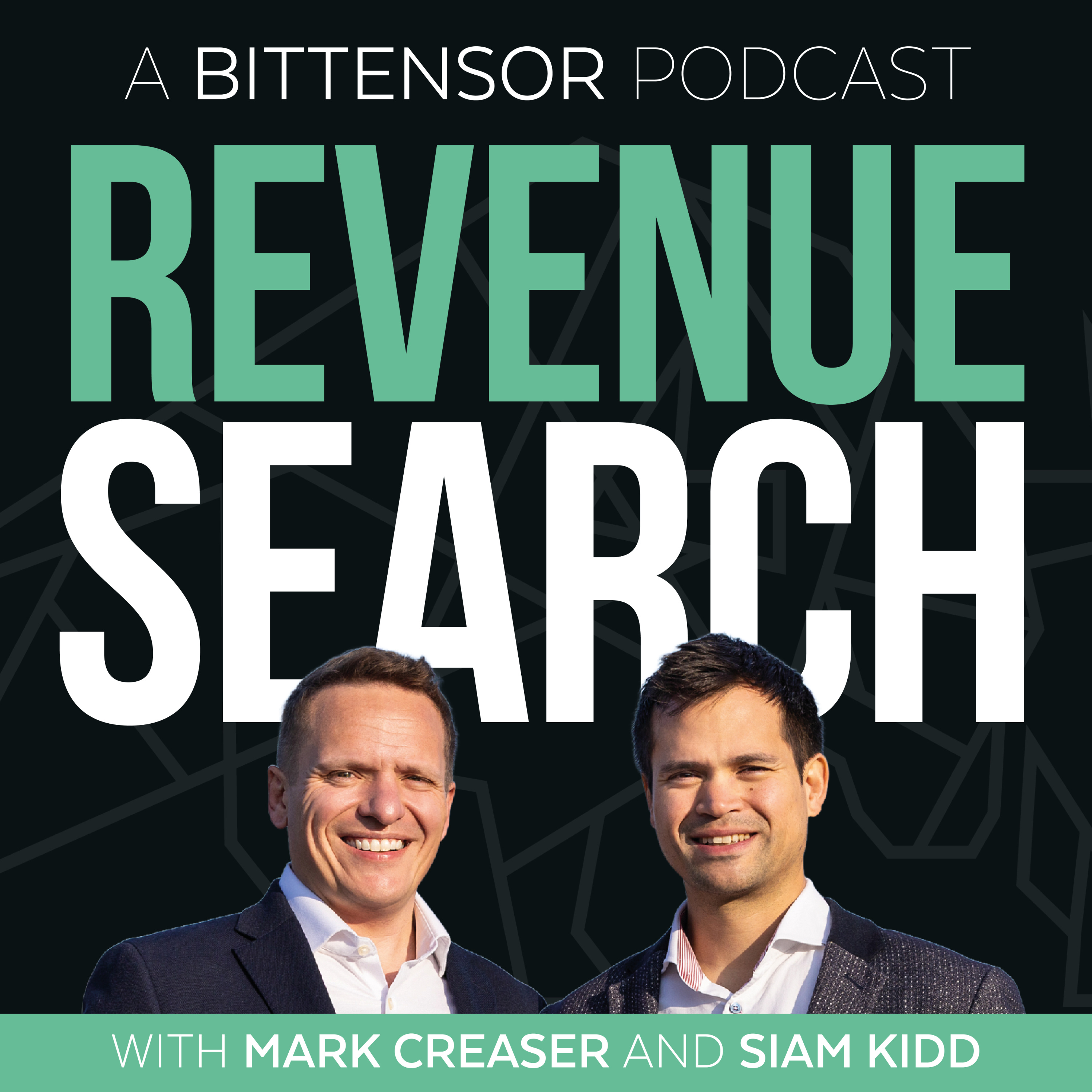
Revenue Search: Inside Bittensor
Podcast Description
The podcast for anyone building, investing in, or obsessed with Bittensor.
Hosted by Mark Creaser and Siam Kidd from DSV Fund, Revenue Search goes inside the subnets to ask the important questions about revenue - not just hype.
If you’re betting on the future of distributed AI - or building it - this is your signal.
Podcast Insights
Content Themes
The podcast primarily explores themes surrounding decentralized AI, revenue generation, and investment opportunities within Bittensor, with episodes addressing topics like subnet trading strategies, real-world utility, and various innovative applications such as Vision-as-a-Service and predictive modeling for finance.
The podcast for anyone building, investing in, or obsessed with Bittensor.
Hosted by Mark Creaser and Siam Kidd from DSV Fund, Revenue Search goes inside the subnets to ask the important questions about revenue – not just hype.
If you’re betting on the future of distributed AI – or building it – this is your signal.
Revenue Search sits down with the Agent Comms team Tom, Chris and Ashton to explore a potential new Bittensor subnet designed as a trust layer for human and AI communication. The project aims to combine Kaspa for ordering, sequencing and transaction records with Bittensor for incentives, using miners to index, store, serve and prove communication data. At its simplest, Agent Comms is building infrastructure that lets people, businesses and AI agents communicate, share files, publish data and verify interactions without relying on a single central provider.
The team walks through four planned products: a Slack/Discord-style communication app, a decentralized Kaspa RPC provider, AI-to-AI coordination and payment rails, and ZK proving services. They discuss how encrypted messages and files are stored off-chain while Kaspa records proofs and timestamps, with Bittensor miners supporting availability and delivery. The commercial model includes server subscriptions, protocol licensing, RPC subscriptions, ZK proving fees and planned alpha buybacks from revenue, though Siam and Mark challenge the team on messaging, go-to-market, miner scoring, and whether the product can be explained clearly enough for the market.
Disclaimer
This podcast’s information is provided for general reference and was obtained from publicly accessible sources. The Podcast Collaborative neither produces nor verifies the content, accuracy, or suitability of this podcast. Views and opinions belong solely to the podcast creators and guests.
For a complete disclaimer, please see our Full Disclaimer on the archive page. The Podcast Collaborative bears no responsibility for the podcast’s themes, language, or overall content. Listener discretion is advised. Read our Terms of Use and Privacy Policy for more details.