The HR Podcast – Built for Business
The HR Podcast - Built for Business
Podcast Description
If you’re in HR, running a business, managing people (or all three), this is the podcast for you. We talk about the messy stuff, the bold stuff, and the things that actually make a difference at work.
No fluff. No corporate waffle. Just honest conversations, practical advice, and the kind of insight that helps you do your job better — and stay sane while doing it.
We’re keeping it real, we’re keeping it useful, and we’re building a better way to do HR — one episode at a time.
Podcast Insights
Content Themes
The podcast covers practical HR challenges, leadership strategies, and workplace dynamics, with episodes including discussions on difficult employee management scenarios, effective communication techniques, and the impact of company culture on retention. Specific focus areas include navigating employee relations and providing real-world solutions to common HR dilemmas.
Big ideas, sized to fit your business.
Each week I bring in an expert to unpack a people topic on a UK small business owners’ desks: AI adoption, leadership, culture, hiring, performance, difficult conversations and often the employment law underneath it.
Dealing with a difficult employee? Trying to work out your approach to AI? Building the kind of leadership and culture that keeps good people? This is practical HR guidance and people management advice, for founders, HR and managers building a team in a small business
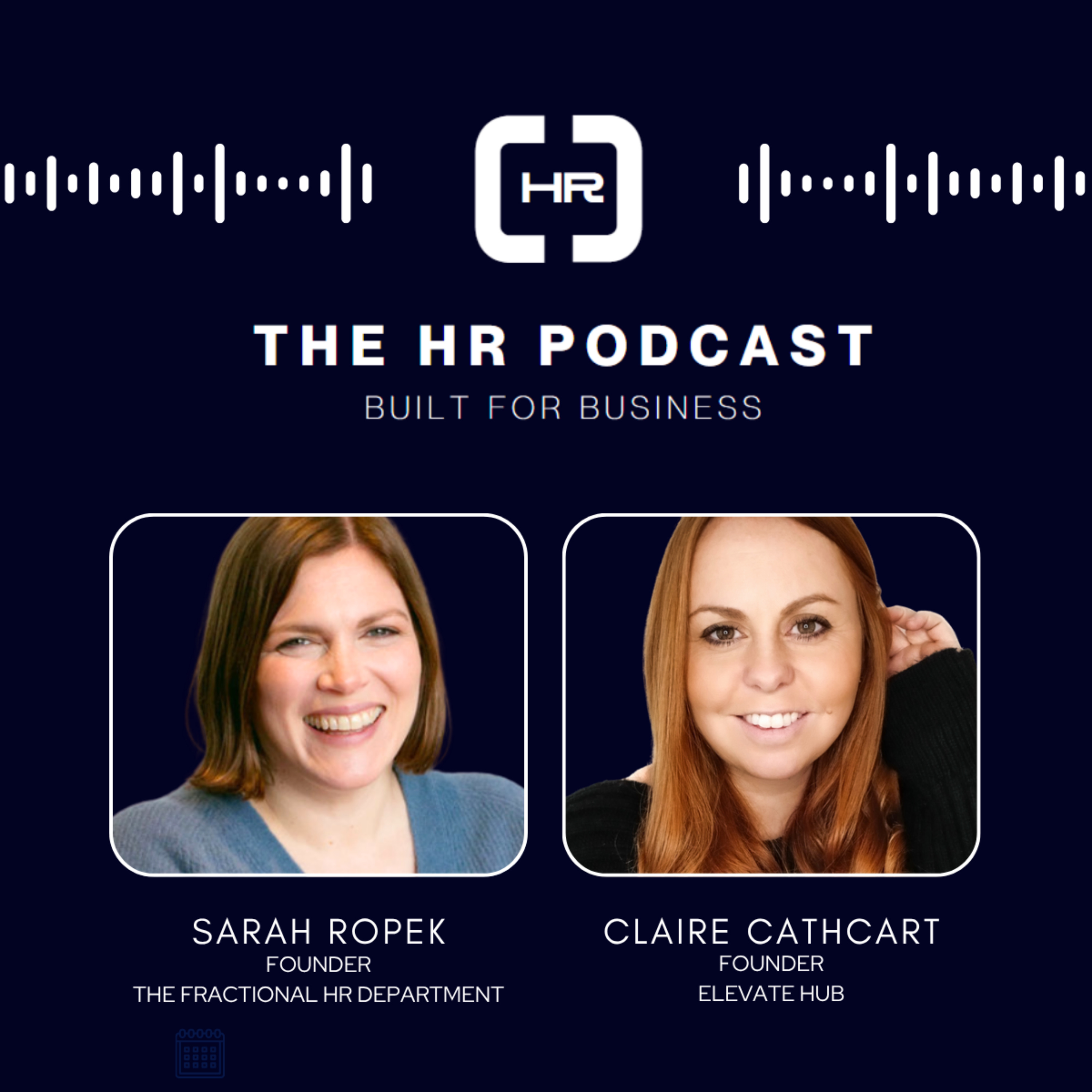
Hosted by Sarah Ropek, founder of The Fractional HR Department
HR has had a rough year in the press. Too big, too slow, not enough impact. In this episode, you'll hear a genuinely honest debate about whether that criticism is fair, and what commercially focused HR actually looks like in practice. You'll learn the difference between what's legally required and what's been quietly added under the banner of “best practice,” why measuring HR ROI properly changes what gets prioritised, and how HR efficiency and automation, including AI in HR, can free people up for more strategic work rather than threaten their jobs. If you've ever wondered whether your own HR strategy and business impact are properly aligned, or whether you're spending time on the wrong things, this one's for you.
Key Takeaways
HR strategy and business impact should start with a hard question: are we doing the wrong things well, rather than the right things at all? Recent media criticism of HR's size and impact is contested and not always backed by solid comparative data, but the underlying question about prioritisation is worth taking seriously regardless.
There's a real difference between what's legally required and what's been added under “best practice.” In interviews, the vast majority of HR candidates answer scenario questions based on internal policy rather than actual statutory minimums — which suggests many HR processes have grown well beyond what risk genuinely requires.
Understanding a business's risk appetite should shape how much process HR builds in. A low-risk, short-service dismissal can often be handled simply and still be legally sound — the extra layers are a cultural and engagement choice, not a legal necessity.
Commercially focused HR means knowing the numbers, not just the policies. One simple, practical starting point: ask what the business spent on recruitment last year. Many HR teams don't know, and reviewing agency spend alone can pay for outsourced HR support within the first year.
Measuring HR ROI should go beyond headcount, absence, and turnover. Metrics like leadership time saved on people-management processes, or time-to-hire for critical roles, tend to resonate far more with the board than standard HR reporting.
AI in HR is best positioned as a way to free up capacity for strategic work, not a threat to jobs. Given how widespread burnout and capacity issues already are in the HR profession, automating manual and administrative tasks is a genuine opportunity rather than something to fear.
A good HR system is foundational to HR efficiency and automation. Reliable, up-to-date data and automated transactional processes make it possible to focus HR's time on genuinely commercial and strategic priorities instead of admin.
Timestamps
[00:56] Why this episode is a departure from the usual format [01:30] Is the media criticism of HR actually fair? [04:08] Why HR looks different in every business [09:48] Legal minimums vs “best practice” policies [13:29] Bells and whistles service vs risk protection [20:39] Metrics that actually get the board's attention [23:36] Why commercially focused HR needs to be a priority [27:52] AI in HR: automation, not replacement
Resources and Links Mentioned
Policy Exchange report — referenced regarding the growth and scope of HR functions, and the increasing length of reports such as gender pay gap submissions.
ACAS codes of practice — referenced as the correct legal benchmark for HR scenario decision-making, as distinct from internal policy
Bolt CEO's decision to replace the HR team with AI and an operations function — referenced as a recent, widely discussed example in the HR press
HR strategy and business impact, commercially focused HR, HR efficiency and automation, measuring HR ROI, AI in HR, HR best practice vs legal minimum, strategic HR for small business, HR metrics that matter, HR advice for small business, future of the HR profession
Disclaimer
This podcast’s information is provided for general reference and was obtained from publicly accessible sources. The Podcast Collaborative neither produces nor verifies the content, accuracy, or suitability of this podcast. Views and opinions belong solely to the podcast creators and guests.
For a complete disclaimer, please see our Full Disclaimer on the archive page. The Podcast Collaborative bears no responsibility for the podcast’s themes, language, or overall content. Listener discretion is advised. Read our Terms of Use and Privacy Policy for more details.