Script Your Future
Script Your Future
Podcast Description
Script Your Future brings you inspiring stories from the frontlines of independent community pharmacy. Each episode features conversations with passionate pharmacists, innovative pharmacy students, and industry leaders who are shaping the future of community healthcare.
Hosted by the NCPA Foundation, this podcast explores the journeys, challenges, and triumphs of those dedicated to advancing independent pharmacy practice. From students discovering their calling to established owners revolutionizing patient care, we dive deep into the personal experiences that make community pharmacy such a vital and rewarding profession.
Whether you're a pharmacy student contemplating your career path, a practicing pharmacist considering ownership, or simply interested in healthcare innovation at the community level, Script Your Future offers valuable insights, practical advice, and inspiring visions of what independent community pharmacy can be.
Join us as we explore how independent pharmacists are creating more accessible healthcare in their communities, adapting to industry changes, balancing professional and personal responsibilities, and crafting innovative business models that put patients first.
Subscribe to "Script Your Future" and be part of the conversation about the evolving role of independent community pharmacies as essential, accessible healthcare providers making a difference in communities across the nation.
*New episodes released monthly. Presented by the NCPA Foundation.* ncpafoundation.substack.com
Podcast Insights
Content Themes
The podcast covers key themes in pharmacy, including ownership challenges, advanced practice pharmacy, community health innovations, and student perspectives. Episodes have featured topics such as the transformative journey of pharmacists like Dared Price, who adapts to industry changes, and Diana Arouchanova, who describes her advanced practice approach in her pharmacy care center.
Script Your Future brings you inspiring stories from the frontlines of independent community pharmacy. Each episode features conversations with passionate pharmacists, innovative pharmacy students, and industry leaders who are shaping the future of community healthcare.
Hosted by the NCPA Foundation, this podcast explores the journeys, challenges, and triumphs of those dedicated to advancing independent pharmacy practice. From students discovering their calling to established owners revolutionizing patient care, we dive deep into the personal experiences that make community pharmacy such a vital and rewarding profession.
Whether you’re a pharmacy student contemplating your career path, a practicing pharmacist considering ownership, or simply interested in healthcare innovation at the community level, Script Your Future offers valuable insights, practical advice, and inspiring visions of what independent community pharmacy can be.
Introduction
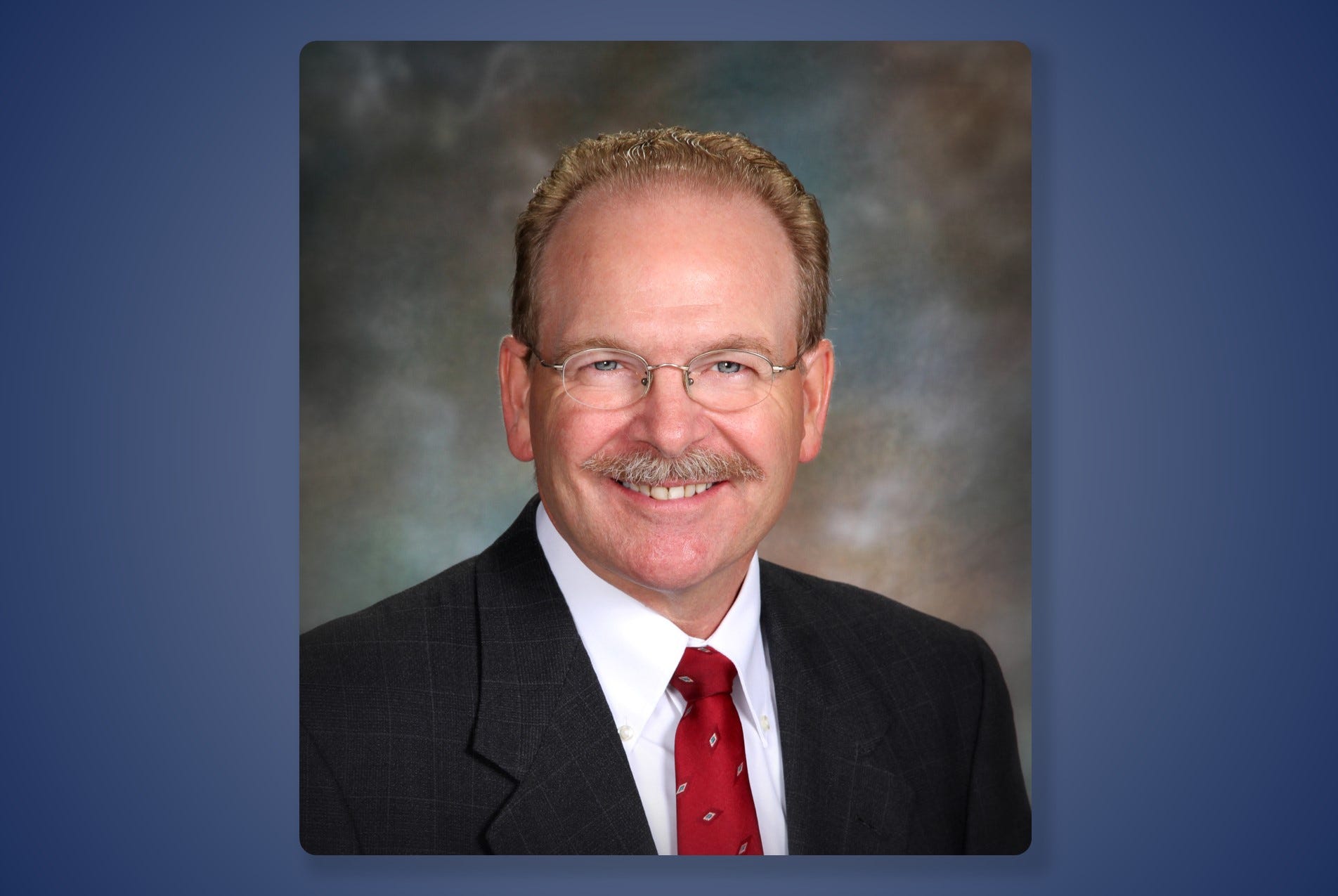
In this episode of Script Your Future, host Sonja Pagniano talks with Matt Osterhaus, a second-generation pharmacist whose family has served Maquoketa, Iowa since his father bought the local drug store in 1965. Matt and his wife ran Osterhaus Pharmacy for decades. They grew it into a nationally respected practice that offered clinical services, a community pharmacy residency program, and services in hospice, home medical, and long-term care. Since selling the pharmacy in 2022, Matt has stayed active in the profession as president of CPESN Iowa, as a board member of the Community Pharmacy Foundation, and as a mentor to many pharmacists.
Matt talks about filling his first prescription at age 12, and about the advice from his father that has guided his career: “If it’s right for the patient, it’ll be right for pharmacy.” He explains how the pharmacy’s residency program became a source of new clinical services and future staff, why he hires pharmacists before he needs them, and why he thinks listening is the most important skill for owners and mentors alike. He also describes the 18-month process of selling the family pharmacy to a buyer who shared his values, why helping launch CPESN has been the most rewarding work of his career, and why giving back to the profession is good for your patients, your business, and your soul.
Interview
Sonja: Welcome, Matt, to the Script Your Future podcast. We are thrilled to have you on today. You are truly one of those people who has built a legacy, from your family’s history in pharmacy through today, and I feel like you continue to do so much for the independent pharmacy profession. I’m very excited to share some of your story and the things you’ve accomplished and learned along the way. Welcome.
Matt: Thanks.
Sonja: Tell us a little about your origin story in independent pharmacy. Where did it all start for you, and where did that path take you?
Matt: My dad bought a community pharmacy in Maquoketa back in 1965, and it was a drug store in every sense of the word. We moved here when I was eight years old. I’m one of ten children, so we all became employees of the pharmacy as soon as we were old enough to walk and talk. At eight years old I started working at the soda fountain, sweeping floors, cleaning bathrooms, and things like that.
One time, when my dad was at an Iowa pharmacy meeting, the previous owner had to come in after hours to fill a prescription, and I got to fill my first prescription. I was 12. It was a Bactrim DS prescription.
Sonja: Oh my gosh.
Matt: Growing up in the pharmacy was a great opportunity to see what my dad did and the impact it had on the patients we served. Right away I thought, “This is something I would like to do.” I wasn’t sure, but I started right off at the University of Iowa in pre-pharmacy, hung in there, made it through, and here we are today.
Sonja: When did you start working with your family as a pharmacist? Did you work at other places first, or did you go straight back to the family pharmacy?
Matt: My wife and I graduated in the same pharmacy class. We weren’t married at the time, but we moved to Milwaukee, Wisconsin, and went to work for Walgreens. I wanted to get out from under my dad’s shadow. He had been chairman of the Iowa Board of Pharmacy and involved in Iowa Pharmacy Association leadership, so I decided to branch out a little. We really enjoyed Milwaukee, and I learned a lot working for Walgreens. There were a lot of things I didn’t like about the way they did things, and a lot of things they did that were pretty smart in how they ran operations.
Then one of my dad’s pharmacists was going to move out of town, and he called and said, “If you want to come back now, we can be partners.” So three years into our careers, married by then and expecting our first child, we went back.
Sonja: Wow, that’s a lot of transitions all at once.
Matt: Yes. I would say most of my continuing education has come through practice. I had some great opportunities, like APhA’s pharmacy management program, which used to be called the APPLE program. It was a week-long program I attended in the early ‘90s. Another huge influence on my career was the Iowa Center for Pharmaceutical Care, also in the early ‘90s. That was when we moved toward documenting the care we provided in a much more substantial way and really focusing on the patient, with dispensing becoming much more technician-driven. The people at the University of Iowa, Drake, and the Iowa Pharmacy Association who put that together changed our path very quickly. They helped us become true caregivers and manage our patients’ health in a much broader way.
Sonja: Did you have conversations with your father about all of that? You’ve seen things go from paper to computers, with technology picking up rapidly and changing the whole workflow.
Matt: Most certainly. Dad is a very progressive pharmacist. He was one of the first pharmacists in the country to keep patient profiles, on paper, to track what was going on with his patients, and one of the first pharmacies in Iowa to computerize, back in 1978. When we went to work for Walgreens, we were still typing labels on a typewriter, and our home pharmacy had already been computerized. I give my dad a lot of credit. He was born in another era, yet he took that technology forward and was willing to make changes he could see would be good for his patients and good for the profession.
He was a great mentor in that respect, always looking at what’s next and what we can do to move our practice forward. We got involved in APhA’s Project ImPACT to help people meet their cholesterol goals. We were doing cholesterol checks in our pharmacy in the 1990s, which was ahead of the curve, and that taught us to think broadly: if there’s something we can do that’s good for our patients, and it’s right, we should do it. My dad would always say, “If it’s right for the patient, it’ll be right for pharmacy. Use that as your North Star and you’ll do well.”
So I had a lot of discussions with my dad growing up, and he was always very open. If you wanted to try something new, if you saw a chance to change something in our community or in our practice, you had to go for it. And some of those things don’t work.
Sonja: You have to try it.
Matt: You see a service that you think will help your patients and also give you a return on the time, energy, and capital you put into it. Sometimes that works and sometimes it doesn’t. We’ve been fortunate that a lot of those things did work over the years.
Sonja: I’ve seen that a lot in independent pharmacy. The pharmacies that succeed are the ones brave enough to try things and okay with it if something doesn’t work. I was talking with someone recently and said, “I feel like a lot of pharmacists are introverted, and that’s why the business mindset doesn’t always come naturally. Sales and persuading people aren’t always comfortable.” He said the real issue is that pharmacists are trained to be very accurate. There can be no mistakes. Now you’re asking them to be okay with things potentially not working, or with people telling them no again and again. I think that’s where it gets very uncomfortable for people.
Matt: It takes a lot of stick-to-itiveness to overcome those barriers. One of the most valuable things my dad showed me is that you don’t have to do this alone. When you’re involved in your local, state, or national associations, you get exposed to new ideas, and you get support from like-minded people who want to make a difference and move the profession forward while they move their own practices forward. That makes such a difference.
From my time on the Board of Pharmacy, I can tell you that when a pharmacist came before the board for disciplinary action, more often than not they had been practicing in their own little cocoon. They weren’t talking to other pharmacists in the area or involved in APhA or NCPA, where they could get ideas about how to do things the right way. You start making bad decisions when you’ve closed yourself off. That’s another advantage of being active in the profession.
My philosophy, which came down from my dad, is to embrace the professional opportunity you have to make a difference with your patients and in your community, and then give back to your profession for that opportunity. That whole circle is good for your patients and good for your business, and it’s good for your soul.
Sonja: It makes you feel good, and it keeps you motivated too. I love that you said that, because I know one of your proudest achievements has been mentoring pharmacy residents as part of your practice. That’s a big investment for a pharmacy to make, and it also gives so much back to your business and your community. What inspired you to take that on, and how did the program grow so popular that people were saying, “This is where I want to do my residency”?
Matt: It started with staying connected to the College of Pharmacy. My dad, my wife, and I all went there, and my wife’s dad was also a pharmacist who went to Iowa, so there’s a lot of history. I think five of the ten of us kids graduated from the University of Iowa. So we have a close connection to the university, and especially the College of Pharmacy. We had that back and forth, we saw what some of our classmates were doing as they taught, and we saw that we could show students a very fulfilling way of practicing pharmacy. That led us to start taking PharmD clerkship students as those programs began in earnest in the ‘80s and ‘90s.
Once the PharmD students were coming through our site, Jay Currie, a classmate of ours and a professor at the college, said the natural next step was to start a residency and show these new grads how they could make a difference in pharmacy and in their lives. Our goal was always for graduates of our program to be difference-makers. We wanted them to go out wherever they ended up, whether they owned a community pharmacy, worked for a medical clinic, or worked in academia, with a mission to show that pharmacy can be a lot more if we all work together.
It became part of the DNA of our practice. We wanted to hire people who wanted to be teachers. You’re teaching patients all the time, and then you bring in high school students, student pharmacists, and residents to be part of that learning environment. That was extremely satisfying to me. I often say I’m as proud of some of the residents who graduated from our program as I am of my own kids.
Sonja: That’s beautiful. Is there something that came out of the residency program that you’re especially proud of, maybe something a resident created or changed in the pharmacy?
Matt: Our clinical services grew every year as each resident came through. The idea was that we could take patients’ information and lab values and help the rest of the healthcare team get people to goals that really make a difference. Our first program, from our earliest residents, was cholesterol management. Since then, residents have helped us build services for local employers, where we go into their workplaces and hold wellness visits and health clinics.
We also have a service in our pharmacy called the Pink Wardrobe, for post-mastectomy patients.
Sonja: Oh, wow.
Matt: My wife started that service right after we moved back to Maquoketa, because we didn’t want our patients to have to travel somewhere else when they were that vulnerable. One of our residents took that service, marketed it broadly, and probably quadrupled what we did in products, sales, and the number of people we helped, all in a single residency year. It’s amazing what can happen in 12 months when people have a place where they can safely take on something brand new, knowing everyone on staff will support them.
You’re right that I’ve put a lot of time and effort into community pharmacy residency nationally, trying to strengthen and grow it. We’re actually working on some things right now to see if we can reinvigorate it.
Sonja: That’s amazing. I’ve read so much about your program, and it’s such a great example of how this can work for pharmacy. To your point, you expanded into hospice, home medical, long-term care, and other clinical programs. Did you run into challenges when you implemented these new programs, or was it easier going bit by bit? Sometimes people try to take on everything at once: “I want to do long-term care and home medical and…” Do you have advice for people who are trying to figure that out?
Matt: I think it’s worth sitting down and planning as much as you can. There are always variables you don’t know, but it’s worth the effort to say, “This is how I think it’s going to work. This is who I think it’s going to take. This is how much money I think it’s going to take.” Chances are that three, four, or five months in, you’ll have to shift gears and do something different. A lot of it comes down to having a great team that will be honest with you as the owner when something isn’t working, so you can shift gears and pull back.
One of the keys to life, I think, is listening, truly listening. You can’t assume you’re the one who always knows. You have to look for other sources of information, take the feedback you get, step back, and make a new decision. It is hard when you see all these opportunities and so many things changing. Right now, with point-of-care testing and the chance for primary care pharmacists to bring services to their communities, there are lots of opportunities. But you have to be realistic about what you can do in a given time.
Another thing my dad would say is don’t wait until you actually need another pharmacist on staff. Hire the pharmacist before you need them so you can keep your momentum going. That’s a hard one, because hiring a new pharmacist is always a shock to your bottom line. And with the workforce shortages we face today, finding a pharmacist who wants to provide care is doubly challenging. But when you see someone you think would fit with your team, think about how you can make it happen now. Don’t wait until it’s an emergency.
Sonja: One hundred percent. It’s so hard to plan ahead in pharmacy, with so many things changing so rapidly, and we can’t control life. Life is lifing, as young people say. But there are things you can do to plan. When you’re thinking about staffing, how do you scope that out? Is a residency program the easiest path, or are there other ways to set up your team so you can bring someone in when those moments happen?
Matt: The residency program is certainly a prime way to do it. Even outside a residency, if you’ve had someone as a student for five weeks, you have a sense of how they work, and that’s a great chance to think about them. One of our pharmacists went to work in another community after school, and when she finished her one-year commitment there, we were after her to ask, “Wouldn’t you like to think about coming here?” Right now three of our past residents are on staff at Osterhaus Pharmacy, and they’re really the core of the team.
The other opportunity is being involved in your state and national pharmacy organizations. You’re at a reception chatting with a young pharmacist, and you walk away thinking, “Wow, she really gets it.” Don’t forget her name.
Sonja: Get her contact info.
Matt: Even if she lives in Virginia, you can make the case that coming to Iowa might be the best move she ever makes. I’m not talking about you specifically, Sonja.
Sonja: I’m not a pharmacist, so I wouldn’t count anyway.
Matt: We don’t need just pharmacists.
Sonja: That’s true. So what is your approach to mentorship? You work with people from all walks of life, with different hopes and dreams, and sometimes as we grow in our professions we need someone to tell us, “It’s great that you have these dreams, but here’s the reality.” Do you have a specific approach to mentoring, especially for those difficult conversations? Or is there a moment that’s been especially memorable or meaningful to you?
Matt: I feel like the most important thing in a good mentoring relationship is that it’s a two-way street. I tell young people that the person looking for a mentor brings something to the relationship too, and it works much better that way. When young people, or pharmacists at any stage, want to sit down and talk with me, I figure I can always learn something. So again, listening is a good start.
You also want someone who is honest and willing to share what they’re dreaming about, and who will also listen to the realities of what it takes to get from here to there. As a mentor, I like to really understand what makes people tick, so it needs to be more than a quick email or a quick call. You have to be willing to put some time into it. I can’t think of a time I invested in a young person and was disappointed in the outcome, even when things didn’t work out the way they or I expected.
You also have to be willing to be a little vulnerable.
As a mentor, don’t be afraid to talk about your failures, because those are stepping stones to future successes. That can be hard with someone who’s young and ambitious and ready to take a leap of faith, when sometimes you have to reel them in a little and say, “Maybe think about this first.” Being a good listener, being honest with people, and supporting them when they’re down is what a good mentor does.
Sonja: Absolutely. Mentorship can be challenging because sometimes the stars just don’t align. One person’s schedule doesn’t work, and the other person gets discouraged because they’re not hearing back. We spend a lot of time in our mentorship program encouraging people not to give up on staying in touch. Just because you’re not hearing back doesn’t mean someone is ignoring you. They might be busy, or your email got missed. And if you’ve only been sending an email here and there, try picking up the phone, and really be persistent. I think persistence is key in independent pharmacy.
Matt: No doubt about it. When things are challenging, trying different ways of reaching someone can help you get over that hump. I think that’s sometimes hard for the current generation. They seem to find it hard to make a phone call, or to answer their phones when someone calls.
Sonja: Exactly. You recently sold your pharmacy, right?
Matt: Yes. We sold the pharmacies on January 1, 2022, so it’s been about four and a half years now.
Sonja: When you started thinking about selling, was there a long lead-up? Did you plan it out? How did your succession planning work?
Matt: Actually, a mentor of mine started the process, or maybe he triggered something that was already in the back of my mind. He brought a potential buyer to the table when I really hadn’t thought about selling at all. But I would tell you that COVID is what made me think maybe this was the time. As an owner, I didn’t always have great work-life balance. I worked a lot of 18-hour days and a lot of 30-day months where I was at work every day.
Sonja: Wow.
Matt: That is what it is. I had balanced it out a little, and then COVID pushed it back the other way. We were getting up at 3:00 in the morning to run COVID vaccine clinics, and I think I was a little tired by then. So when this opportunity came, I thought I should really consider it instead of just saying, “I’m not ready for that.”
My dad, who has been my mentor and a great example for me, was still going to the pharmacy every day until the last couple of years, and he’s 95.
Sonja: Oh, wow.
Matt: So I think he was somewhat surprised when I started thinking about selling. The process took about 18 months. We decided the first buyer brought to us wasn’t a good fit. Then we let people know we were considering a sale, and the next three interested buyers were all people in Iowa pharmacy I had known and worked with on committees. I knew their practice philosophies would match ours. In the end, we sold to the person I felt most comfortable with.
I’m still in the pharmacy probably three days a week, at least stopping in to say hello, and our name is still on the pharmacy. This is the community we live in. We’ve been here since 1965, and we’re going to be here till the end, so what happens at Osterhaus Pharmacy is still very important to me. I can tell you I’m still very proud. All of our staff stayed on, and they’re taking it further than I did as the owner. It’s been very positive, and I like the freedom retirement gives me to set my own schedule.
I’m the president of CPESN Iowa, so I’m still very involved there, and I’m still on the Community Pharmacy Foundation board. There’s a lot that keeps me interested in pharmacy. I want to see community pharmacy continue to thrive and grow through the challenges we’re facing right now. Along with the challenges, there are tremendous opportunities. I was still practicing in 2015 and 2016 when we started putting CPESN together, and that has truly been the most rewarding thing I’ve been involved in during my whole pharmacy career.
Getting pharmacists together to provide care in a focused, concrete way, and showing the difference we make when we work together as a group of pharmacies, has been nothing short of miraculous. One of my frustrations in practice before that was that a regional employer had no interest in contracting with Osterhaus Pharmacy, even though we served about 10% of their people.
Sonja: Come on.
Matt: But if you can put together a group of pharmacies, that changes. My first thought was simply, can we get a group of pharmacies in Eastern Iowa together to serve these people? CPESN has exceeded that goal in a huge way, and we keep finding ways to grow the network and the services. That’s very exciting to me, and I like spending time on it.
To me, it’s about community. CPESN gives us more bandwidth and has opened more doors, so we can think of ourselves not just as a pharmacy, but as a community health center that makes a difference in the lives of just about everyone in the community. That’s something I’m very proud of in Maquoketa, the impact the Osterhaus family has had.
Sonja: I’m glad to hear you’re still involved. What advice do you have for people who are thinking about retirement and wondering, “Is this my time? Should I start thinking about selling, or about transitioning to a pharmacist who’s been working for me, through a partnership or ownership agreement?” What should they be doing for succession planning?
Matt: I don’t know that I’m a great resource on that, because I was very lucky in how things worked out for me. The Greenwood family, who owned other pharmacies, decided we could be part of their group as we transitioned out. I do think that if you’ve built a practice that makes a difference in your community, it’s worth the effort to find someone who can carry that on.
There’s the easy button of selling to a grocery chain, or to a hospital that will turn your community pharmacy into a hospital-owned pharmacy. I’m the chairman of the board of our local hospital, so I have nothing against hospitals, but they don’t really know how to run community pharmacies. It’s a different deal.
Take the time to turn over every rock and see what the opportunities are. If you have someone with a sincere interest, sit down with them and figure out how to make it happen. We certainly wanted the sale to work financially, but keeping a community pharmacy that would serve this community, and the patients we had served for generations, was of paramount importance to us. You have to weave that into it.
Building long-term relationships with colleges of pharmacy and your state association is probably the best way to find someone who will do that. When you know who’s providing good care around the state, or you meet a pharmacist with the drive to do it, that person is a great candidate to groom for the position. The financial side is tough, and there’s no easy way through it. I was fortunate to be born into it, and when my dad was ready to step back from daily practice, my wife and I were ready to charge into it. If you can marry someone who is also a guiding light for you throughout your career, that’s a pretty good bonus too.
Sonja: That probably helps a lot. You mentioned the Community Pharmacy Foundation, and as you can imagine, philanthropy is key to everything we do at the NCPA Foundation. When you think about your philanthropic work and volunteering, where do you think people can make the biggest philanthropic impact on independent pharmacy?
Matt: We have to give pharmacists a chance to make innovative ideas work. At the Community Pharmacy Foundation, we’re looking for the next big idea that can work at the pharmacy level and show what the profession can do more broadly. Right now we’re very focused on taking ideas we’ve worked on over the 26 or 27 years the foundation has existed and scaling them across the country.
As an individual, get involved with your state association and with foundations like the NCPA Foundation and the APhA Foundation. They’re all trying to do good work, and pooling those dollars gives you a bigger impact and takes things to the next level.
As I said earlier about giving back to the profession, when you’re ready to retire, step back and look at what pharmacy has done for you: the opportunities it’s given you, and the way it has let you improve the lives of others and your own life. There’s a lot of reason to give back. Being involved in philanthropy that carries that on to the next generation makes you feel good too.
Sonja: Absolutely.
Matt: My dad says that if you’ve given some money and it hasn’t made you feel good, you need to give away more money.
Sonja: I’m not sure that’s how that works, but I’ll take it. Thank you so much for your time today, Matt. If people want to get in touch with you, where’s the best place to reach you?
Matt: I’m very good at answering my emails, so email is still the best way to reach me. When I saw that question on your list, I thought I should probably check LinkedIn more often than I do. A lot of people use it to connect, and I’m not very good at that. But I’m available and happy to chat, and I’m happy to share my cell phone number if anyone wants it. I don’t feel like an elder statesman of the profession, but I’ve been through a lot of interesting things and come out on top of a lot of good things, and I’d love to see other people have that same kind of career. I’ve been blessed.
Sonja: You’ve done incredible things, and we’re honored to have you on the podcast. Thank you so much, Matt.
Matt: It was fun, Sonja. Have a great weekend.
Sonja: You too.
Episode Summary
On the Script Your Future podcast, host Sonja Pagniano talks with Matt Osterhaus, a second-generation pharmacist whose family has served Maquoketa, Iowa since 1965. Matt describes growing up working in his father’s pharmacy and filling his first prescription at 12. He talks about the early career lessons he learned at Walgreens and his return home to become his father’s partner, and about his father’s guiding principle: “If it’s right for the patient, it’ll be right for pharmacy.” He explains how Osterhaus Pharmacy’s community pharmacy residency program produced new clinical services and future staff, why owners should hire pharmacists before they need them, and why listening and honesty are the foundation of good mentorship. Matt also walks through the 18-month process of selling the pharmacy in 2022 to a buyer who shared his practice philosophy, reflects on helping launch CPESN, and encourages pharmacists to give back through state associations and foundations such as the NCPA Foundation and the Community Pharmacy Foundation.
Get in touch with Matt:
* Email: [email protected]
* LinkedIn: https://www.linkedin.com/in/matt-osterhaus-215a797/
Get full access to NCPA Foundation Newsletter at ncpafoundation.substack.com/subscribe
Disclaimer
This podcast’s information is provided for general reference and was obtained from publicly accessible sources. The Podcast Collaborative neither produces nor verifies the content, accuracy, or suitability of this podcast. Views and opinions belong solely to the podcast creators and guests.
For a complete disclaimer, please see our Full Disclaimer on the archive page. The Podcast Collaborative bears no responsibility for the podcast’s themes, language, or overall content. Listener discretion is advised. Read our Terms of Use and Privacy Policy for more details.