Synchronicity Magazine – New(s) Frontiers Podcast
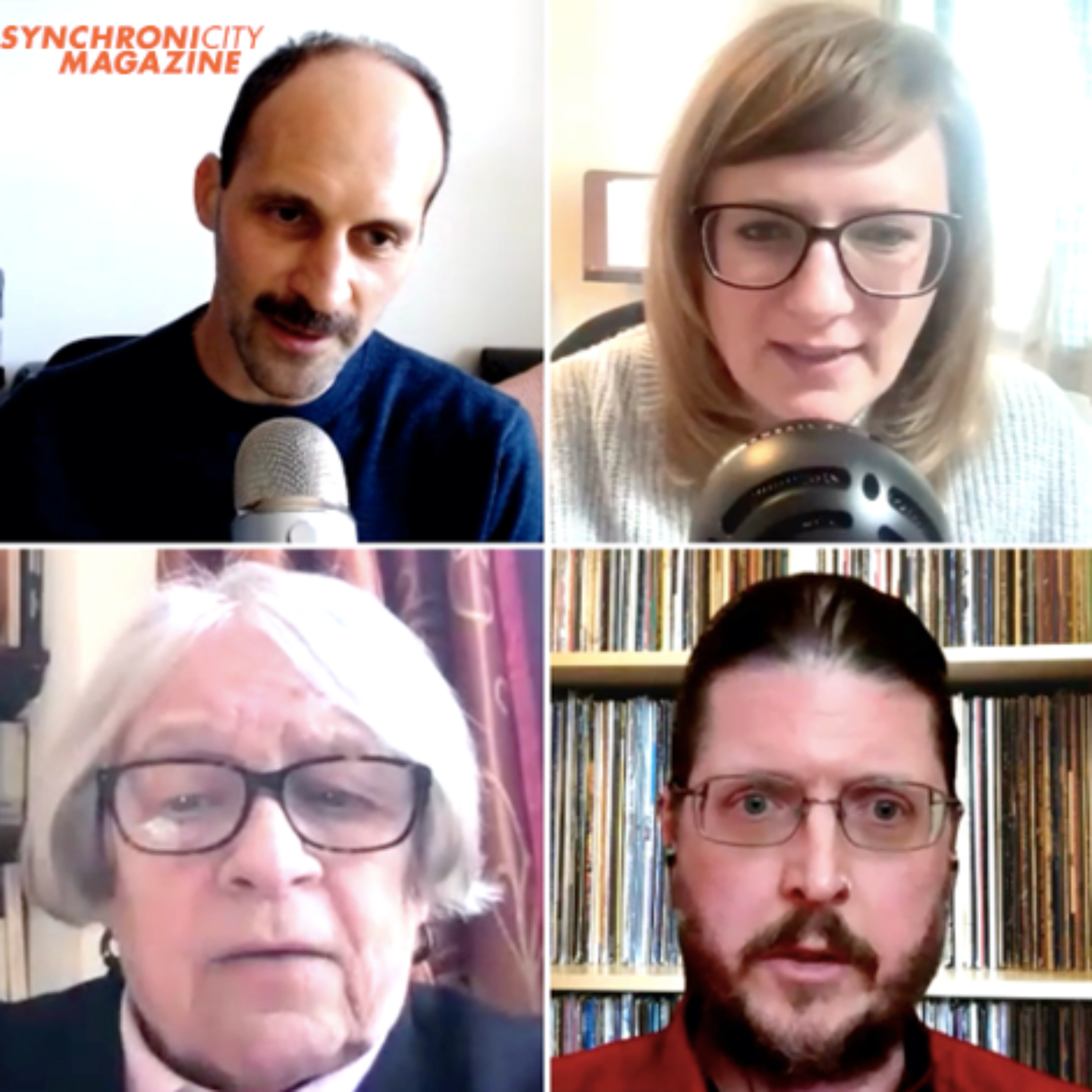
Synchronicity Magazine - New(s) Frontiers Podcast
Podcast Description
Synchronicity Magazine is an independent socio-political magazine dedicated to upholding the highest standards of journalism.
In our first podcast we will be taking a look at the UK government’s crackdown on the pro-Palestine movement. From Draconian anti-terror laws targeting journalists and activists to increasingly restrictive measures being taken to block the mass protests organised against Israel’s continuing assault on the people of Gaza.
You can find us on buymeacoffee.com/synchronicitymagazine where your contributions go directly into producing impactful, quality journalism.
Podcast Insights
Content Themes
The podcast addresses socio-political themes, specifically focusing on government actions impacting free speech and protest rights, with the inaugural episode analyzing the UK government's crackdown on the pro-Palestine movement. Topics include the implications of anti-terror laws on journalism, the dynamics of protest organization, and historical context related to Palestine.
Synchronicity Magazine is an independent socio-political magazine dedicated to upholding the highest standards of journalism.
In our first podcast we will be taking a look at the UK government’s crackdown on the pro-Palestine movement. From Draconian anti-terror laws targeting journalists and activists to increasingly restrictive measures being taken to block the mass protests organised against Israel’s continuing assault on the people of Gaza.
You can find us on buymeacoffee.com/synchronicitymagazine where your contributions go directly into producing impactful, quality journalism.
Hello and welcome to the third episode of NEW(S) FRONTIERS.
This podcast is brought to you by Synchronicity Magazine: https://synchronicitymagazine.com/ an independent socio-political magazine dedicated to upholding the highest standards of journalism.
I am Mark A. Silberstein, Editor of Synchronicity Magazine.
Today we’ll be looking at what transitional justice in Israel might look like post conflict. Both the International Court of Justice (ICJ) and the International Criminal Court (ICC) have current proceedings related to the Israeli-Palestinian conflict.
The ICJ case was brought by South Africa against the state of Israel in 2023. It focused on the question of whether Israel is in breach of the Genocide Convention following its attacks against the Palestinian population in Gaza. It also highlights the historical context of the founding of the state of Israel and the Nakba that followed. The application states that there is ”evidence of increasing genocidal incitement, overt intent to “destroy the Palestinian people under occupation”, loud calls for a ‘second Nakba’ in Gaza and the rest of the occupied Palestinian territory”.
The ICC issued arrest warrants in 2024 on the grounds of crimes against humanity and the war crime of starvation for Israeli Prime Minister Benjamin Netanyahu and, the then, Defense Minister Yoav Gallant. At the same time, the court issued arrest warrants for Hamas leaders who orchestrated the October 7th attacks against Israel on the grounds of war crimes and crimes against humanity.
Last year, 28 countries including the UK and numerous European nations issued a call for the end of the war in Gaza by Israel.
Recent developments saw the Gaza peace plan announced by Donald Trump in September. However, this has not stopped the bombardment of Gaza by Israel and the indiscriminate killing of civilians and blocking of food and fuel from entering the strip.
Yet this recognition of an end to hostilities and the recent UN Human Rights Council delegation visit to the EU headquarters, presenting a two-state solution for Palestine and Israel, with talks of “peace”, “engagement” and bringing “this conflict to an end” are hopeful developments in a process that could eventually lead to a long-lasting peace.That is why it is important to talk about the process of transitional justice now.
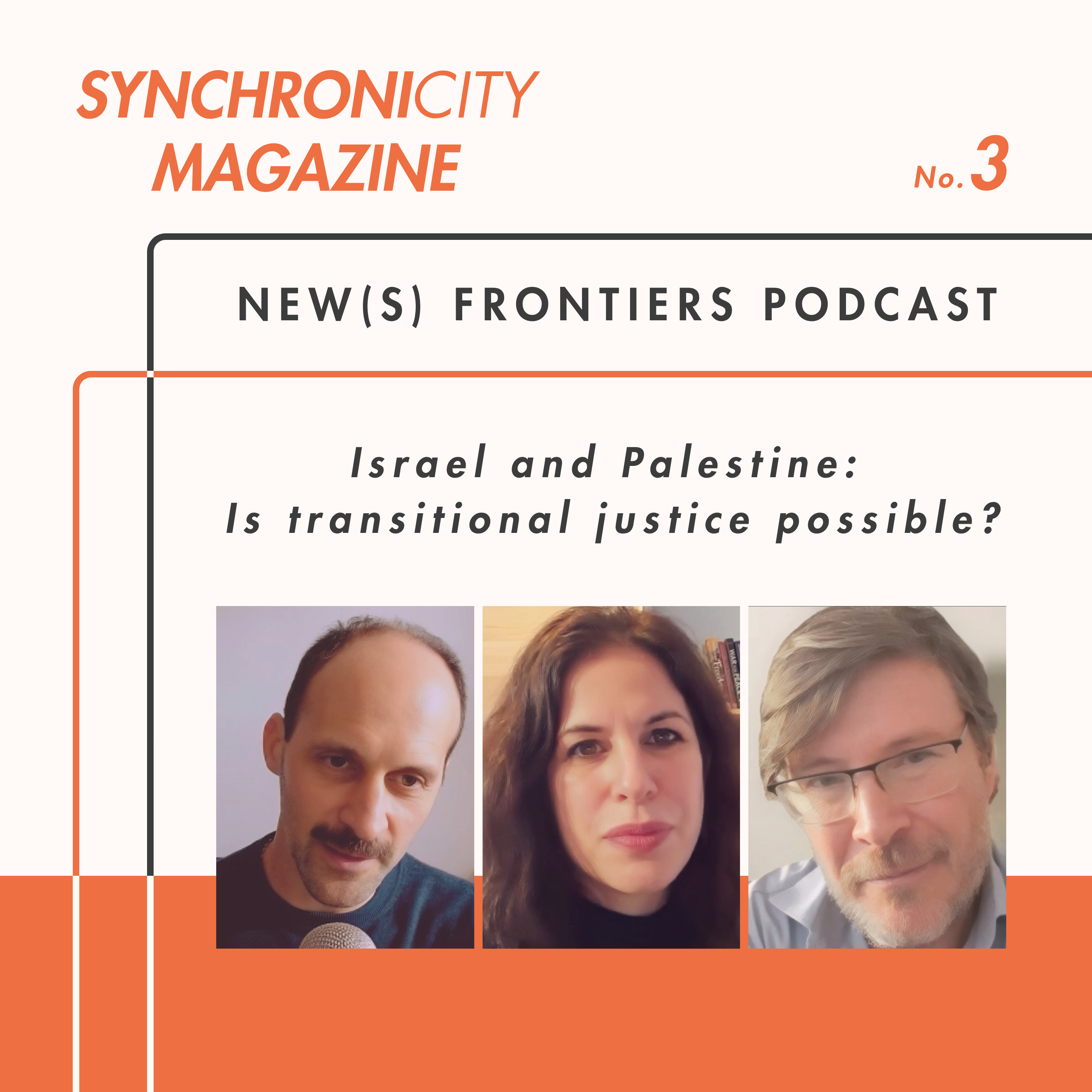
We invited two experts together in a panel discussion to examine how a future Israel might deal with these crimes.
Joining us is Phil Clark a Professor of International Politics at SOAS University of London. He specialises in conflict and post-conflict issues, including transitional justice, peace building and reconciliation after mass atrocities in Rwanda, Uganda, the Democratic Republic of Congo and Burundi.
Also joining us is Hagar Kotef a Professor of Political Theory in the department of Politics and International Studies, also at SOAS. She currently works on an ESRC-funded project on torture and bureaucracy in Israel and Palestine, in collaboration with the Public Committee against Torture in Israel.
I have taken a special interest in the concept of transitional justice as Professor Clark was a lecturer of mine when I studied my MSc in International Politics at SOAS with a fascinating module entitled Violence Justice and the Politics of Memory (VJPM).
Especially as Jewish person and a South African who was around during apartheid and the Truth and Reconciliation Commission (TRC) and with a family who were fighting against the apartheid regime.
If you found this podcast interesting, you can buy us a coffee. Contributions go directly into producing impactful, quality journalism. Together, we can make a real difference, one story at a time.
Please continue to join us as we explore more NEW(S) FRONTIERS.
PRESENTER: Mark A. Silberstein
PRODUCTION: Mark A. Silberstein and Enter HUMAN
GRAPHICS & MUSIC: Enter HUMAN
Released on 26 July 2026
Disclaimer
This podcast’s information is provided for general reference and was obtained from publicly accessible sources. The Podcast Collaborative neither produces nor verifies the content, accuracy, or suitability of this podcast. Views and opinions belong solely to the podcast creators and guests.
For a complete disclaimer, please see our Full Disclaimer on the archive page. The Podcast Collaborative bears no responsibility for the podcast’s themes, language, or overall content. Listener discretion is advised. Read our Terms of Use and Privacy Policy for more details.