Perspectives

Perspectives
Podcast Description
We believe that when people share their experiences—across generations, cultures, and backgrounds—they offer insights that strengthen the communities we live in. Conversations that begin locally can be enriched by broader voices, bringing fresh context, challenges, and inspiration that help us grow together.
Each episode also includes input from our tween contributors, whose questions and reflections often open up new ways of thinking. Their questions add richness to the conversation and create opportunities for learning and connection across all ages.
This podcast isn’t just a platform—it’s part of how we imagine better communities: by listening more closely, learning from each other, and creating new ways to reconnect with what matters, right where we are.
Keep Informing those Perspectives!
theinformedperspective.substack.com
Podcast Insights
Content Themes
The podcast covers a range of topics including urban planning, body image, patient advocacy, self-discovery, loss, and community engagement. Episodes feature discussions like the impact of urban design on inclusivity, the complexities of body image and mental health, and practical advice for patient advocacy within the healthcare system.
In today’s fast-moving world, it’s easy to feel disconnected, from our communities, from other generations, and even from ourselves. The Informed Perspective exists to pause that rush, to listen more carefully, and to create space for meaningful reflection and dialogue.
We believe that when people share their experiences—across generations, cultures, and backgrounds—they offer insights that strengthen the communities we live in. Conversations that begin locally can be enriched by broader voices, bringing fresh context, challenges, and inspiration that help us grow together.
Each episode of our podcast also includes input from tween contributors, whose questions and reflections often open up new ways of thinking. Their contributions add richness to the conversation and create opportunities for learning and connection across all ages.
This platform is about imagining better communities: by listening more closely, learning from each other, and finding new ways to reconnect with what matters, right where we are.
Keep informing those perspectives.
What is play, really?
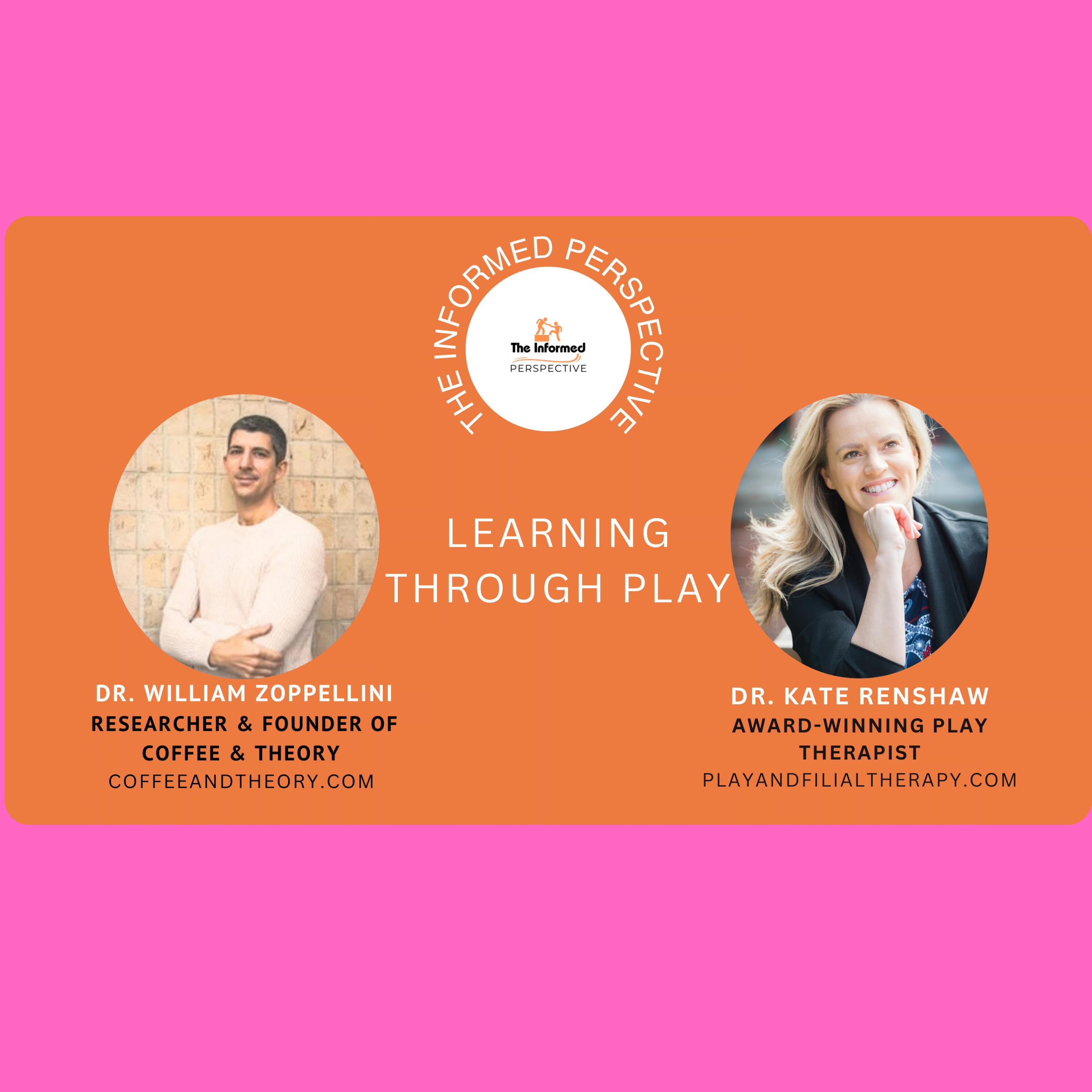
If you ask most people, they’ll picture a child on a playground, building blocks, or kicking a ball. But in our latest Learning Through Play podcast episode, we sat down with play therapist Dr. Kate Renshaw and researcher Dr. Will Zoppollini to challenge that narrow definition.
Play isn’t just an activity. It’s a mindset.
Right now, we are living through a global play deficit, and it’s showing up everywhere, from our rigid school systems to our adult lives. We’ve become obsessed with standardising education, over-scheduling kids, and funneling everything through screens.
As artificial intelligence begins to automate the analytical and repetitive parts of our world, a profound shift is happening. Humanness, real-world contact, and raw joy are becoming our most vital human assets. If AI can write the essay, crunch the data, and generate the code, what makes us human? Our capacity for curiosity, emotional connection, and imaginative play.
Here are a few mindset shifts we explored in this episode that we can all start adopting today:
* Redefining Playfulness: Play doesn’t require a toy or a scheduled block of time. It’s an attitude of flexibility, curiosity, and approachability. It’s about how we look at the world.
* Flexibility in Assessment: If learning is a natural process of adaptation, why are we still measuring it with one-dimensional, sit-down testing? We need assessment models that value how young people solve problems creatively and collaboratively.
* Micro-Minutes of Joy: You don’t need hours of free time to inject play into your day. We can weave “micro-moments” of playfulness, humour, and connection into the margins of our routines, whether we’re 6 or 60 years old.
* Navigating the Tech Wave: Devices aren’t going anywhere. But instead of letting screens dominate our attention, the real challenge is intentionally designing our days to foster deeper, face-to-face interactions and human connection.
We are starving for connection in a hyper-connected world. The antidote isn’t doing more—it’s learning how to play again.
Get full access to The Informed Perspective at theinformedperspective.substack.com/subscribe
Disclaimer
This podcast’s information is provided for general reference and was obtained from publicly accessible sources. The Podcast Collaborative neither produces nor verifies the content, accuracy, or suitability of this podcast. Views and opinions belong solely to the podcast creators and guests.
For a complete disclaimer, please see our Full Disclaimer on the archive page. The Podcast Collaborative bears no responsibility for the podcast’s themes, language, or overall content. Listener discretion is advised. Read our Terms of Use and Privacy Policy for more details.