Pain Points with Max Shen
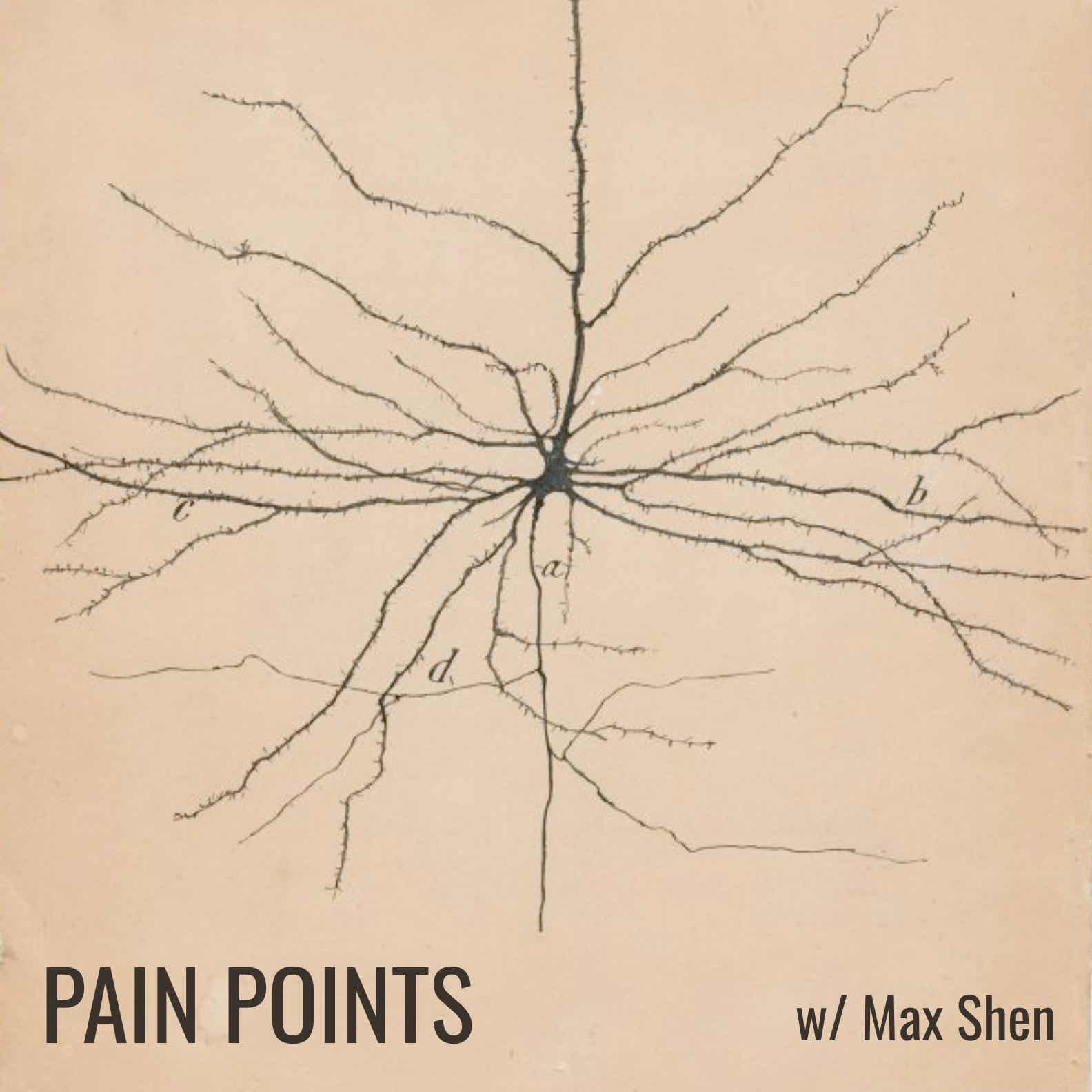
Pain Points with Max Shen
Podcast Description
Are you a brain in a body, or a body with a brain? What does the nervous system have to do with chronic pain? How do we 'debug' pain?
Join Max as he explores the relationship between pain and insight. Featuring scientists, pioneers in somatic therapy, and those who have recovered from chronic pain.
Max Shen is a pain researcher affiliated with MIT. He is also the creator of Debug Your Pain, a platform to teach skills in pain resolution.
A production of Debug Your Pain. Read our latest at essays.debugyourpain.com
essays.debugyourpain.com
Podcast Insights
Content Themes
The podcast explores a variety of topics surrounding pain science, somatic therapy, and personal recovery stories. Notable episodes cover themes such as the relationship between pain and cognition, the constraints-led approach in movement coaching, and discussions on biological computation as it relates to health. Specific episode examples include interviews discussing the fallacies of traditional training models in sports and the role of intention in movement.
Are you a brain in a body, or a body with a brain? What does the nervous system have to do with chronic pain? How do we ‘debug’ pain?
Join Max as he explores the relationship between pain and insight. Featuring scientists, pioneers in somatic therapy, and those who have recovered from chronic pain.
Max Shen is a pain researcher affiliated with MIT. He is also the creator of Debug Your Pain, a platform to teach skills in pain resolution.
A production of Debug Your Pain. Read our latest at essays.debugyourpain.com
Summary
Dr. Jessica Vellela is the first American-born woman to become an Ayurvedic Physician and practice independently in India. Prior to her nearly eight years of Ayurveda study she had an early career as a self-taught Data Architect. She founded Āyu Academy and now runs myĀyu, a one-on-one personalized Ayurvedic health program. In this conversation we cover the cosmology and metaphysics underlying Ayurveda, the tridosha system, pain as the cardinal symptom of vata, worked examples of the Ayurvedic diagnostic process, difficulties in assessment and communication, and why you shouldn’t eat fruit and milk together.
Timestamps
0:00:00 – Intro
0:01:05 – What is Ayurveda?
0:04:20 – Atma, rebirth, karma
0:07:00 – The 60/30/10 model: body/mind/soul
0:10:30 – A case study: digestive problems
0:14:30 – Mind and body in Ayurveda
0:17:55 – The ontology of pain in Ayurveda
0:20:10 – Endogenous and exogenous disease
0:24:40 – Dosha combinations and classifying pain
0:28:10 – Diagnosing chronic pain example
0:32:20 – How are some physical ailments solved mentally
0:34:40 – Overdetermined physical explanations
0:38:41 – Dizziness, nausea, tinnitus, and the doshas
0:41:35 – LLM decision-tree triage
0:47:10 – Measuring pain
0:53:10 – MyĀyu and making Ayurveda accessible
Links
This is a public episode. If you would like to discuss this with other subscribers or get access to bonus episodes, visit essays.debugyourpain.com
Disclaimer
This podcast’s information is provided for general reference and was obtained from publicly accessible sources. The Podcast Collaborative neither produces nor verifies the content, accuracy, or suitability of this podcast. Views and opinions belong solely to the podcast creators and guests.
For a complete disclaimer, please see our Full Disclaimer on the archive page. The Podcast Collaborative bears no responsibility for the podcast’s themes, language, or overall content. Listener discretion is advised. Read our Terms of Use and Privacy Policy for more details.