Fusion Forward

Fusion Forward
Podcast Description
Fusion Forward is a podcast hosted by Alex Borovskis of Helixos (helixos.co) that dives into the future of fusion energy through engaging and insightful conversations with the people shaping the field.
Each episode features an interview with a guest - whether a scientist, engineer, policymaker, investor, or thought leader - exploring their journey into fusion and unpacking key ideas across science, technology, economics, and politics.
Podcast Insights
Content Themes
The podcast delves into various themes including advancements in fusion technology, policy implications, and economic factors influencing the fusion landscape. Episodes cover subjects like the role of Oak Ridge National Laboratory in fusion research and breakthrough innovations such as the Materials Plasma Exposure eXperiment, aiming to provide insights into the complex interplay of science, technology, and societal impact.
Fusion Forward is a podcast hosted by Alex Borovskis of Helixos (helixos.co) that dives into the future of fusion energy through engaging and insightful conversations with the people shaping the field.
Each episode features an interview with a guest – whether a scientist, engineer, policymaker, investor, or thought leader – exploring their journey into fusion and unpacking key ideas across science, technology, economics, and politics.
Korea went from one of the poorest countries in the world, with GDP per capita under $100 in 1960, to a nation that builds the world's ships, chips, and nuclear reactors. Now it's positioning itself to do the same for fusion.
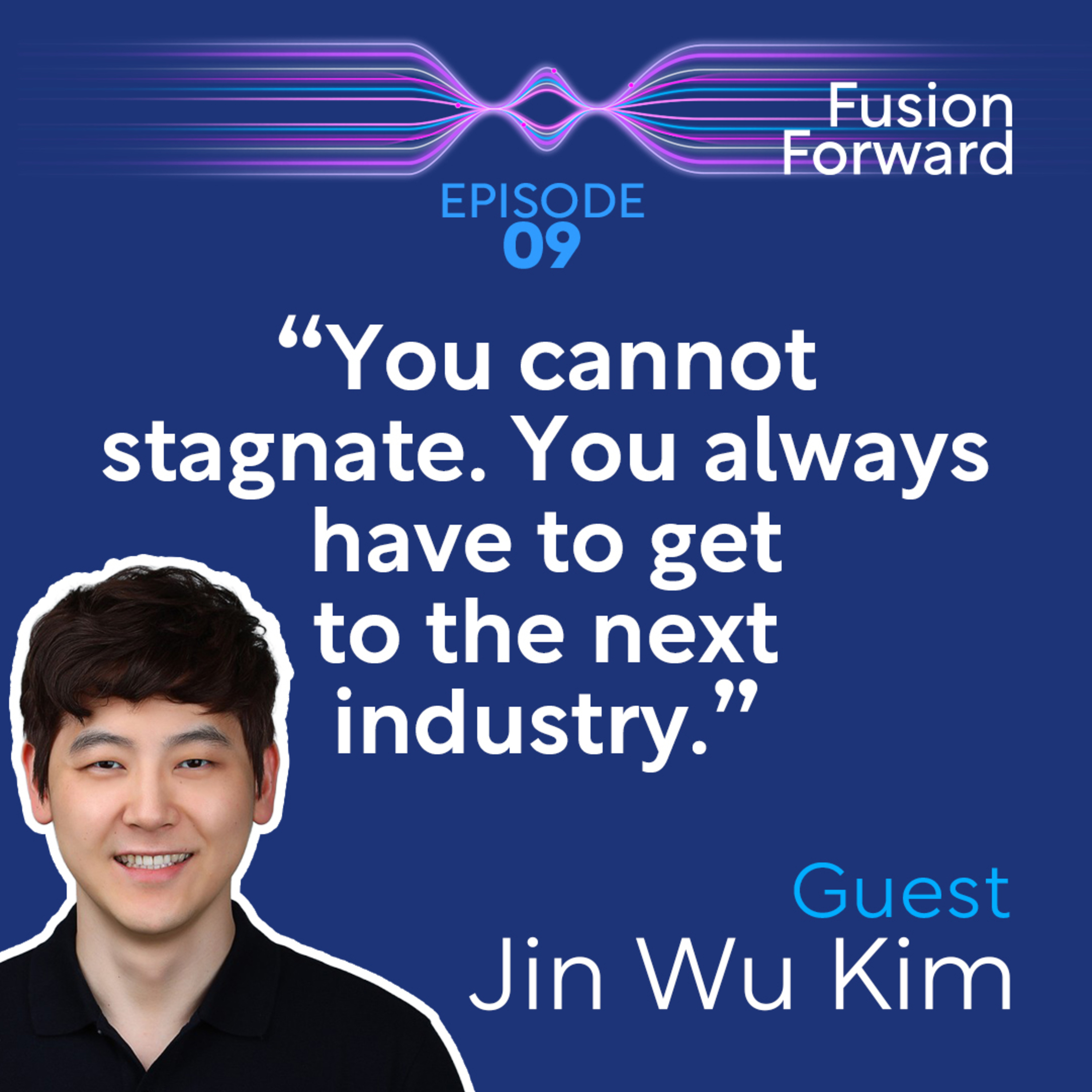
In this episode of Fusion Forward, we sit down with Jin Wu Kim of Enable Fusion, Korea's flagship fusion supply chain startup, to trace how Korea's unique industrial model, built on state-directed conglomerates, or chaebols, like Samsung, SK, Hyundai, and LG, is now being applied to one of the hardest engineering problems in the world.
We cover:
Korea's industrial origin story: colonization, the Korean War, and a 50-year transformation into one of the world's most advanced economies
The chaebol model, how top-down government coordination and a handful of family-run conglomerates built Korea's shipbuilding, semiconductor, and nuclear fission industries
The founding of K-STAR in 1995, first plasma in 2008, and 17+ years of continuous operation that's built a 200-250 company deep fusion supply chain inside Korea
What Korea's shipbuilding, semiconductor, and nuclear fission expertise directly transfers to fusion components, and what doesn't
The geopolitical tension between global collaboration (the semiconductor model) and supply chain protectionism, and what that means for a resource-poor country like Korea
Why energy independence is, in Jin Wu's view, the single biggest determinant of Korea's next decade
Whether you're tracking the global fusion supply chain, curious about industrial policy, or want to understand why a country of 50 million people is becoming indispensable to commercial fusion, this conversation connects Korea's 70-year industrial story directly to what it will take to build the first fusion power plants.
About the Guest
Jin Wu Kim is the Chief Financial Officer and Chief Commercial Officer at Enable Fusion, Korea's flagship fusion supply chain startup, which focuses on precision manufacturing and component delivery for fusion reactor developers rather than reactor design itself. Enable Fusion was co-founded by Dr. GS Lee, a foundational figure in Korean fusion who helped launch the country's fusion program in 1995 and has been closely involved with K-STAR and ITER ever since.
Disclaimer
This podcast’s information is provided for general reference and was obtained from publicly accessible sources. The Podcast Collaborative neither produces nor verifies the content, accuracy, or suitability of this podcast. Views and opinions belong solely to the podcast creators and guests.
For a complete disclaimer, please see our Full Disclaimer on the archive page. The Podcast Collaborative bears no responsibility for the podcast’s themes, language, or overall content. Listener discretion is advised. Read our Terms of Use and Privacy Policy for more details.