The Fraud Complex
The Fraud Complex
Podcast Description
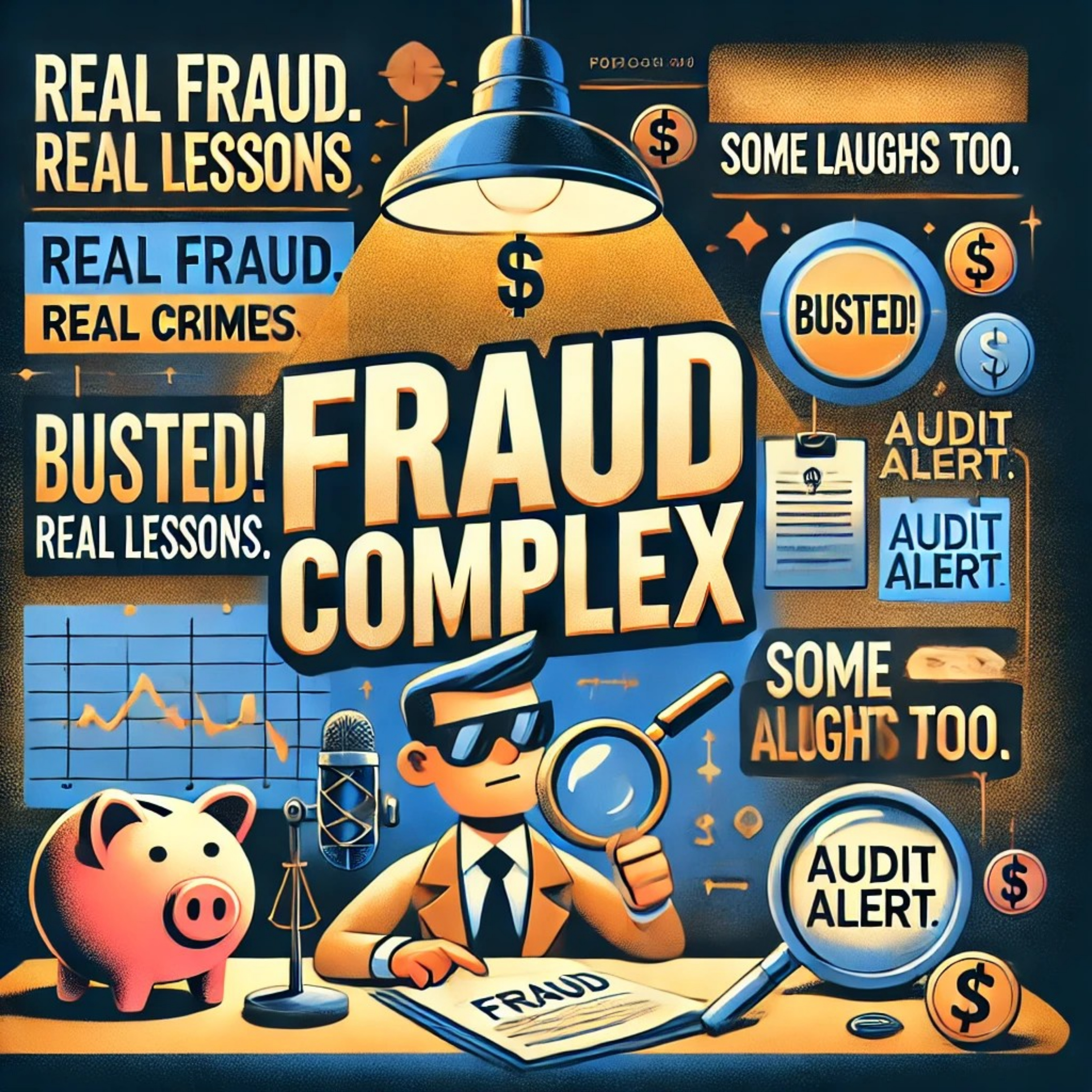
Every week on The Fraud Complex, we pull back the curtain on the world's most audacious real-life fraud cases and shocking betrayals. Why do we fall for it? And what's left when the facade falls away? Join CPA Garth Sheriff alongside comedian Josh Sager for sharp, unfiltered perspectives that expose the schemes and the masterminds. If you're fascinated by how deception really happens and want to protect yourself from becoming prey, you've found your show.
Podcast Insights
Content Themes
The podcast covers themes such as real-life fraud, deception psychology, and corporate security best practices, with episodes examining cases like the Great Gold Heist at Toronto Pearson Airport and lessons learned for CPAs to enhance their professional skepticism. The show tackles the intricacies of fraud schemes and discusses preventative measures while infusing humor into discussions around serious topics.
Every week on The Fraud Complex, we pull back the curtain on the world’s most audacious real-life fraud cases and shocking betrayals. Why do we fall for it? And what’s left when the facade falls away? Join CPA Garth Sheriff alongside comedian Josh Sager for sharp, unfiltered perspectives that expose the schemes and the masterminds. If you’re fascinated by how deception really happens and want to protect yourself from becoming prey, you’ve found your show.
What happens when the student applying for financial aid doesn’t actually exist?
In this episode of The Fraud Complex, Garth and Josh dive into the growing problem of “ghost students” – fake or stolen identities used to enroll in colleges and fraudulently collect financial aid.
What was once a more manual form of student aid fraud is becoming increasingly scalable with artificial intelligence. Fraudsters can use stolen personal information, automated applications, AI-generated coursework, and even digital personas to make fake students appear real.
Garth and Josh explore how these schemes work, why community colleges and online programs can be particularly vulnerable, and how real people can become victims when their identities are used to obtain financial aid they never applied for.
They also discuss the staggering scale of the problem, including reports of more than 1.2 million fraudulent applications and approximately 223,000 suspected fake enrollments at California community colleges in 2024, as well as the steps government agencies, financial institutions, and colleges are taking to fight back.
And because this is The Fraud Complex, the conversation naturally turns into ghost movies, AI students developing a love of learning, Patrick Swayze, and a possible sequel nobody asked for.
In this episode:
• What is a “ghost student”?
• Ghost students vs. straw students
• How stolen identities are used to obtain student aid
• How AI is making enrollment fraud easier to scale
• The impact on legitimate students and identity theft victims
• Why online education creates new verification challenges
• How colleges, banks, FinCEN, and the Department of Education are responding
• The “No Aid for Ghost Students Act”
Learn more about the story:
Associated Press – How scammers are using AI to steal college financial aid
Read the AP investigation
FinCEN – Alert on Fraud Schemes Targeting Federal Student Aid
Read the FinCEN alert
U.S. Department of Education – Nationwide Federal Student Aid Fraud Prevention Effort
Read the Department of Education update
Federal Student Aid – Real-Time FAFSA Fraud Detection
Read the Federal Student Aid guidance
U.S. Department of Education – No Aid for Ghost Students Act
Read about the No Aid for Ghost Students Act
The Fraud Complex unpacks wild fraud and true-crime stories, exploring not just what happened, but how people rationalize the decisions that lead them there.
Subscribe and follow for more episodes of The Fraud Complex.
Disclaimer
This podcast’s information is provided for general reference and was obtained from publicly accessible sources. The Podcast Collaborative neither produces nor verifies the content, accuracy, or suitability of this podcast. Views and opinions belong solely to the podcast creators and guests.
For a complete disclaimer, please see our Full Disclaimer on the archive page. The Podcast Collaborative bears no responsibility for the podcast’s themes, language, or overall content. Listener discretion is advised. Read our Terms of Use and Privacy Policy for more details.