Computing Education Things
Computing Education Things
Podcast Description
A podcast about the world of learning and teaching computer science by Daniel Prol
Podcast Insights
Content Themes
The podcast covers a range of topics related to teaching and learning computer science, focusing on areas such as code reading skills, visualization tools, and graphic programming. Specific episodes include discussions on evaluating code readability, the role of visualization in education, and engaging students through graphics in programming.
A podcast about the world of computing education
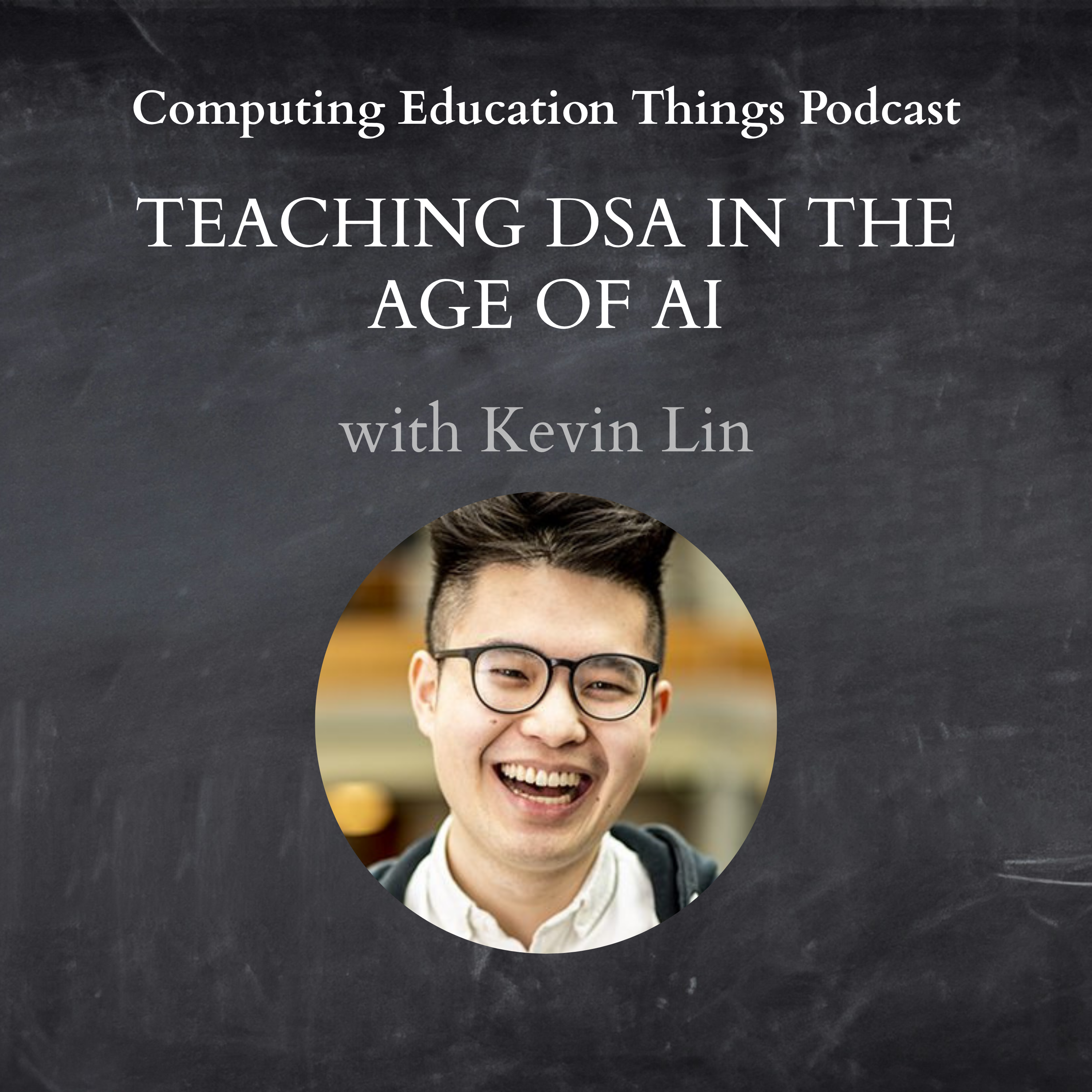
In this episode, Kevin Lin (UW) and I take a broader look at the relevance of data structures and algorithms in today’s real-world problems, the role of friction in learning, and the impact of AI at different levels. We also explore online versus in-person teaching in the context of DSA, address common misconceptions, and discuss Kevin’s approach to teaching the subject. Finally, we touch on how he is reimagining computing education. This was a blast, enjoy!
Mentions during the episode:
- CSE 373 Spring 2026
- Visual Data Structures Cheat-Sheet
- BRIDGES
- Josh Hug
- CS 61B Spring 2026
- AlgoMasterIO
- CS 1332 Data Structures & Algorithms Visualization Tool
- LeetCode
- GeeksforGeeks
- COMPSCI 201 – Duke
- Owen Astrachan
- Mark Liffiton
- Artturi Tilanterä dissertation
- The Computer Always Wins
- Reimagining CS Education
The Computing Education Things deep dives relevant to this episode:
- #35 — In Defense of Software Craftsmanship
- #36 — Delegating Understanding
- #39 — Is a Computing Degree Still Valuable?
Where to find Kevin:
Disclaimer
This podcast’s information is provided for general reference and was obtained from publicly accessible sources. The Podcast Collaborative neither produces nor verifies the content, accuracy, or suitability of this podcast. Views and opinions belong solely to the podcast creators and guests.
For a complete disclaimer, please see our Full Disclaimer on the archive page. The Podcast Collaborative bears no responsibility for the podcast’s themes, language, or overall content. Listener discretion is advised. Read our Terms of Use and Privacy Policy for more details.