The Write In: Grad Student Narratives
The Write In: Grad Student Narratives
Podcast Description
Welcome to The Write In: Grad Student Narratives, a podcast featuring the stories of Yale PhD students who take us on their journey and offer strategies for writing—and being—in graduate school. I am your host, Dr. Julia Istomina, and I get to work (and chat) with Yale grad students in my role as the Associate Director of the Graduate Writing Lab at The Poorvu Center. Each episode features a specific theme or question based on the conversation and story of our guest. Guests include Grad Writing Lab Fellows who are either in the later stages of their PhD Program or have just earned their degree. The scope of each conversation steers toward reflecting on their overall time spent at Yale while focusing a lens on the ways they managed a particular challenge or opportunity in their process.
Podcast Insights
Content Themes
The podcast focuses on themes such as personal growth in graduate school, navigating challenges, and building a writing process. Episodes delve into topics like finding value in academic-adjacent roles, leveraging interdisciplinary skills in environmental studies, and designing writing practices that promote student wellness, with examples including Dana Hayward's pivot in her dissertation project and Chihiro Larissa's holistic approach to writing.
Welcome to The Write In: Grad Student Narratives, a podcast featuring the stories of Yale PhD students who take us on their journey and offer strategies for writing—and being—in graduate school. I am your host, Dr. Julia Istomina, and I get to work (and chat) with Yale grad students in my role as the Associate Director of the Graduate Writing Lab at The Poorvu Center. Each episode features a specific theme or question based on the conversation and story of our guest. Guests include Grad Writing Lab Fellows who are either in the later stages of their PhD Program or have just earned their degree. The scope of each conversation steers toward reflecting on their overall time spent at Yale while focusing a lens on the ways they managed a particular challenge or opportunity in their process.
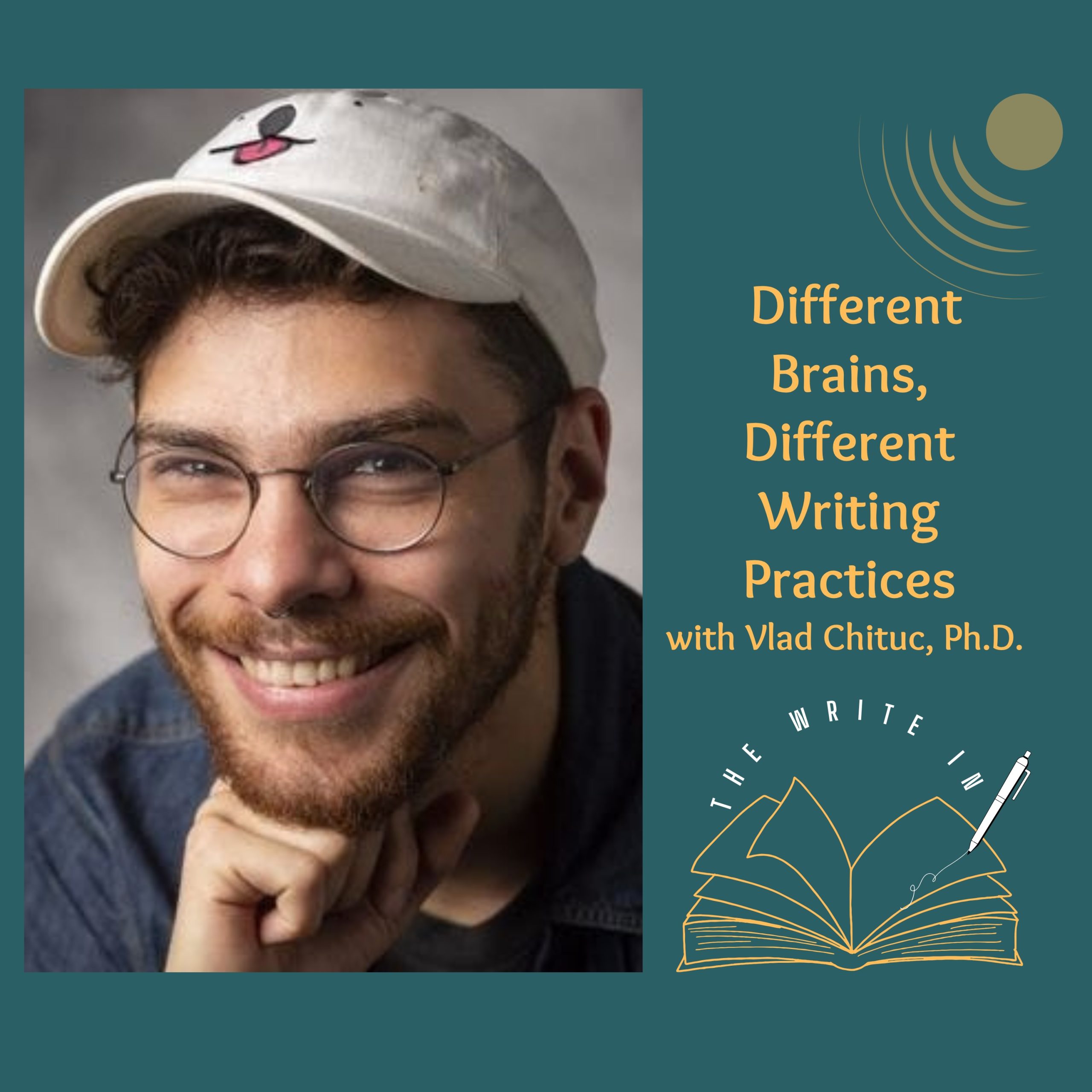
Vlad Chituc shares strategies for navigating academic writing norms for neurodivergent grad students
This is the second part of a special 2-part episode of The Write In, featuring Dr. Vlad Chituc. Vlad doesn’t shy away from brain topics, and why would he? As a psychologist and recently minted PhD, Vlad thinks deeply about human cognition and behavior. But, also, Vlad reflects deeply on his experience as a neurodivergent graduate student and how he learned to work with his brain, not castigate himself, to get good research writing done. We talk about how academic writing culture can sometimes be too narrow in terms of upholding certain ways of writing and meeting deadlines that can impact the kinds of brains—and ideas—that propel both innovation and rigor. Reclaiming agency in the form of radical self-acceptance, and working out a writing process that works for Vlad, can be a model for anyone who isn’t a “15-minutes a day” kind of writer.
Bio:
Vlad Chituc is a postdoctoral researcher at Stanford University, where he works with Michael Frank and Ben Domingue as part of the LEVANTE project. Psychologists often ask people to rate their subjective experience — on a scale from one to ten, how happy are you? how wrong would that be? how strongly are you feeling that emotion? His research draws from sensory psychophysics and information theory to understand what those numbers actually mean. Vlad completed his PhD at Yale University, and his dissertation was advised by Brian Scholl. This work was awarded the Glushko Dissertation Prize from the Cognitive Science Society. [Dissertation] [Glushko Prize Talk @ CogSci 2025]. Vlad has written publicly for outlets like The New York Times, The New Republic, and The Daily Beast. Explore his website here: https://vladchituc.com/
Disclaimer
This podcast’s information is provided for general reference and was obtained from publicly accessible sources. The Podcast Collaborative neither produces nor verifies the content, accuracy, or suitability of this podcast. Views and opinions belong solely to the podcast creators and guests.
For a complete disclaimer, please see our Full Disclaimer on the archive page. The Podcast Collaborative bears no responsibility for the podcast’s themes, language, or overall content. Listener discretion is advised. Read our Terms of Use and Privacy Policy for more details.