Innotainment Podcast
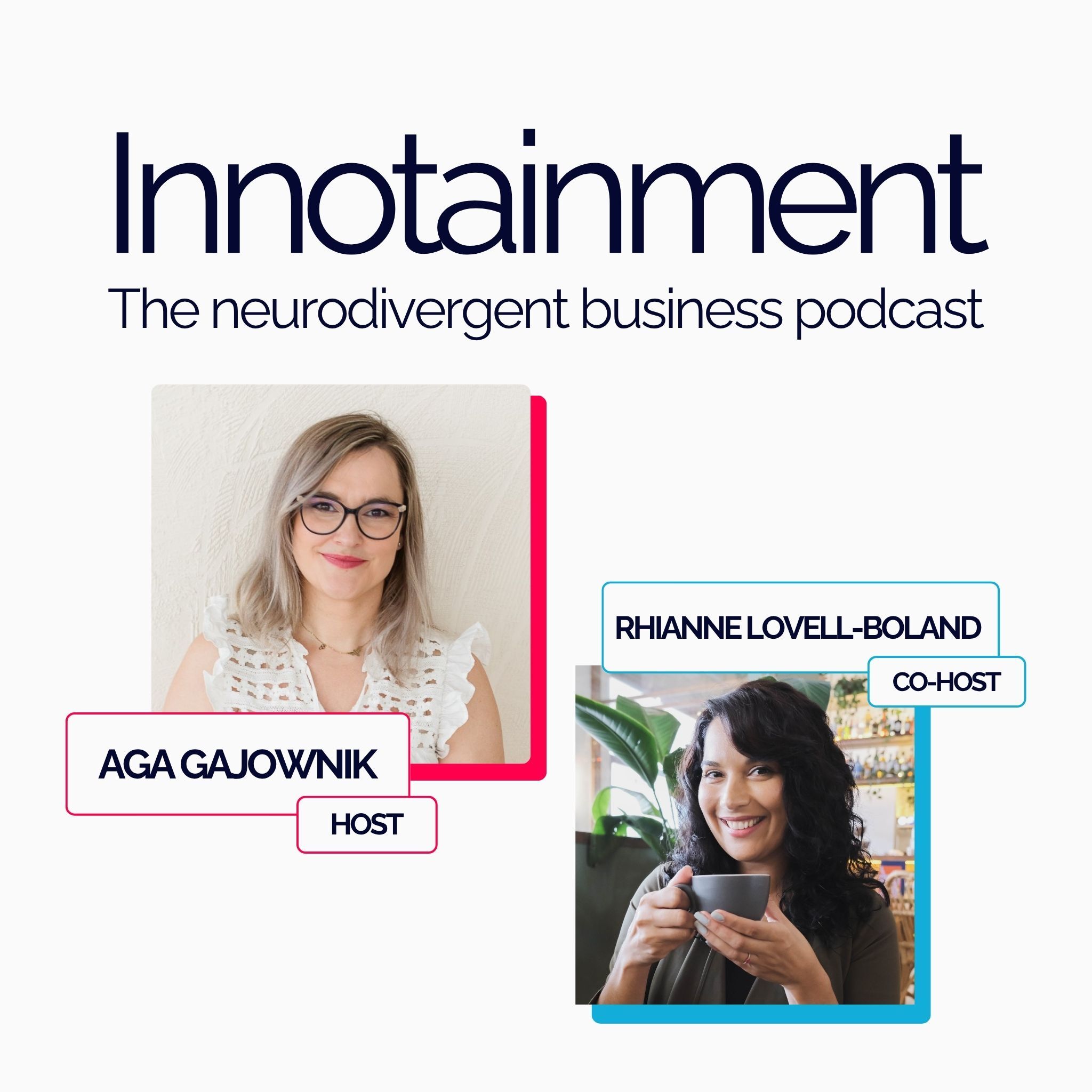
Innotainment Podcast
Podcast Description
A business podcast for brilliant-but-overthinking founders. Join systems strategist Aga Gajownik (Innovation & Integration) and podcast strategist Rhianne Lovell-Boland (More Talk Media) as they unpack the Business Model Canvas with ADHD-friendly strategies, honest conversations and systems that work with your brain, not against it!
Podcast Insights
Content Themes
The podcast centers around themes of business modeling, customer segmentation, and effective value propositions. Episodes cover practical topics such as identifying ideal clients through experimentation and crafting human-centered value propositions that resonate. For instance, Episode 2 explores Customer Segments, focusing on the importance of defining who you serve to avoid burnout.

Brain Friendly Systems with Aga Gajownik is a weekly podcast for late-diagnosed neurodivergent professionals and leaders who are done with advice that doesn’t fit how their brain works. Hosted by Aga Gajownik, AuDHD practitioner, systems strategist, and founder of Innovation and Integration. Each episode covers the neuroscience, operational systems, and identity work that actually moves things forward. Published on Tuesdays. Based in Singapore. Working with professionals internationally.
Aga Gajownik breaks down why it’s important to understand your nervous system before any system, habit, or plan will actually hold. She walks through a public meltdown at a conference, what interoception and masking actually do to your ability to catch a crisis early, and why fear and excitement can feel identical in your body.
In this episode
- [00:54] What happened at Asia Tech Summit, and why knowing the tools didn’t help in the moment
- [01:52] Interoception, masking, and why two systems can both be quietly wearing you down
- [04:00] Mistaking panic for ambition, and how to tell the difference
- [06:30] Why fear and excitement feel the same in your body, and where the actual leverage is
- [09:00] On research, polyvagal theory, and why she doesn’t wait for consensus before paying attention to her own patterns
- [11:45] What she’s actually proud of now, and why none of it is dramatic
Mentioned in this episode
Connect
LinkedIn Aga Gajownik

Disclaimer
This podcast’s information is provided for general reference and was obtained from publicly accessible sources. The Podcast Collaborative neither produces nor verifies the content, accuracy, or suitability of this podcast. Views and opinions belong solely to the podcast creators and guests.
For a complete disclaimer, please see our Full Disclaimer on the archive page. The Podcast Collaborative bears no responsibility for the podcast’s themes, language, or overall content. Listener discretion is advised. Read our Terms of Use and Privacy Policy for more details.