The Self Careapist Therapist Podcast

The Self Careapist Therapist Podcast
Podcast Description
Are you curious about what happens behind closed doors in therapy sessions? The Self Care*apist podcast pulls back the curtain on the therapeutic process, offering valuable insights for both mental health professionals and anyone interested in the human condition. Each episode features in-depth interviews with expert therapists who share their specialized approaches, techniques, and wisdom gained from years of clinical practice.The Self Care*apist podcast serves as a unique professional development resource for therapy interns and clinicians at all experience levels while also providing powerful healing insights for listeners navigating their own mental health journeys. By exploring the nuanced work of EMDR consultants, trauma specialists, and perinatal mental health experts, this podcast creates a rare opportunity to witness therapeutic approaches that are typically hidden from view. Hosted at lorainmoorehead.com
Podcast Insights
Content Themes
The podcast focuses on various mental health topics, including Dialectical Behavior Therapy (DBT), trauma-informed care, and innovative therapeutic approaches. For instance, episodes feature in-depth discussions with experts like Dr. Kiki Fehling on DBT's relevance for LGBTQIA+ communities, as well as insights into Traumaplay therapy with Paris Goodyear-Brown, showcasing how therapeutic relationships can foster healing for children and caregivers.
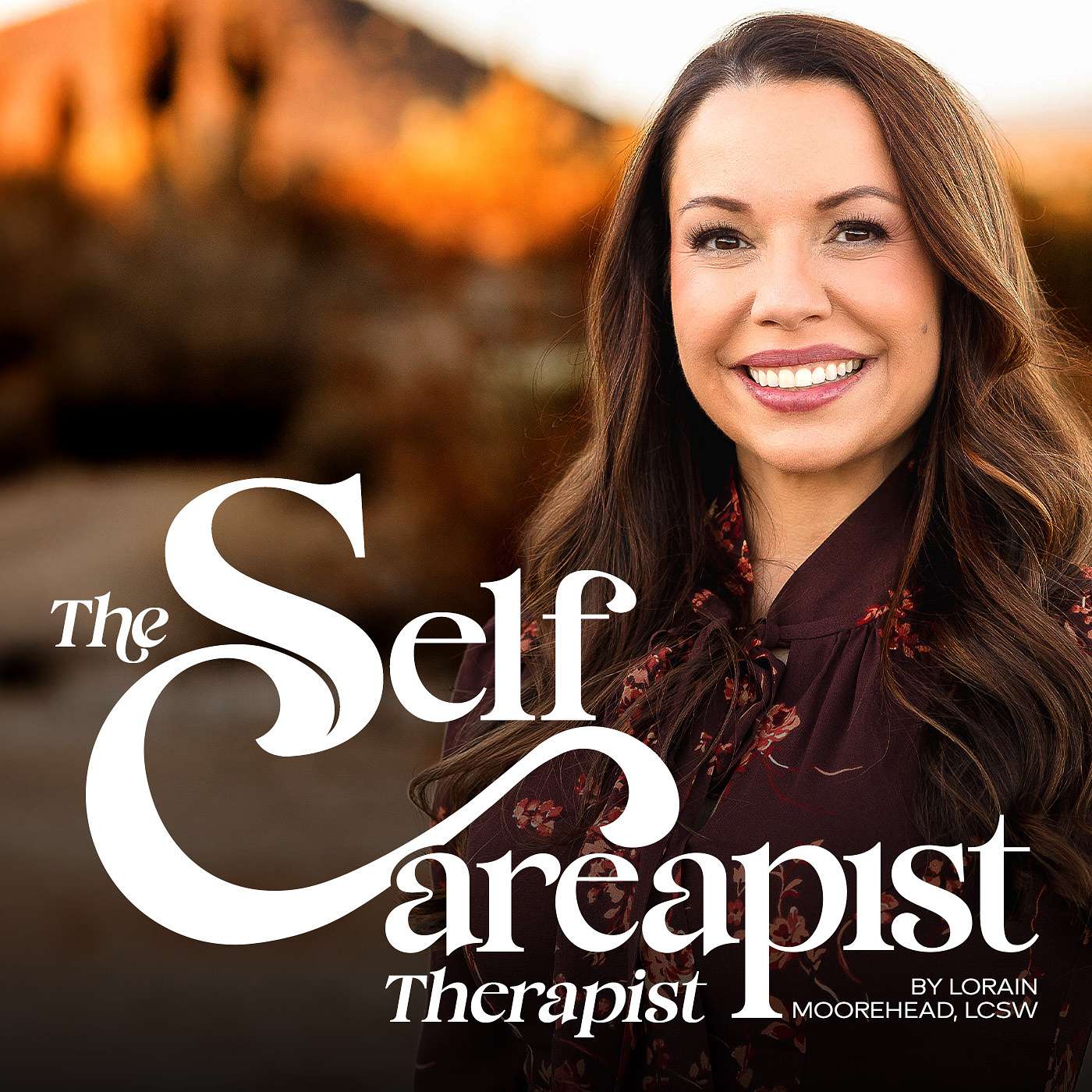
Self Careapist Therapist Podcast is a podcast for therapists who want practical, evidence-based psychotherapy skills they can use in their next session. Each Episode brings leading researchers, clinicians, and therapy experts into conversations about what actually happens in the therapy office: from EMDR and ACT to DBT, OCD, trauma, couples therapy, supervision, and beyond.
Past guests include Dr. Tony Attwood and Dr. Michelle Garnett (Autism and ADHD), Dr. Paul Hewitt (perfectionism research), Wendy Behary, LCSW (schema therapy for narcissism), Lainey Rosenzweig, LMFT (founder of Accelerated Resolution Therapy), Dr. Steven C. Hayes (founder of ACT), Dr. William R. Miller (co-developer of Motivational Interviewing), and Dr. Ricardo Muñoz (ran the first randomized controlled trial to prevent depression).
Hosted by Lorain Moorehead, LCSW, PMH-C, EMDR Certified Approved Consultant, Clinical Supervisor, and graduate school faculty associate. Expert guests share evidence-based interventions you can take straight into your next session.
Many episodes offer a free CEU for licensure in Arizona through the Board of Behavioral Health Examiners. Content is relevant for continuing education across LCSW, LMHC, LPC, LMFT, NCC, NBCC, and psychology licensure.
Topics include:
- EMDR therapy, trauma processing, and advanced EMDR applications
- Internal Family Systems (IFS), parts work, and integrative trauma approaches
- CBT, DBT, RO-DBT, ACT, and third-wave cognitive behavioral therapies
- Clinical supervision, therapist training, and professional development
- Trauma, complex trauma, PTSD, CPTSD, and nervous system regulation
- ADHD, autism, neurodiversity-affirming assessment and treatment
- Therapist burnout, perfectionism, compassion fatigue, and sustainable self-care
- Couples therapy, attachment theory, and relational wounds
- Anxiety, OCD, and exposure-based interventions
- Grief, prolonged grief disorder, and meaning-making
- Suicide risk assessment, CAMS, and crisis intervention
- Parent-child therapy, adolescent anxiety, and family systems
- Perinatal mental health
- Ketamine-assisted psychotherapy and emerging modalities
- Clinical ethics, risk management, and culturally responsive practice
- Private practice development, insurance, and building a sustainable career
Questions we answer:
- How do I use EMDR, CBT, DBT, or ACT in real-life sessions, not just textbook examples?
- How do I choose which therapy modality to learn next?
- How do other therapists handle burnout and compassion fatigue?
- How do I integrate different modalities instead of feeling like I’m doing them wrong?
- When should I use IFS parts work versus EMDR reprocessing?
- How do I grow as a therapist after grad school or licensure?
- How do I make my practice more trauma-informed and culturally responsive?
- How do I find my niche or specialty as a clinician?
- What does evidence-based therapy actually look like in practice?
- How do therapists cope with imposter syndrome and self-doubt?
- How do I explain complex therapy concepts to clients in simple language?
Primary-source interviews on EMDR and related trauma reprocessing methods, with the clinicians who developed them: Lainey Rosenzweig on Accelerated Resolution Therapy (ART) and Thomas Zimmerman on the Four Blinks version of Flash technique.
Whether you are a seasoned clinician or a graduate student, every episode is built to sharpen your clinical thinking. Listen while you drive, walk, or decompress between sessions.
New episodes every other Wednesday.
Leave a review on Apple Podcasts. It helps other therapists find the show.
CBT is the most evidence-based first-line treatment for eating disorders, but Dr. Susan Simpson kept seeing the same pattern in her caseload: roughly half of clients relapsed, and dropout rates ran between a quarter and a third. The shame, perfectionism, and attachment wounds underneath the eating disorder just weren't shifting.
Dr. Susan Simpson is a clinical psychologist,rainer-Supervisor, and Director of SchemaTherapy Training Scotland. She has more than 25 years of experience treating eating disorders and is co-author of
”Schema Therapy for Eating Disorders” and ”Tha Therapy.” Her newest book, ”Breaking Negative Eating Patterns and Remembering Your True Self,” translates her clinical model into a self-help guide for clients,
families, and clinicians.
In this episode, you'll learn:
– Why CBT alone leaves a meaningful percentage of eating disorder clients stuck, and what schema therapy adds
– How GLP-1 medications complicate eating disoncept of ”food noise”
– The two core emotional needs at the root of most eating disorder presentations: connection/attachment and autonomy
– How schema modes (”parts”) function as survlogy, and why you work with them rather thanagainst them
– Why intellectual insight (”I get it, but I gh on its own
– A real case example: how schema therapy helped a client with long-standing anorexia reconnect to unmet childhood
needs
– What group schema therapy looks like, and its evidence base for eating disorders and borderline personality disorder
Timestamps:
0:00 Meet Dr. Susan Simpson and today's topic
0:17 The main eating disorder categories, including ARFID
3:27 Why ARFID took years to be clinically re
4:58 Do eating disorder patterns come in waves?
5:25 How GLP-1 medications complicate eating
6:52 What ”food noise” actually means
9:12 Why Dr. Simpson moved from CBT to schema
12:40 The two core emotional needs behind eating disorders
13:50 Schema modes explained: protective part
17:12 Working with, not against, protective parts
20:04 Is schema therapy just CBT with extra s
24:19 Where dietitians and other specialists fit on the team
26:06 Working with ambivalence and readiness
28:50 Food diaries, and knowing your own scope as a clinician
30:41 The part that doesn't want to fully letfood addiction
32:27 Her new self-help book, and who it's for
35:02 Rewriting a clinical model for a generahapter one)
37:06 Case study: healing long-standing anorexia through schema therapy
42:34 A group therapy memory: why clients cank
43:47 How directive vs. non-directive coaching depends on the client's history
46:07 Avoiding transference traps that repeat
47:30 Where to learn schema therapy if you want to go deeper
49:00 The current research on schema therapy
51:03 What group schema therapy looks like in practice
53:38 Closing thoughts and where to find Dr.
Resources mentioned:
– Breaking Negative Eating Patterns and Remembering Your True Self, Dr. Susan Simpson
– Schema Therapy for Eating Disorders, Susan Simpson et al.
– The Cambridge Guide to Schema Therapy, Susan Simpson et al.
– ”When Standard Treatments Are Not Enough” – Showcasing Schema Therapy for the Treatment of Anorexia Nervosa and Borderline Personality Disorder, Hepworth & Simpson (2025), Journal of Clinical Psychology: https://doi.org/10.1002/jclp.23801
– Schema Therapy Training Scotland: https://schematherapyscotland.com
– Dr. Simpson's publications on ResearchGate: https://www.researchgate.net/profile/Susan_Simpson/publications
– Dr. Simpson's YouTube channel: https://www.youtube.com/@BreakingNegativeEatingPatterns
This episode covers topics relevant to CE/CEU, NCC.
Free CEU available for Arizona licensure through the Board of Behavioral Health Examiners.
Subscribe for weekly clinical training you can use in your next session.
Website: https://lorainmoorehead.com
Instagram: @selfcareapist
Not sure where you're stuck clinically? Take the free Stuck Point Quiz at lorainmoorehead.com/quiz and get resources matched to your answers.
Self Careapist Therapist Podcast is a biweekly, therapist-to-therapist conversation hosted by Lorain Moorehead, LCSW, PMH-C, EMDRIA Approved Consultant. Guests include psychologists, researchers, and the developers of the clinical models they teach, with practical takeaways for every level, from intern to clinical supervisor. Many episodes offer a free CEU for Arizona licensure through the Board of Behavioral Health Examiners.
New episodes every other Wednesday. If this episode was useful, leave a review on Apple Podcasts. It helps other therapists find the show.
Disclaimer
This podcast’s information is provided for general reference and was obtained from publicly accessible sources. The Podcast Collaborative neither produces nor verifies the content, accuracy, or suitability of this podcast. Views and opinions belong solely to the podcast creators and guests.
For a complete disclaimer, please see our Full Disclaimer on the archive page. The Podcast Collaborative bears no responsibility for the podcast’s themes, language, or overall content. Listener discretion is advised. Read our Terms of Use and Privacy Policy for more details.