Off the Grid, On the Record
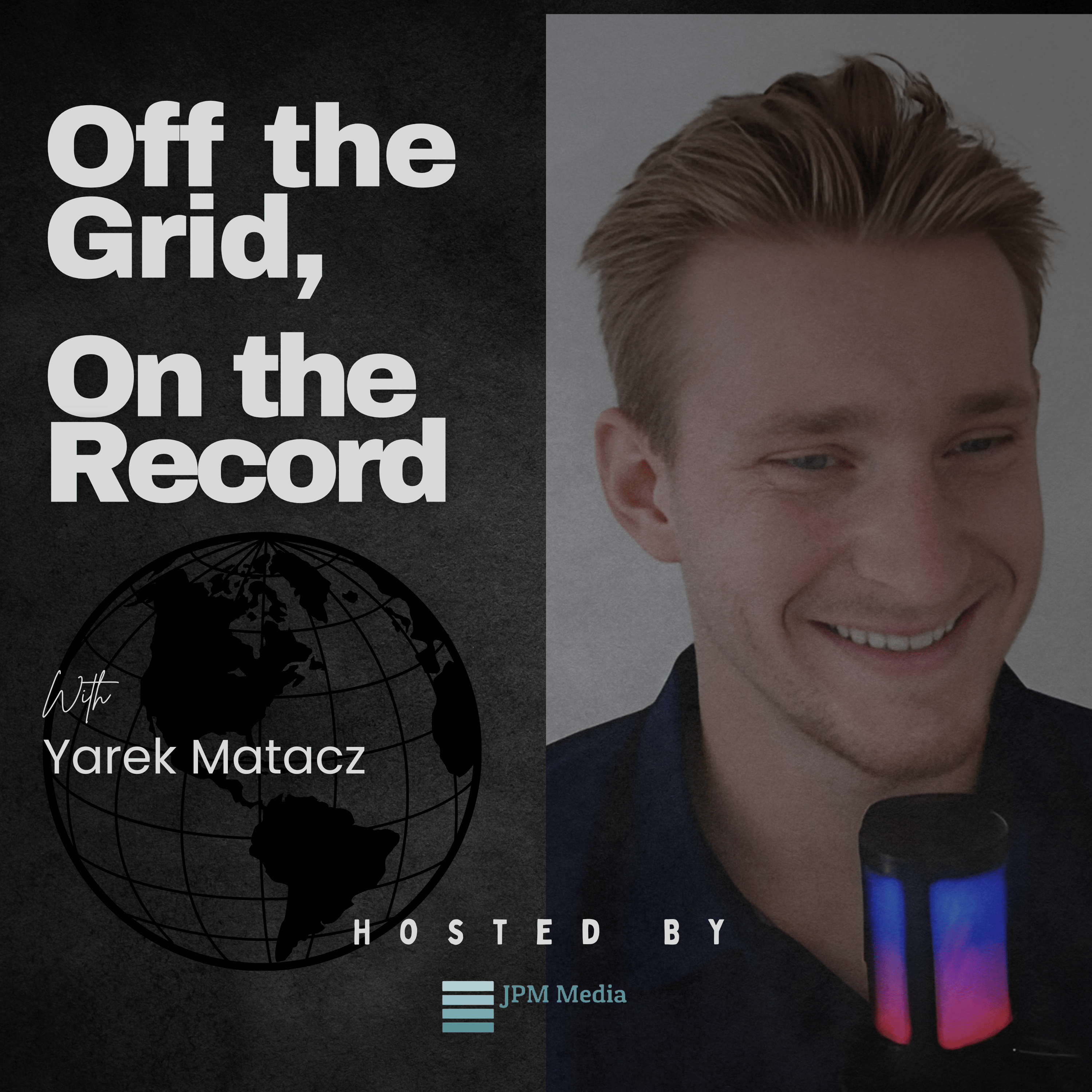
Off the Grid, On the Record
Podcast Description
By JPM Media Real voices. Real energy. Real transitions.Off the Grid: On the Record is where bold voices in clean energy, climate infrastructure, and sustainable tech go on the record. Hosted by Yarek Matacz, this podcast cuts through buzzwords and brings you grounded conversations with the people actually building the future — from solar CEOs and policy architects to grid innovators and cleantech financiers.Each episode explores how renewable energy systems are being rethought, funded, scaled, and implemented in real time. No fluff. No industry jargon. Just honest insight into what’s working — and what’s next.🎧 Available on all major platforms: 🔗 Spotify: https://open.spotify.com/show/7FXxTgjKq2Mw1P8OjTfhk5 🔗 Apple Podcasts: https://podcasts.apple.com/us/podcast/off-the-grid-on-the-record/id1747620342 🔗 YouTube: https://www.youtube.com/@yarekmatacz🔗 Website: https://jpmmedia.ca/project-1/🎯 What You’ll Hear:Hard-won lessons from solar developers, climate tech founders, and infrastructure operatorsDeep dives into grid strategy, financing, and the business of decarbonizationGlobal voices — from Australia’s sub-5MW revolution to North American energy resilienceReal stories about navigating regulation, building trust, and scaling responsibly🔧 Built for: Clean energy professionals | Project developers | Investors | Sustainability teams | Grid operators | Anyone tired of surface-level green talk📩 Want to suggest a guest? Reach out at: [email protected]
Podcast Insights
Content Themes
The podcast dives into topics including clean energy innovations, sustainable technology solutions, challenges in renewable energy deployment, and ethics in energy policy. Episodes examine issues like the solar industry's maintenance problems and ethical property development, highlighted by case studies such as Futureland's community-driven housing projects in Australia and Contractor Power's AI tools for efficiency in energy management.

Most companies don’t have a lead problem — they have a funnel problem.
Behind the Funnel is a business podcast that breaks down how B2B companies actually acquire customers and scale revenue. Hosted by Yarek Matacz, founder of JPM Media and Co-Hosts Nick Cross and Marcus Sousa. The show goes beyond surface-level marketing advice to explore the real systems, strategies, and decisions that drive predictable growth.
Each episode features conversations with SaaS founders, operators, consultants, and B2B leaders who are actively building and scaling companies. Instead of theory or generic “growth hacks,” these discussions unpack the acquisition engines behind real businesses — from outbound systems and paid acquisition to funnel architecture, offer design, and sales processes.
Listeners will hear what worked, what failed, and what ultimately helped companies build consistent pipelines and sustainable growth.
Behind the Funnel is designed for founders, consultants, and operators who want to understand how modern B2B companies turn attention into revenue. If you’re building a SaaS product, scaling a consulting business, or developing a go-to-market strategy, this podcast offers a practical look at how growth actually happens behind the scenes.
Expect thoughtful conversations, tactical insights, and honest breakdowns of the systems that power real businesses.
New episodes feature founders, marketers, and operators sharing what it really takes to turn leads into customers and ideas into scalable companies.
Every advantage your company has right now is already expiring. That’s the premise behind the Durable Advantage Cycle, the framework at the center of this conversation with Arun Pattanayak, a former Microsoft Data and AI Executive and fractional CTO who’s spent 20+ years inside companies like Citibank, JPMorgan Chase, EY, Credit Suisse, and TD Bank.
We get into the build, buy, or kill model Arun uses with every client to decide where technology dollars actually go, why he thinks most AI investment failures are an architecture problem and not a tool problem, and the difference between a product with a marketing problem and one with a product-market-fit problem, two things that get confused constantly and require completely different fixes.
In this episode:
- The Durable Advantage Cycle, and why the biggest tech companies in the world are built around repeating it, not escaping it
- The build, buy, or kill scoring framework Arun uses to decide what actually gets funded
- Why “we bought the AI tool” isn’t a strategy, and what intelligence architecture and change fitness actually mean
- The three-layer workforce model (automation, augmentation, innovation) and how to know which layer a task belongs in
- What Arun looks for before he’ll take on a client, and why he turns down more work than he accepts
- How to tell whether your problem is actually marketing, or whether marketing is just amplifying a product nobody wants yet
- The one AI trend Arun thinks is completely overhyped right now
About Arun: Arun Pattanayak spent over 20 years in enterprise technology, including six years as a Data and AI Executive at Microsoft, and has worked inside organizations like Citibank, JPMorgan Chase, EY, Credit Suisse, and TD Bank. He’s now a fractional CTO through his company Tipsora, the author of Future-Proof Your Business, and host of the podcast What Comes Next.
Find Arun: LinkedIn (search Arunansu Pattanayak) | arunansupattanayak.com | tipsora.com | What Comes Next, wherever you get your podcasts

Disclaimer
This podcast’s information is provided for general reference and was obtained from publicly accessible sources. The Podcast Collaborative neither produces nor verifies the content, accuracy, or suitability of this podcast. Views and opinions belong solely to the podcast creators and guests.
For a complete disclaimer, please see our Full Disclaimer on the archive page. The Podcast Collaborative bears no responsibility for the podcast’s themes, language, or overall content. Listener discretion is advised. Read our Terms of Use and Privacy Policy for more details.