Economies that work – for all

Economies that work - for all
Podcast Description
Dive into the transformative power of human rights in economic policymaking! Join us as we talk with leading economists dedicated to fostering equitable growth. Explore how integrating economic policy with human rights can foster just and sustainable societies, and dive into the concept of a Human Rights Economy championed by the UN High Commissioner for Human Rights, Volker Türk. Tune in for insights that can reshape our world. Learn more about the Human Rights Economy at https://www.ohchr.org.
Co-developed by UN System Staff College & the Office of the High Commissioner for Human Rights.
Podcast Insights
Content Themes
Highlights critical issues surrounding economic inequality, sustainability, and human rights, featuring episodes such as 'Is the solution hiding in plain sight?' with economist Jayati Ghosh who highlights the inadequacies of the GDP-focused system, and 'Why is our economic system failing the 2030 Agenda?' with Volker Türk, discussing the structural reforms necessary for a human rights-focused economy.
Dive into the transformative power of human rights in economic policymaking! Join us as we talk with leading economists dedicated to fostering equitable growth. Explore how integrating economic policy with human rights can foster just and sustainable societies, and dive into the concept of a Human Rights Economy championed by the UN High Commissioner for Human Rights, Volker Türk. Tune in for insights that can reshape our world. Learn more about the Human Rights Economy at https://www.ohchr.org.
Co-developed by UN System Staff College & the Office of the High Commissioner for Human Rights.
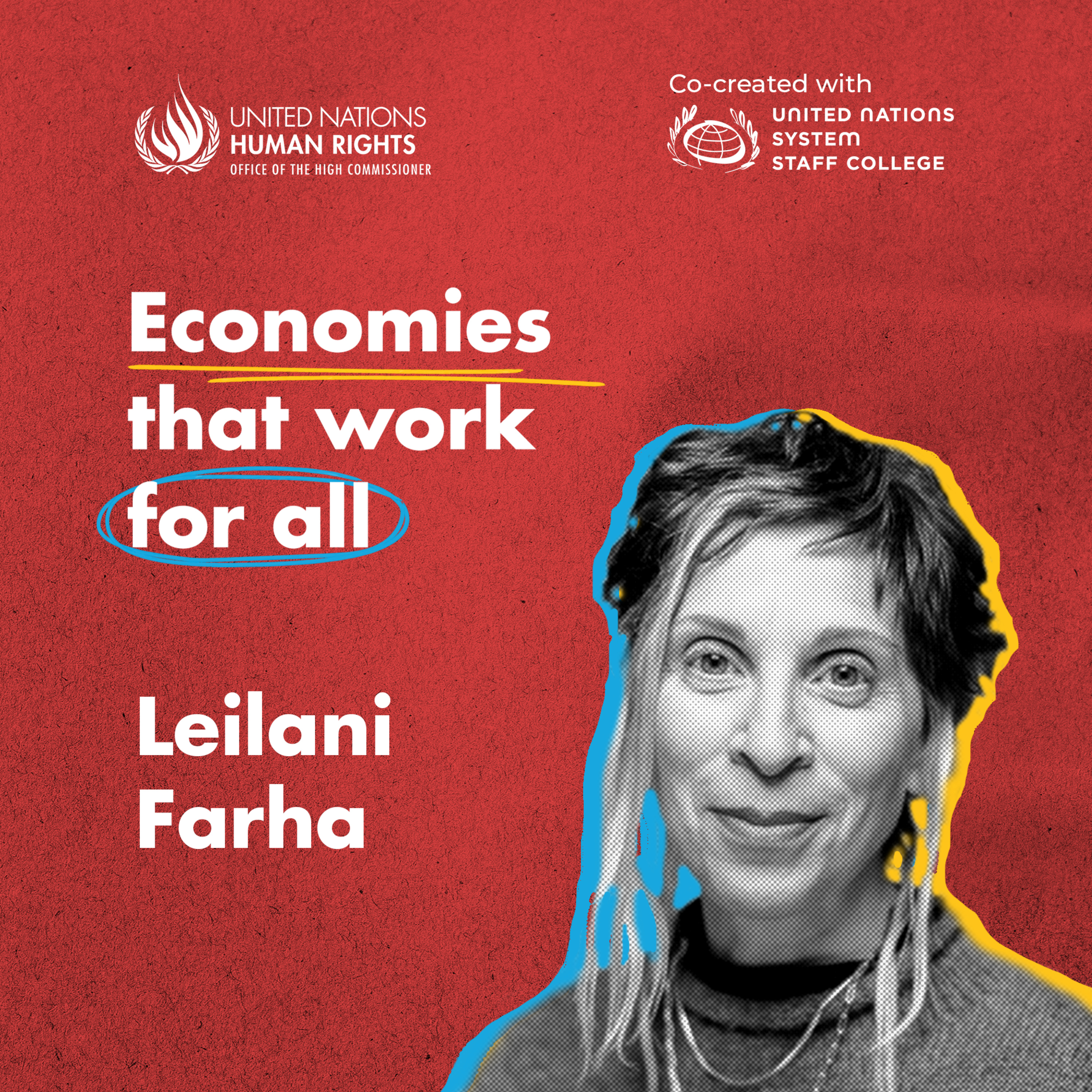
Leilani Farha—former UN special rapporteur on the right to adequate housing and global director of THE SHIFT—joins us in this episode for a timely and thought-provoking conversation on housing as a human right.
Farha describes housing as a “springboard” to nearly every other human right, emphasizing that without a safe and secure home, it is nearly impossible to live a full and dignified life. She argues that meaningfully enforcing the right to housing is key to confronting the deepening global housing crisis.
Building on this foundation, our conversation turns to the structural forces shaping today’s housing landscape—from the financialization of housing markets to the systemic roots of homelessness. Rather than viewing homelessness as an individual shortcoming, we examine it as a policy failure embedded in broader economic systems. We also discuss the role of corporate actors, and why greater accountability, while not a silver bullet, could be a powerful step toward creating fairer and more sustainable housing systems.
If you’d like to learn more about the Human Rights Economy, the work of OHCHR or UNSSC, check this link.
Disclaimer
This podcast’s information is provided for general reference and was obtained from publicly accessible sources. The Podcast Collaborative neither produces nor verifies the content, accuracy, or suitability of this podcast. Views and opinions belong solely to the podcast creators and guests.
For a complete disclaimer, please see our Full Disclaimer on the archive page. The Podcast Collaborative bears no responsibility for the podcast’s themes, language, or overall content. Listener discretion is advised. Read our Terms of Use and Privacy Policy for more details.