YouPotential

YouPotential
Podcast Description
YouPotential explores what it truly means to live a life well lived — through the lens of psychology, money, and meaning.
Hosted by Shaun Maslyk—Certified Financial Planner®, Financial Behaviour Specialist®, and Positive Psychology Practitioner—the podcast delivers science-backed insights, candid conversations, and real stories that help people live with more intention.
Podcast Insights
Content Themes
The podcast focuses on themes of psychology, finance, and personal meaning. It explores significant topics such as relationship dynamics intertwined with financial conflicts, the pursuit of meaning in life, and creative reinvention. Episodes include discussions with experts like Debra Kaplan on the impact of childhood experiences on adult relationships, and Dr. Michael Steger on the importance of meaning in cultivating a fulfilling life.
YouPotential explores what it truly means to live a life well lived — through the lens of psychology, money, and meaning.
Hosted by Shaun Maslyk—Certified Financial Planner®, Financial Behaviour Specialist®, and Positive Psychology Practitioner—the podcast delivers science-backed insights, candid conversations, and real stories that help people live with more intention.
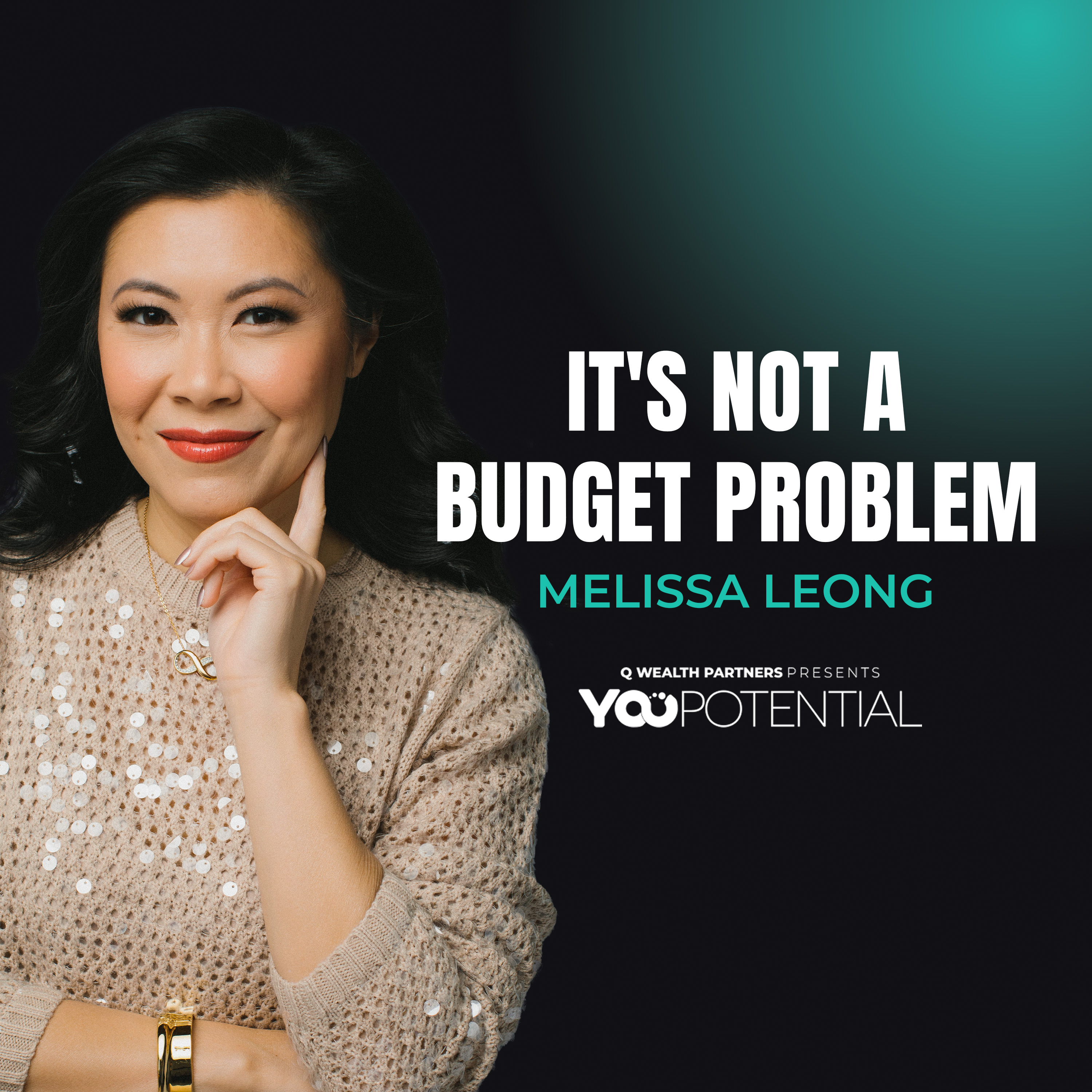
The Money Story You Inherited (And Can’t Shake) | Melissa Leong
Her six-year-old whispered it in the dark: “Mommy, I think there’s something wrong with me.” He didn’t love his old stuffies anymore. This episode will change how you think about every dollar you spend — and every dollar you don’t.
EPISODE SUMMARY
Melissa Leong is one of Canada’s most respected voices at the intersection of money and psychology. A journalist, speaker, and author of Happy Go Money, she’s spent years unpacking why smart people make irrational financial decisions — and she starts with herself.
In this conversation, Melissa opens up about her inherited scarcity mindset — rooted in her Chinese-Canadian family’s history of war, immigration, and a 70-year-old restaurant in Winnipeg’s Chinatown. Her grandfather helped build that community and quietly funded a pagoda in one of Winnipeg’s biggest parks. Her mother taught her that money was scarce, that you worked for every dollar, and that the expensive toilet paper was not for your family. These stories didn’t stay in the past. They followed Melissa into adulthood, into her marriage, and into how she eats breakfast (leftover toast crusts, if you’re wondering).
But the heart of this conversation isn’t about scarcity. It’s about the pause. Melissa makes a case that our spending is often not a budgeting failure — it’s a neurological response to a system designed to hijack our reward systems. Dopamine doesn’t reward having, it rewards seeking. One-click buy, frictionless spending, personalized ads that never sleep. And in the middle of all this, a six-year-old kid is already feeling the pull of hedonic adaptation — he just doesn’t have words for it yet.
Shaun and Melissa explore how couples with opposite money stories can stay connected (her husband’s abundance mindset vs. her scarcity lens), what it means to feel “enough” in a world that profits from your dissatisfaction, and why the happiest time of her life involved cockroaches, five dollars, and dollar dumplings in a basement apartment in Taiwan. This is one of those episodes that sneaks past your defenses and sits with you for days.
KEY TOPICS COVERED
- Hedonic Adaptation in Real Time: How a six-year-old’s stuffie confession reveals what’s happening to all of us
- The Dopamine Trap: Why spending isn’t a willpower problem — it’s a neurological one
- Inherited Money Stories: How war, immigration, and family restaurants shape financial behavior generations later
- The Grandfather’s Legacy: Philanthropy, Chinatown, and what generosity really looks like
- Couples and Money Conflict: When scarcity mindset marries abundance mindset — and the ongoing negotiation
- The Pause: Why friction in spending is actually a health practice
- Financial Socialization: What your kids learn about money from watching you (not from any course)
- Enough: What it feels like, why we can’t find it, and the meditation of okayness
MEMORABLE QUOTES
“When I get new stuffies, I don’t like my old stuffies anymore.”
Timestamp: [02:20]
“We are swimming in this system that is designed to hijack our reward systems.”
Timestamp: [03:30]
“I don’t think that you are being irresponsible. I think you’re tired. I think you’re overwhelmed. I think you are stressed. I think you’re overstimulated.”
Timestamp: [06:18]
“Money is just an accelerant. Money shows you who you are because you use it to navigate this world.”
Timestamp: [11:08]
“Right now, in this exact moment, I am okay.”
Timestamp: [51:12]
“I love you forever. My love is forever, which means wherever I am, and even if I’m not here, you will feel my love.”
Timestamp: [01:17:01]
ABOUT MELISSA LEONG
Melissa Leong is a journalist, author, and speaker who has spent her career making money conversations feel human. She’s the author of Happy Go Money, a book that bridges personal finance and the science of happiness. A former Financial Post reporter, she’s appeared on screens across Canada bringing warmth and wit to a topic most people avoid.
But what makes Melissa different isn’t her credentials — it’s her honesty. She openly talks about eating her kids’ leftover toast crusts instead of buying herself breakfast, about the scarcity mindset she inherited from immigrant parents who survived war, and about the ongoing money arguments with her husband that she expects will never fully resolve. She’s not teaching from a pedestal. She’s teaching from the kitchen table.
Melissa grew up in Winnipeg, where her grandfather helped build Chinatown and ran a restaurant for 70 years. She now lives with her husband and two kids (ages 6 and 10), a collection of stuffies in various states of abandonment, and an arcade game with a price tag that may never be fully disclosed.
CONNECT WITH MELISSA LEONG
- Website: melissaleong.com
- Book: Happy Go Money
RESOURCES MENTIONED
- Happy Go Money by Melissa Leong
- Daniel Kahneman’s research on money and happiness
- Hedonic adaptation research
- Study: Living next to a lottery winner increases bankruptcy risk
- 2020 study: Giving $10K to 200 people — those who spent on others were happier
- Viktor Frankl — “Between stimulus and response there is a space”
ABOUT YOUPOTENTIAL
YouPotential explores what it means to live a meaningful life — through conversations about money, purpose, relationships, and becoming. Hosted by Shaun Maslyk.
“Sometimes it’s not the answers we learn from — but the questions.”
Disclaimer
This podcast’s information is provided for general reference and was obtained from publicly accessible sources. The Podcast Collaborative neither produces nor verifies the content, accuracy, or suitability of this podcast. Views and opinions belong solely to the podcast creators and guests.
For a complete disclaimer, please see our Full Disclaimer on the archive page. The Podcast Collaborative bears no responsibility for the podcast’s themes, language, or overall content. Listener discretion is advised. Read our Terms of Use and Privacy Policy for more details.