SPRingBoard Environmental Law Podcast

SPRingBoard Environmental Law Podcast
Podcast Description
Hosted by Sive, Paget & Riesel, New York's preeminent environmental law firm for over 60 years, SPRingBoard Environmental Law Podcast is a conversational and interview-based show centralized on a wide spectrum of environmental law-based topics. Guests will include SPR attorneys, topic experts, consultants, activists, professors, environmental lawyers and more.
Podcast Insights
Content Themes
The podcast explores a wide array of environmental law topics including climate justice, sustainability in construction, and regulatory impacts under different governmental administrations. Specific episodes address subjects like NYC’s Local Law 97, the complexities of climate gentrification, and the anticipated changes in environmental policies under political shifts.
Hosted by Sive, Paget & Riesel, New York’s preeminent environmental law firm for over 60 years, SPRingBoard Environmental Law Podcast is a conversational and interview-based show centralized on a wide spectrum of environmental law-based topics. Guests will include SPR attorneys, topic experts, consultants, activists, professors, environmental lawyers and more.
What does an environmental lawyer actually do?
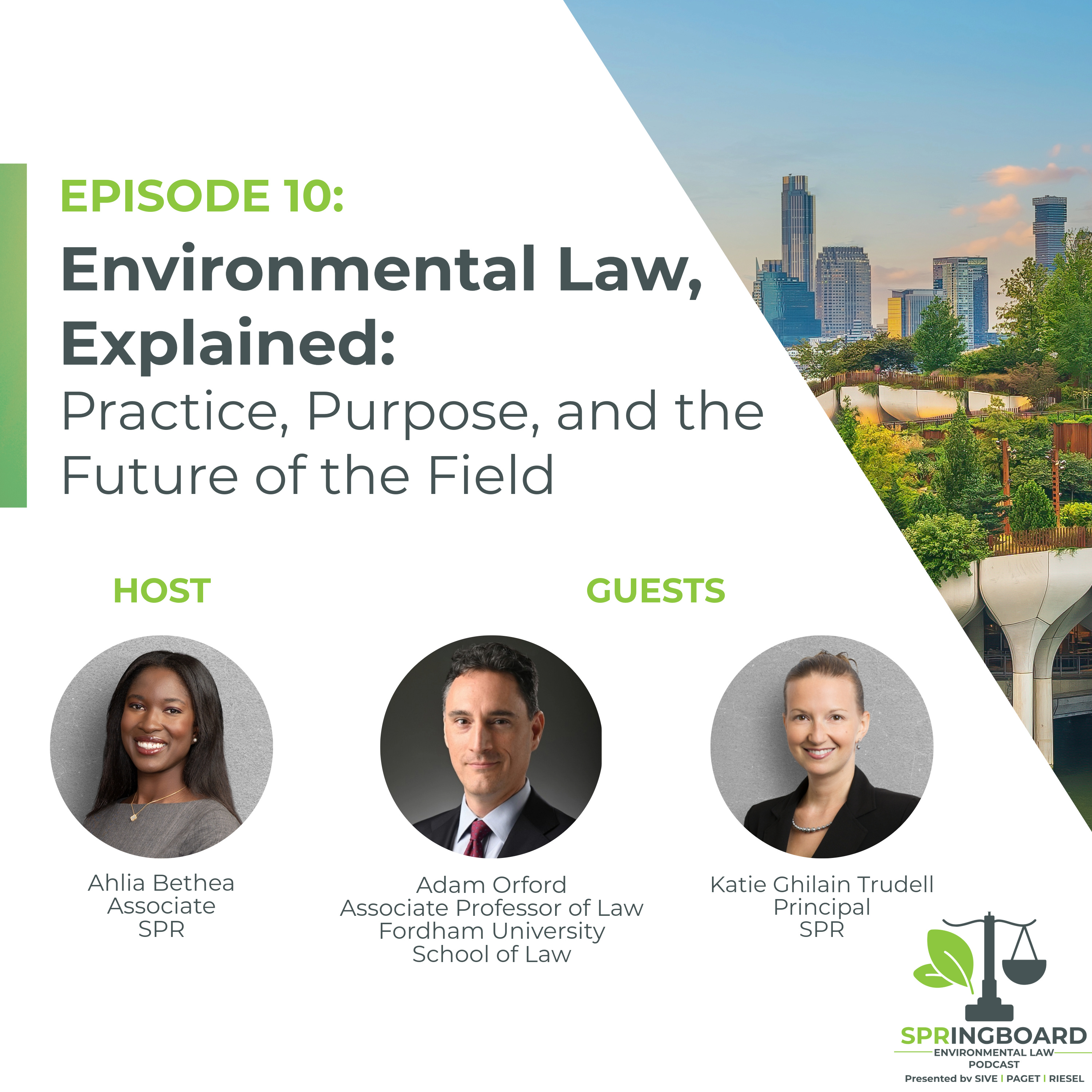
In this Climate Week NYC special episode, SPRingBoard host Ahlia Bethea is joined by Dr. Adam Orford, Associate Professor of Law at Fordham University School of Law, and Katherine Ghilain Trudell, Principal at SPR, for a candid discussion about the realities of practicing environmental law, the many career paths available, and the trends shaping the future of the field.
Whether you are considering a career in environmental law, undertaking a major development project, or simply curious about how environmental lawyers help move ideas from concept to completion, this episode offers an inside look at one of the legal profession's most diverse and rapidly evolving fields.
Key takeaways:
- Environmental lawyers are involved in far more than enforcement actions and pollution disputes. Their work often includes guiding housing, infrastructure, hospital, park, renewable energy, and redevelopment projects through environmental review, permitting, and litigation.
- The most common mistake project sponsors make is waiting too long to engage environmental counsel. Early planning can help identify permitting requirements, address stakeholder concerns, build a strong administrative record, and minimize litigation risk.
- Environmental law is highly collaborative. Lawyers often work closely with regulators, consultants, community stakeholders, and project sponsors to resolve issues and develop legally defensible outcomes.
- A background in environmental science is not required to practice environmental law. Curiosity, strong legal skills, and the ability to quickly learn new technical concepts are often more important.
- Administrative law is one of the most important foundations for environmental practice because so much environmental decision making occurs through agency processes and regulations.
- Climate change is not solely an environmental law issue and is increasingly affecting unexpected areas of legal practice, including property, investment, and estate planning.
- Current law students and lawyers looking to transition into the environmental field should pay particular attention to energy regulation, since environmental, energy, and utility issues are becoming increasingly interconnected.
Production support for this episode was provided byCharlotte Hawes, Legal Marketing Assistant at SPR.
Disclaimer: The content of this podcast, and its supplemental material, is for informational purposes only and should not be considered legal advice. The views and opinions expressed in this program are those of the speakers in their individual capacities and do not necessarily reflect the views or opinions of SPR and/or any of the clients they represent.
Disclaimer
This podcast’s information is provided for general reference and was obtained from publicly accessible sources. The Podcast Collaborative neither produces nor verifies the content, accuracy, or suitability of this podcast. Views and opinions belong solely to the podcast creators and guests.
For a complete disclaimer, please see our Full Disclaimer on the archive page. The Podcast Collaborative bears no responsibility for the podcast’s themes, language, or overall content. Listener discretion is advised. Read our Terms of Use and Privacy Policy for more details.