HuMed with David Spiro, MD

HuMed with David Spiro, MD
Podcast Description
HuMed goes beyond diagnoses and procedures to explore the profound human experiences of medical professionals. Join Dr. Spiro as he engages in deep, candid conversations with fellow doctors, nurses, and other healthcare providers. They share the often-unseen realities of their work in the demanding hospital environment – the challenging cases, the emotional toll, and the ethical dilemmas they navigate daily.
Podcast Insights
Content Themes
The podcast focuses on themes such as the emotional toll of healthcare, the challenges faced by medical professionals, and the ethical dilemmas encountered in clinical practice. Episodes cover topics like the pain of losing a patient, the significance of patient communication, and the challenges of delivering bad news, often highlighting poignant stories from the guests' careers.
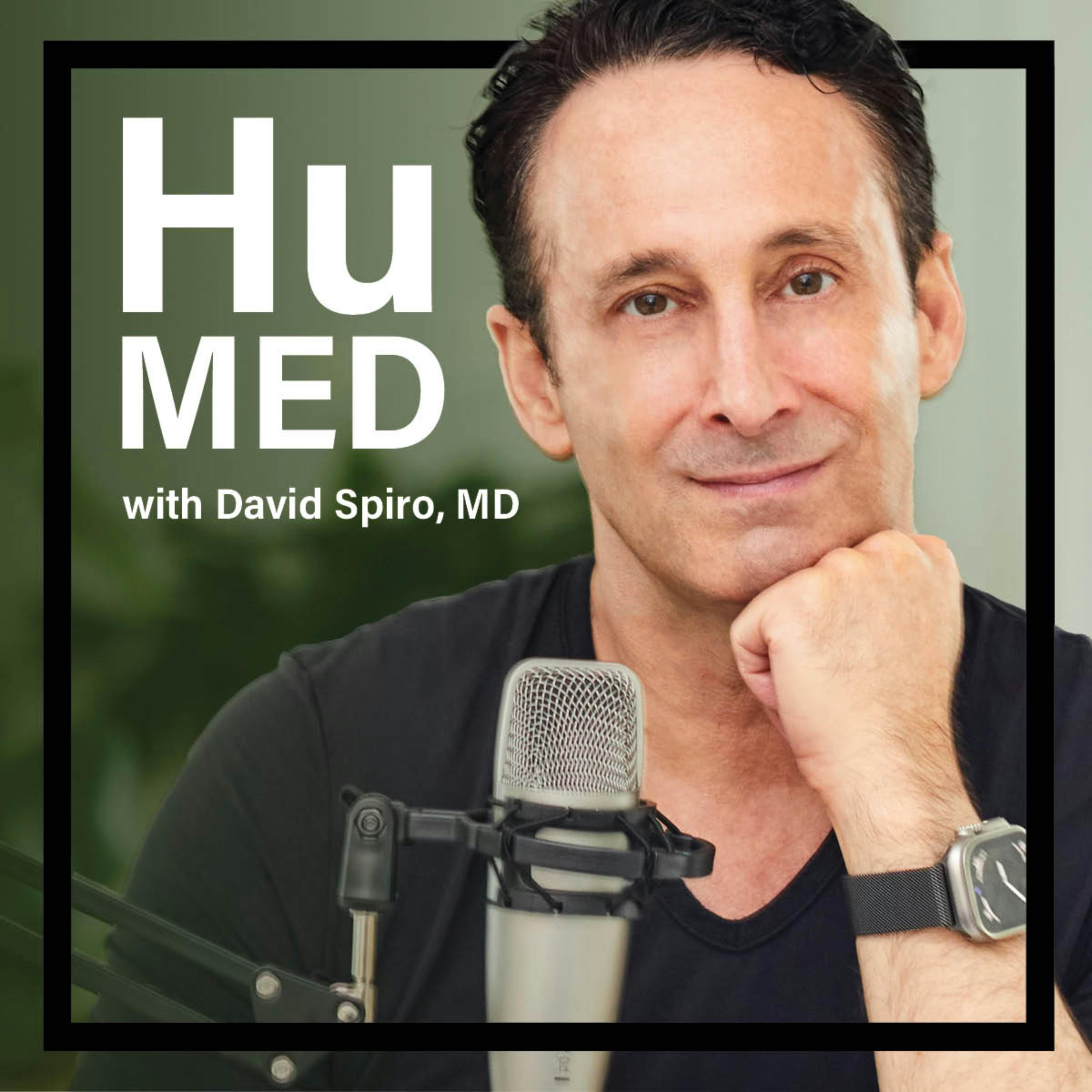
HuMed goes beyond diagnoses and procedures to explore the profound human experiences of medical professionals. Join Dr. Spiro as he engages in deep, candid conversations with fellow doctors, nurses, and other healthcare providers. They share the often-unseen realities of their work in the demanding hospital environment – the challenging cases, the emotional toll, and the ethical dilemmas they navigate daily.
A resident on night call writes one word in a chart to describe his patient’s husband, a man in his 90s: “senile.” He thinks it means “very old.” The note gets corrected, but the word stays in the edit trail, and a few days later the record shows the patient has read it. Every instinct tells him to leave it alone. He calls the family to apologize anyway.
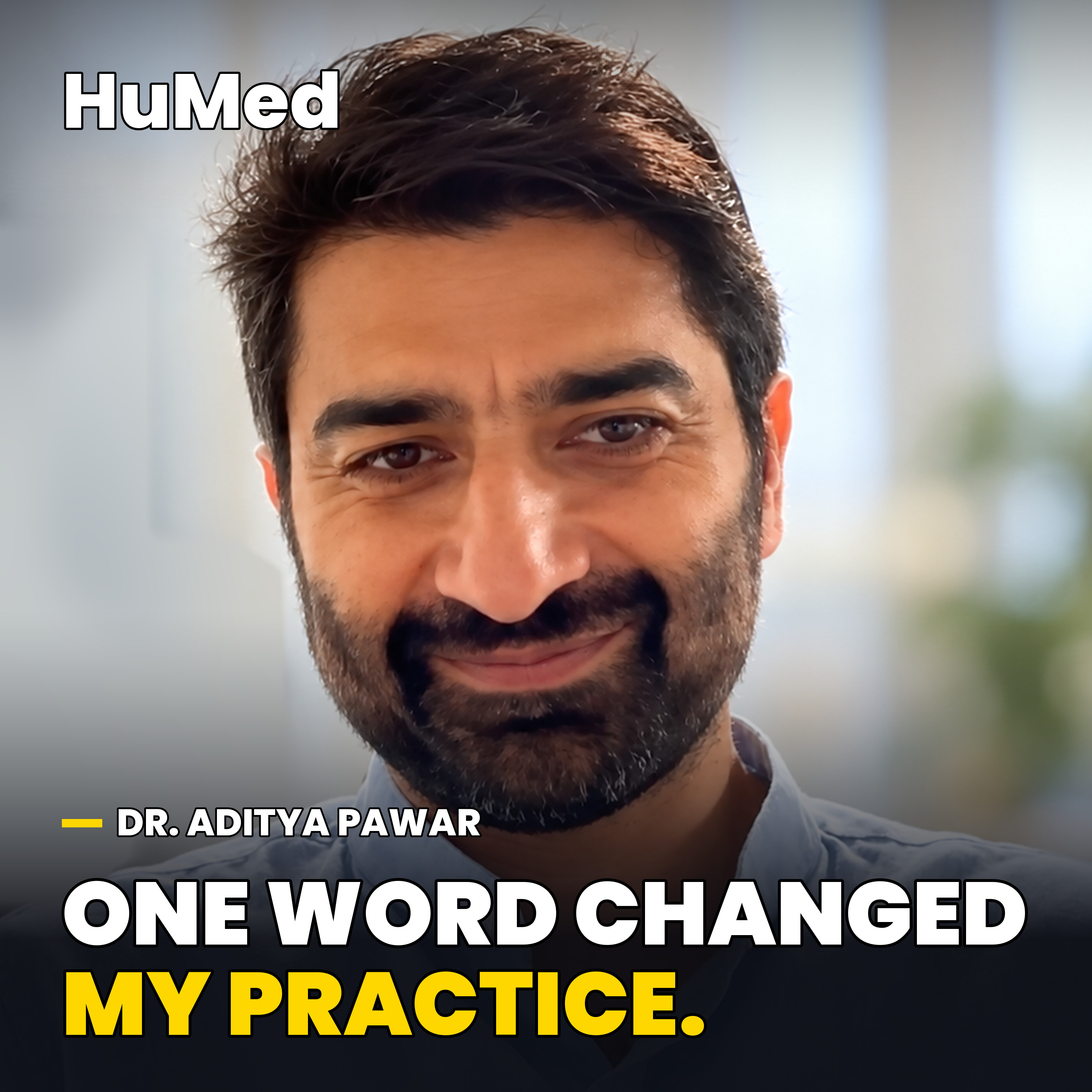
Dr. Aditya Pawar is a transplant nephrologist at Beth Israel Deaconess Medical Center and Harvard Medical School. That phone call became “Safe Space,” his essay in The New England Journal of Medicine. He joins Dr. David Spiro to talk about what the couple said to him on that call, why it took him years to understand it, and who a clinician’s “safe space” really protects.
In this episode:
– The apology he almost didn’t make, and why he says it would be just as hard tomorrow
– Why “safe space” in medicine often protects the doctor, and what a “brave space” with patients looks like
– Telling a patient you don’t yet know the best approach
– Practicing in India versus the U.S.: five-minute visits that never really end, and seeing your patients at the grocery store
– Why he calls paternalism “a protective mechanism”
– What he says to kidney patients who won’t let their own child donate
– What he tells first-year medical students about the 20-minute visit that needs an hour and twenty
– His uncle’s lesson from Sunday evenings seeing patients in a village in India: “As a physician, we’ve always lost”
– Six hugs from a grieving family after one of his first codes
Dr. Spiro also shares what it was like to lead his team’s debrief after a child died in his pediatric ER.
Read the essay: “Safe Space,” N Engl J Med 2026;395:840-843. https://doi.org/10.1056/NEJMp2518528
Chapters
00:00:00 “As a physician, we’ve always lost”
00:00:20 Meet Dr. Aditya Pawar
00:02:03 “It started from a mistake”
00:02:33 Night call, a couple in their 90s, and one word
00:04:27 The phone call he almost didn’t make
00:05:11 What the couple meant by “safe space”
00:06:37 Parents in the room during a resuscitation
00:08:20 Who is the safe space for?
00:10:03 From safe spaces to brave spaces
00:12:55 Medicine in India versus the U.S.
00:15:11 Sharp boundaries, and crossing the line
00:17:43 “Every single cell of my body is telling me don’t do it”
00:21:14 What safe space meant as a child in India
00:23:10 Family, elder care, and what gets lost
00:28:16 Organ donation: “Do not take away that decision from me”
00:30:00 Teaching first-year medical students
00:34:26 Dr. Spiro: the debrief after a child dies
00:38:06 His uncle, Dr. S.S. Jamwal
00:39:49 One of his first codes as a resident
00:41:11 “This concept of death, you have to get comfortable with it”
00:42:11 Six hugs from a grieving family
00:42:44 Closing
If this episode meant something to you, follow HuMed on Apple Podcasts and send it to one colleague who needs to hear it.
Disclaimer
This podcast’s information is provided for general reference and was obtained from publicly accessible sources. The Podcast Collaborative neither produces nor verifies the content, accuracy, or suitability of this podcast. Views and opinions belong solely to the podcast creators and guests.
For a complete disclaimer, please see our Full Disclaimer on the archive page. The Podcast Collaborative bears no responsibility for the podcast’s themes, language, or overall content. Listener discretion is advised. Read our Terms of Use and Privacy Policy for more details.