Africa World Now Project
Africa World Now Project
Podcast Description
Africa World Now Project is a multimedia educational project that produces knowledge about the African world through a series of methods that include: radio, podcast, publishing, film festivals, webinars, social media, etc. Africa World Now Project is, in essence, a multimedia open-access 'classroom' that provides actionable information that explores continuities and discontinuities in the history, culture, and politics of the entire African world. AWNP does this by engaging in organic discussions with scholars, artists, journalists, activists, organizers and others who are intentionally disruptive in assessing the various issues that exist in the entire African world.
Podcast Insights
Content Themes
Explores topics related to African history, culture, politics, and resistance through formats such as interviews with scholars and activists. Key themes include the role of music in civil rights as discussed in episodes like 'How music defines D.C.’s history of resistance and resilience' and critical examinations of time as a colonial construct in 'Dismantling the master's clock.'
Africa World Now Project is a multimedia educational project that produces knowledge about the African world through a series of methods that include: radio, podcast, publishing, film festivals, webinars, social media, etc. Africa World Now Project is, in essence, a multimedia open-access ‘classroom’ that provides actionable information that explores continuities and discontinuities in the history, culture, and politics of the entire African world. AWNP does this by engaging in organic discussions with scholars, artists, journalists, activists, organizers and others who are intentionally disruptive in assessing the various issues that exist in the entire African world.
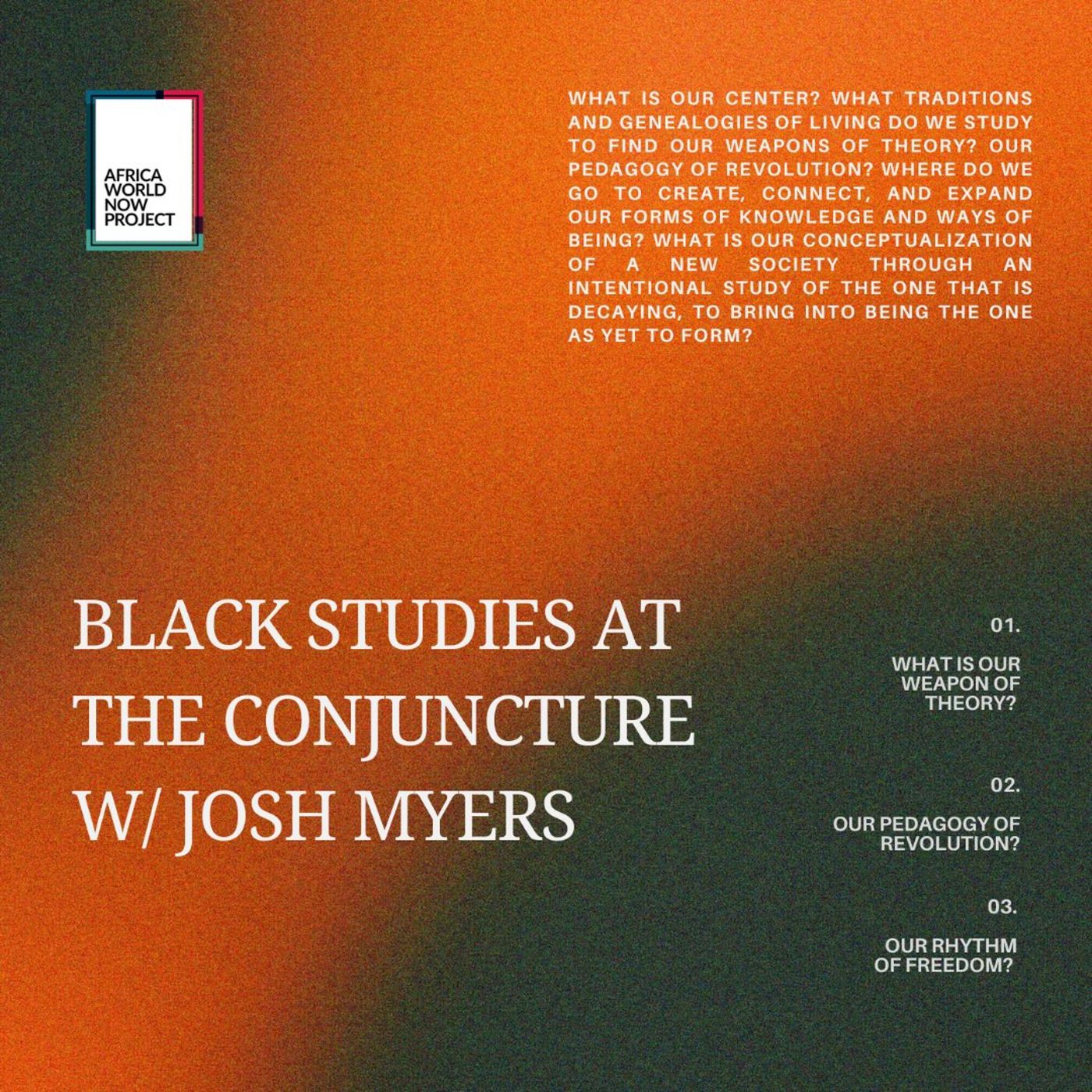
What does it mean, in this moment – echoes of and the culmination of moments before, to teach, learn, share, and evolve within increasingly violent conditions. What is and where are our (your) terrains of struggle for the Black working class, heretical intellectuals, and inherently rebellious minded youth? What are our weapons? Where do we find our center? Upon what do we build our barriers of resistance? How do we organize a people who do not, yet, fully know, they should be organized? What is the meaning of joining an organization, when the organization is content to be caught in a cycle of ‘actions’ that are not attached or show any real signs of impacting the critical consciousness of the very people they say they are organizing? What does liberation mean, when the Congo has been in a constant state of conflict, fueled by external interests, for over the past 140+ years? What are the contours of our conjuncture? The nexus of our time? What does it mean to offer an intersectional analysis built upon colonial conceptualizations of our realities and what it means to be human? What does it mean to live in a so-called intellectual world with so much criticism and no real critique? What is our center? What traditions and genealogies of living do we study to find our weapons of theory? Our pedagogy of revolution? Where do we go to create, connect, and expand our forms of knowledge and ways of being? What is our conceptualization of a new society through an intentional study of the one that is decaying, to bring into being the one as yet to form? There is hope, some say, the old forms of oppression are at their limit, capitalism is at a breaking point … but what do we say when we look closely to see capital is becoming something else too (something old, yet new)?
Disclaimer
This podcast’s information is provided for general reference and was obtained from publicly accessible sources. The Podcast Collaborative neither produces nor verifies the content, accuracy, or suitability of this podcast. Views and opinions belong solely to the podcast creators and guests.
For a complete disclaimer, please see our Full Disclaimer on the archive page. The Podcast Collaborative bears no responsibility for the podcast’s themes, language, or overall content. Listener discretion is advised. Read our Terms of Use and Privacy Policy for more details.