The Neil Haley Show
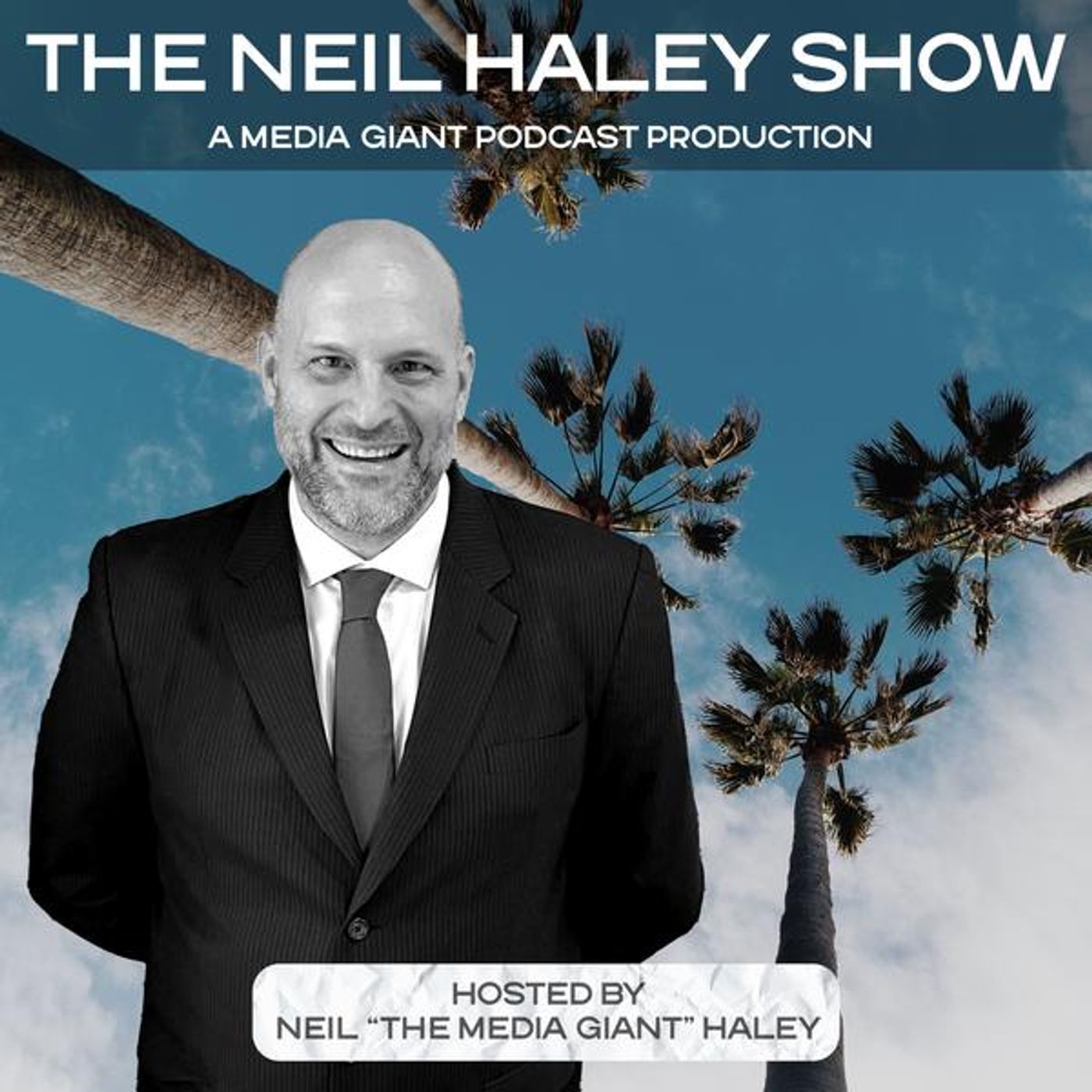
The Neil Haley Show
Podcast Description
The Neil Haley Show is heard in over 180 countries and has over 3 million listeners a week. The Neil Haley Show is syndicated on 150+ stations. Here are some of the stations and markets the show is being played on: •BPTV Channel 7 Pittsburgh PA •1310 AM WDOC Eastern Kentucky •92.1 FM / 1630 AM Tampa FL •99.5 FM / 1520 AM Las Vegas NV •87.9 FM / 870 AM Macon GA •102.1 / 1640 AM Lancaster PA •96.3 FM Boulder CO •90.3 FM Milwaukee WI •94.7 FM Pittsburgh PA •101.5 FM Long Beach CA •97.7 FM The Villages FL •87.9 FM Colorado Springs CO •90.3 FM Jacksonville FL •96.7 FM Washington DC •107.5 FM Whaley UK, London UK, Boston MA, Chicago IL, Los Angeles CA, Montreal Canada, Detroit MI, St. Petersburg FL, Mississippi, Oregon, Baltimore MD, Orlando FL, Wisconsin, and Kingston Jamaica •IHeartRadio •WVIP •VIP Internet Radio •Blogtalk Radio Some of the shows notable guests include: •Howie Mandell •Stone Cold Steve Austin •Linda McMahon •Newt Gingrich •Mel Brooks •Paul “Triple H” Levesque •Barry Williams •Fran Drescher •Jackie Martling •Xzibit •Liza Gibbons •Dave Cowens •Kurt Warner •Noelle Pikus Pace •Randall Cunningham •John Rich •Steven Jackson •Ryan Clark •James Worthy •Alan Page •Art Rooney II •Kerry Walsh Jennings •Bethany Hamilton •Bill Ayers •Sharna Burgess In addition, we interview New York Times Best Selling Authors. You can find more information on The Neil Haley Show at www.neilhaley.com
Podcast Insights
Content Themes
The show covers a diverse range of themes, focusing on personal growth, health and wellness, celebrity interviews, and cultural commentary. Episodes often feature discussions on resilience and trauma recovery, such as Daria Burke’s journey overcoming childhood adversity, as well as exploration of health narratives like Dr. Michael Greger's insights on longevity. Other topics include literature with authors like Janet Skeslien Charles, and entertainment through interviews with iconic figures in music and television.
The Neil Haley Show is heard in over 180 countries and has over 3 million listeners a week. The Neil Haley Show is syndicated on 150+ stations. Here are some of the stations and markets the show is being played on: •BPTV Channel 7 Pittsburgh PA •1310 AM WDOC Eastern Kentucky •92.1 FM / 1630 AM Tampa FL •99.5 FM / 1520 AM Las Vegas NV •87.9 FM / 870 AM Macon GA •102.1 / 1640 AM Lancaster PA •96.3 FM Boulder CO •90.3 FM Milwaukee WI •94.7 FM Pittsburgh PA •101.5 FM Long Beach CA •97.7 FM The Villages FL •87.9 FM Colorado Springs CO •90.3 FM Jacksonville FL •96.7 FM Washington DC •107.5 FM Whaley UK, London UK, Boston MA, Chicago IL, Los Angeles CA, Montreal Canada, Detroit MI, St. Petersburg FL, Mississippi, Oregon, Baltimore MD, Orlando FL, Wisconsin, and Kingston Jamaica •IHeartRadio •WVIP •VIP Internet Radio •Blogtalk Radio Some of the shows notable guests include: •Howie Mandell •Stone Cold Steve Austin •Linda McMahon •Newt Gingrich •Mel Brooks •Paul “Triple H” Levesque •Barry Williams •Fran Drescher •Jackie Martling •Xzibit •Liza Gibbons •Dave Cowens •Kurt Warner •Noelle Pikus Pace •Randall Cunningham •John Rich •Steven Jackson •Ryan Clark •James Worthy •Alan Page •Art Rooney II •Kerry Walsh Jennings •Bethany Hamilton •Bill Ayers •Sharna Burgess In addition, we interview New York Times Best Selling Authors. You can find more information on The Neil Haley Show at www.neilhaley.com
Become a supporter of this podcast: https://www.spreaker.com/podcast/the-neil-haley-show–6503396/support.
Jim Poole, Chairman and CEO of NuCalm, and Dr. Robert J. McCunney, author of The Aging Code, join Neil Haley on a body under load. Poole on resetting a nervous system that never gets an off switch. McCunney on whether aging can be slowed, and what the science supports.
Segment 1: Jim Poole, NuCalm
Also closed as The NSRT Podcast. Free trial on air: nsrt.ai. More episodes: nsrt.ai/podcast.
Poole frames NuCalm as neuroscience, not a sleep soundtrack. Inventor Dr. Blake Holloway spent 19 years on nonlinear algorithms so the brain cannot habituate. Inaudible physics sits under music. With headphones and an eye mask, Rescue guides the brain to 4 Hz, deep theta, in about 240 seconds.
At 4 to 7 Hz, Poole says, cells do maintenance and the vagus nerve engages. He cites Dr. Chung-Kang (CK) Peng of Harvard Medical School: about 20 minutes equated, in Peng’s early observation, to roughly two hours of restorative sleep. This does not replace sleep. Live to 100, he says, and you should sleep about 33 of those years. Physics can supplement a short night. It cannot erase sleep debt.
Origin: November 5, 2009, a Chicago hospital, a $6,000 FDA Class III device. A patient was prepared in four minutes and operated on without anesthesia. Poole says more than 2.7 million procedures have followed. At 4 Hz, the patient knows surgery is happening and cannot find a place to care.
Tracks: Rescue at 4 Hz, Deepest Sleep near 0.5 Hz on a speaker, Flow State at 7.83 Hz, Focus around 18.4 Hz, and a 41 Hz peak track. When FBI trainees called it mind control, he agreed, and listed caffeine, alcohol, and pharmaceuticals as the same idea by other means.
For Neil’s early Los Angeles flight: Rescue on the plane, 20 to 30 minutes with headphones and an eye mask after landing, then Deepest Sleep in the hotel. Both are required to hit 4 Hz. Poole claims no jet lag in 17 years, including meetings right after a 37-hour arrival in Singapore. Partners: FedEx pilots, FBI Hostage Rescue, Navy SEALs, BORTAC, BORSTAR, and 79 pro teams since 2011. Tony Robbins asked in 2015 if two hours of sleep plus the app was enough. Poole said no.
Law enforcement: thirties bring caffeine, alcohol, and wrecked sleep; fifties bring hypertension, colitis, and diabetes. Protocol: Rescue at least 20 minutes a day plus Deepest Sleep. Next targets: about 750,000 U.S. officers and 18.4 million veterans.
Segment 2: Dr. Robert J. McCunney, The Aging Code
McCunney practices at Brigham and Women’s Hospital and on the Harvard Medical School faculty. Former director of environmental medicine at MIT. The Aging Code is book two in the Dan Murphy series, after Cluster.
A New York Times health journalist, a United Nations physician seeing accelerated-aging illnesses, and a Russian geneticist who loses his family in Donbas. McCunney researched aging, CRISPR, and the Russia-Ukraine war before plotting. Fiction. Science from peer-reviewed work.
Animal studies have extended lifespan in mice with peptides, stem cells, and several drugs. Rapamycin has extended mouse lifespan about 30 to 50 percent. Immune suppression can invite unusual infections, and mouse data is not a human protocol.
Progeria affects about 400 to 500 children and traces to one DNA change. At 18, patients can look 85. An Austin company is marketing a klotho vector in Honduras, Mexico, and Panama, not in the United States. Bench to bedside still runs about 10 years.
On Dave Asprey and Bryan Johnson he is cautious. Putin and Xi were overheard wanting to reach 140. Documented record: Jeanne Calment of France, 122. He would not put Neuralink in on current evidence.
Life expectancy is an average, not a countdown. A fit 65-year-old can have 18 or 19 years left. People over 100 are the fastest-growing U.S. age cohort, more than 100,000. Basics should carry most people to 85–90. Past 90, genes dominate. Neil raises the Marrow Marxman, a marrow-harvest cannula from University of Miami surgeon Dr. Robert Marx.
Sleep debt cannot be repaid. A balanced nervous system can still change the day. Aging can be studied. Living forever is still a hypothesis.
Become a supporter of this podcast: https://www.spreaker.com/podcast/the-neil-haley-show–6503396/support.
Disclaimer
This podcast’s information is provided for general reference and was obtained from publicly accessible sources. The Podcast Collaborative neither produces nor verifies the content, accuracy, or suitability of this podcast. Views and opinions belong solely to the podcast creators and guests.
For a complete disclaimer, please see our Full Disclaimer on the archive page. The Podcast Collaborative bears no responsibility for the podcast’s themes, language, or overall content. Listener discretion is advised. Read our Terms of Use and Privacy Policy for more details.