Scalability School
Podcast Description
Scalability School is your cheat code for building a more profitable DTC brand or agency.
We break down tactical strategies, real-time wins, and tough lessons from three powerful perspectives: operator, agency, and community. It's not theory—it's what’s actually working in the wild. Skip the fluff, steal what works, and scale with confidence.
Podcast Insights
Content Themes
The podcast focuses on key DTC marketing strategies, performance optimization, and creative operations, with episodes exploring topics such as effective ad testing methodologies, leveraging user-generated content on platforms like TikTok, and scalable creative production frameworks. Specific episodes detail strategies for measuring agency performance through report cards and making pivotal hiring decisions based on ad spend thresholds.

Scalability School is your cheat code for building a more profitable DTC brand or agency.
We break down tactical strategies, real-time wins, and tough lessons from three powerful perspectives: operator, agency, and community. It’s not theory—it’s what’s actually working in the wild. Skip the fluff, steal what works, and scale with confidence.
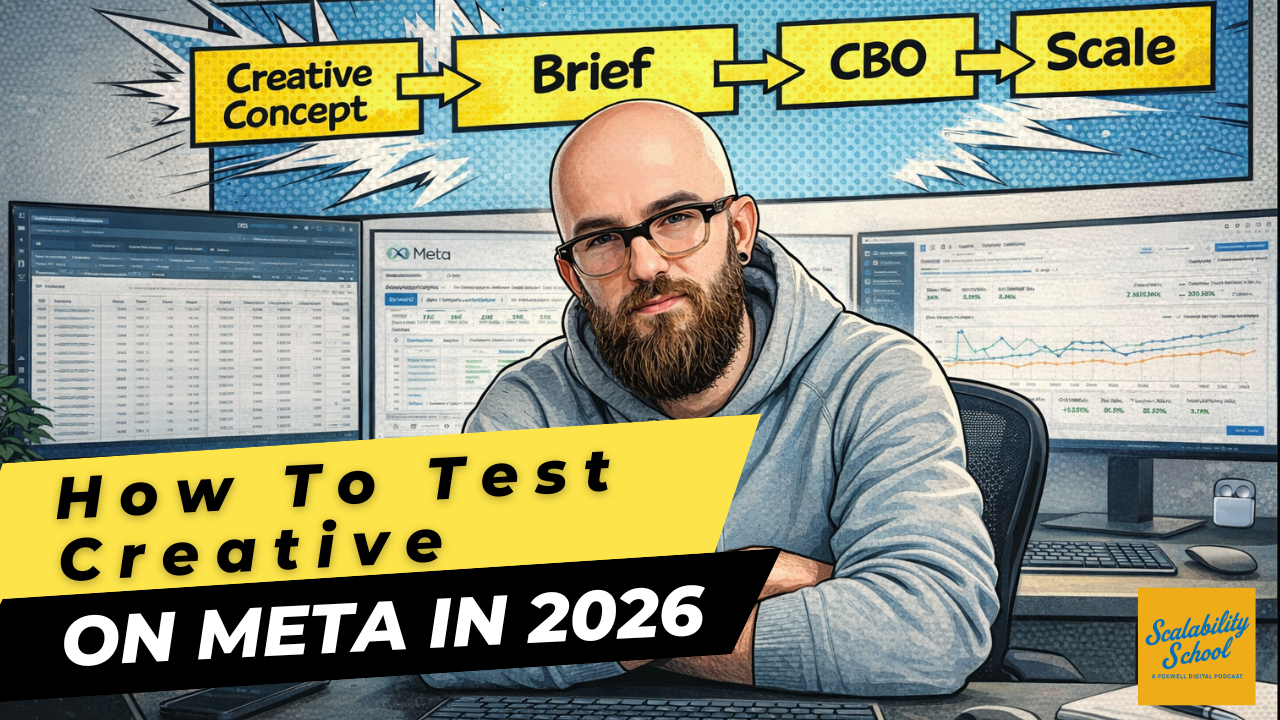
In this episode of Scalability School, host Andrew Foxwell is joined by Phil Kiel of Taikun Digital and co-host Brad Ploch to tackle the single most-asked question in the Foxwell Founders community: how do you actually test creative on Meta in 2026? The question was asked over 160 times in just 45 days, making it the undisputed #1 topic among media buyers and brand operators in the community.
The conversation digs into two distinct camps of creative testing, forced spend (ABO) versus letting ads earn spend (CBO) and unpacks the real-world pros, cons, and trade-offs of each. Phil, who runs accounts at significant scale, makes a compelling case for the CBO-first, content-centric approach, arguing that the role of Meta’s algorithm is to allocate spend to the best creative, not for buyers to manually dictate it. The episode also confronts the volume trap: the pressure media buyers feel to launch massive quantities of ads every month. Phil’s take is refreshing and practical, 8 to 10 solid concepts per month (roughly 40–50 assets) is a solid starting point for most brands, built around strong creative briefs rather than raw volume. The hosts challenge the Twitter/X culture of flex-posting ad launch numbers, arguing the real metric that matters is creative quality and concept diversity.
Key Takeaways:
- Are you forcing spend into creative tests and accidentally funding your worst ads?
- Is the ad set structure in your Meta account actually doing anything, or is it just an expensive folder?
- How many new creative concepts should you be launching per month?
- CBO vs. ABO for creative testing: which one is actually right for your account right now?
- Why launching too many ads may be training your account to spend on losers.
- What does it actually mean to ‘let ads earn spend’ and how to know when a creative concept has really failed versus just not getting a fair shot.
- Why creative volume is the wrong metric to optimize and what you should be tracking instead.
- What’s the difference between a creative concept and an ad asset?
- The one thing you should do today if you’re a brand owner paralyzed by creative output pressure.
This episode of the Scalability School podcast is sponsored by NorthBeam and they just launched Northbeam Incrementality. Northbeam Incrementality gives you easy, automated, self-service incrementality tests, while protecting you from the major mistakes so many people make while running incrementality tests. Your MTA handles the daily tactics, your MMM guides the long-term planning, and Incrementality provides the causal truth. It’s a closed loop that allows you to scale what works and cut what doesn’t. Right now when you head over to northbeam.io/incrementality, they’re offering Scalability School listeners 50% off unlimited tests for a year when you join. Just tell them we sent you!
To learn more about Phil Kiel and the Taikun Digital team you can follow him on X https://x.com/PhilKiel or head to https://www.taikundigital.com/
To connect with Andrew Foxwell send an email [email protected]
To connect with Brad Ploch send him a DM at https://x.com/brad_ploch
To connect with Zach Stuck send him a DM at https://x.com/zachmstuck
Learn More about the Foxwell Founders Community at https://foxwellfounders.com/
Learn More about the The Hive Haus Creators Community at http://HiveHausUGC.com
Disclaimer
This podcast’s information is provided for general reference and was obtained from publicly accessible sources. The Podcast Collaborative neither produces nor verifies the content, accuracy, or suitability of this podcast. Views and opinions belong solely to the podcast creators and guests.
For a complete disclaimer, please see our Full Disclaimer on the archive page. The Podcast Collaborative bears no responsibility for the podcast’s themes, language, or overall content. Listener discretion is advised. Read our Terms of Use and Privacy Policy for more details.