Risk is Our Business
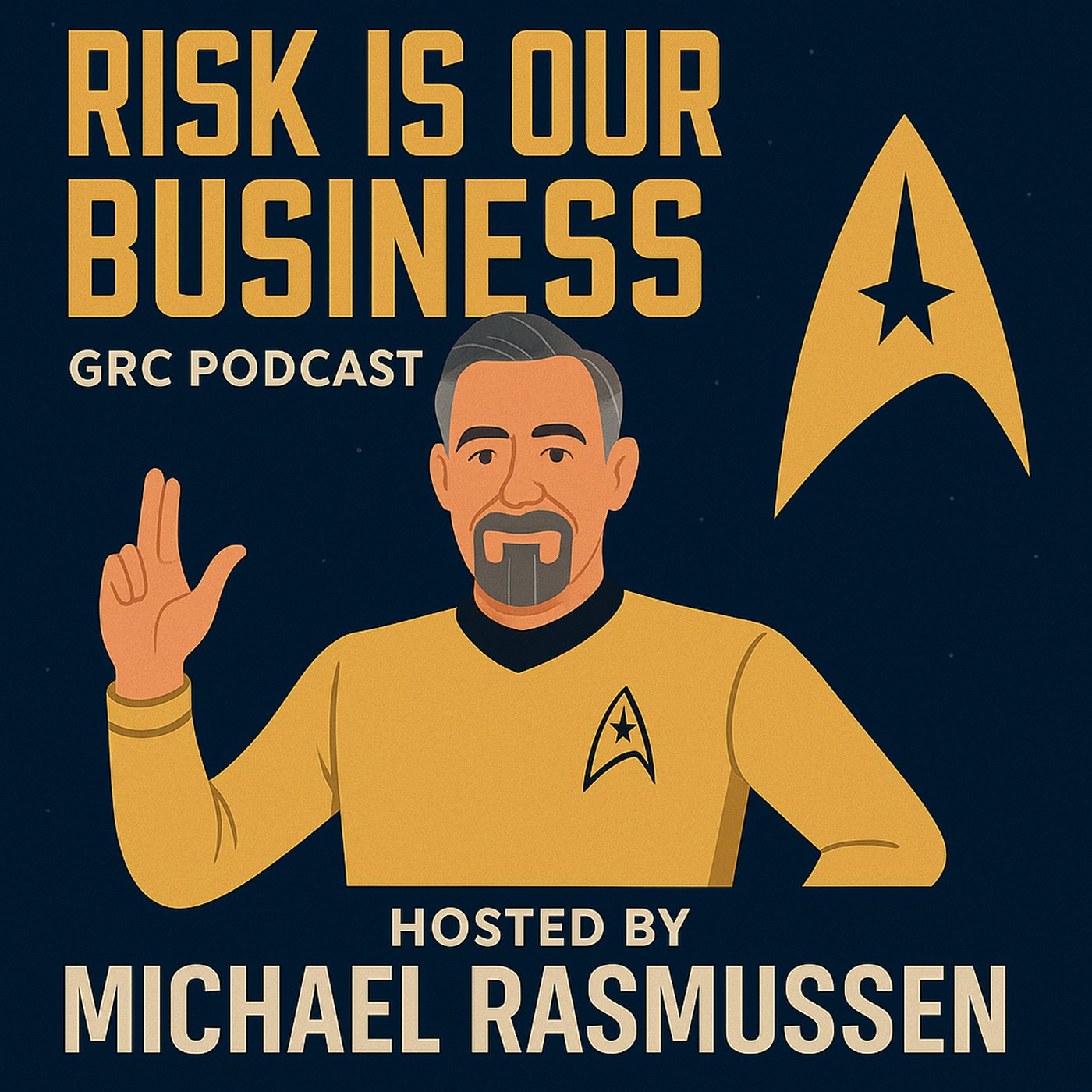
Risk is Our Business
Podcast Description
Welcome to Risk Is Our Business, where we explore the principles of Governance, Risk Management, and Compliance — to reliably achieving objectives, navigating uncertainty, and act with integrity.
Here, we follow the Prime Directive of Risk Management: No decision or strategy moves forward without understanding its impact on our objectives, our resilience, and our values. Because risk isn’t the enemy, it’s the mission.
After all, risk is our business.
Join us as we go boldly into the world of GRC.
Podcast Insights
Content Themes
The podcast highlights essential themes in GRC, with episodes covering topics such as the evolution of risk management, the impact of cultural context on compliance, and the strategic adjustments needed for risk adaptation. For example, episodes explore how GRC has transitioned from a compliance-centric view to a more strategic, objective-driven approach, alongside discussions about technological integration in risk processes.

Welcome to Risk Is Our Business, where we explore the principles of Governance, Risk Management, and Compliance — to reliably achieving objectives, navigating uncertainty, and act with integrity.
Here, we follow the Prime Directive of Risk Management: No decision or strategy moves forward without understanding its impact on our objectives, our resilience, and our values. Because risk isn’t the enemy, it’s the mission.
After all, risk is our business.
Join us as we go boldly into the world of GRC.
In this episode of Risk Is Our Business, Captain Michael Rasmussen welcomes Jannie Wentzel and Andrew Gunter, Partner and Principal GRC Consultants at Cential, for a candid conversation about where risk management and GRC go wrong, particularly inside American organizations, and what it takes to set a better course.
Jannie and Andrew take the helm for much of the discussion, beginning with the bad. They explore the habits, structures, and assumptions that leave risk and compliance programs disconnected from the business, including approaches built around satisfying requirements rather than helping organizations understand uncertainty and make better decisions.
The conversation turns to the state of risk management in the United States and some of the recurring weaknesses they encounter in practice. Rather than treating those problems as inevitable features of GRC, they examine what organizations can do differently and why effective risk management begins with understanding the business, its objectives, and the decisions people are actually trying to make.
From there, the discussion moves naturally into what good risk management looks like. Jannie and Andrew draw on years spent working directly with organizations to discuss the importance of alignment, practical processes, clear ownership, and GRC programs designed around business value rather than bureaucracy.
More than a prescribed tour through frameworks and methodologies, this episode is a practitioner-led conversation about the state of the profession and the course corrections that can turn GRC from an obligation into something the business genuinely wants on the bridge.
Disclaimer
This podcast’s information is provided for general reference and was obtained from publicly accessible sources. The Podcast Collaborative neither produces nor verifies the content, accuracy, or suitability of this podcast. Views and opinions belong solely to the podcast creators and guests.
For a complete disclaimer, please see our Full Disclaimer on the archive page. The Podcast Collaborative bears no responsibility for the podcast’s themes, language, or overall content. Listener discretion is advised. Read our Terms of Use and Privacy Policy for more details.