Generalist Universe

Generalist Universe
Podcast Description
The Generalist Universe Podcast is hosted by Caio Huck Spirandelli, a Brazilian economist and science communicator. In each episode, Caio sits down with researchers, academics, and experts from around the world for thoughtful, in-depth conversations about society, science, and the big questions shaping our world.
It’s a space for listeners who want to go beyond headlines and explore ideas with nuance, honesty, and an interdisciplinary lens.
Join Caio on this journey through knowledge, asking tough questions and challenging easy answers.
Podcast Insights
Content Themes
The podcast explores a variety of complex topics, including societal dynamics, gender equality, and violence against women, exemplified by episodes featuring the discussions of femicide in Latin America, the roots of violence against women, and intellectual decolonization in Africa. Each episode aims to delve into broader themes, such as inequality and cultural shifts, while maintaining a focus on providing deep, thoughtful insights rather than surface-level commentary.
Welcome to the Generalist Universe Podcast, hosted by Caio Huck Spirandelli, a Brazilian economist and science communicator. Originally envisioned as an interdisciplinary exploration across numerous fields, the show now delves deeply into high-quality social sciences.
The name “Generalist Universe” celebrates Homo sapiens as a generalist species—adaptable, versatile, and endlessly curious. Caio embodies this generalist spirit through thoughtful dialogues with leading social scientists, providing insightful perspectives on complex social phenomena and human behavior.
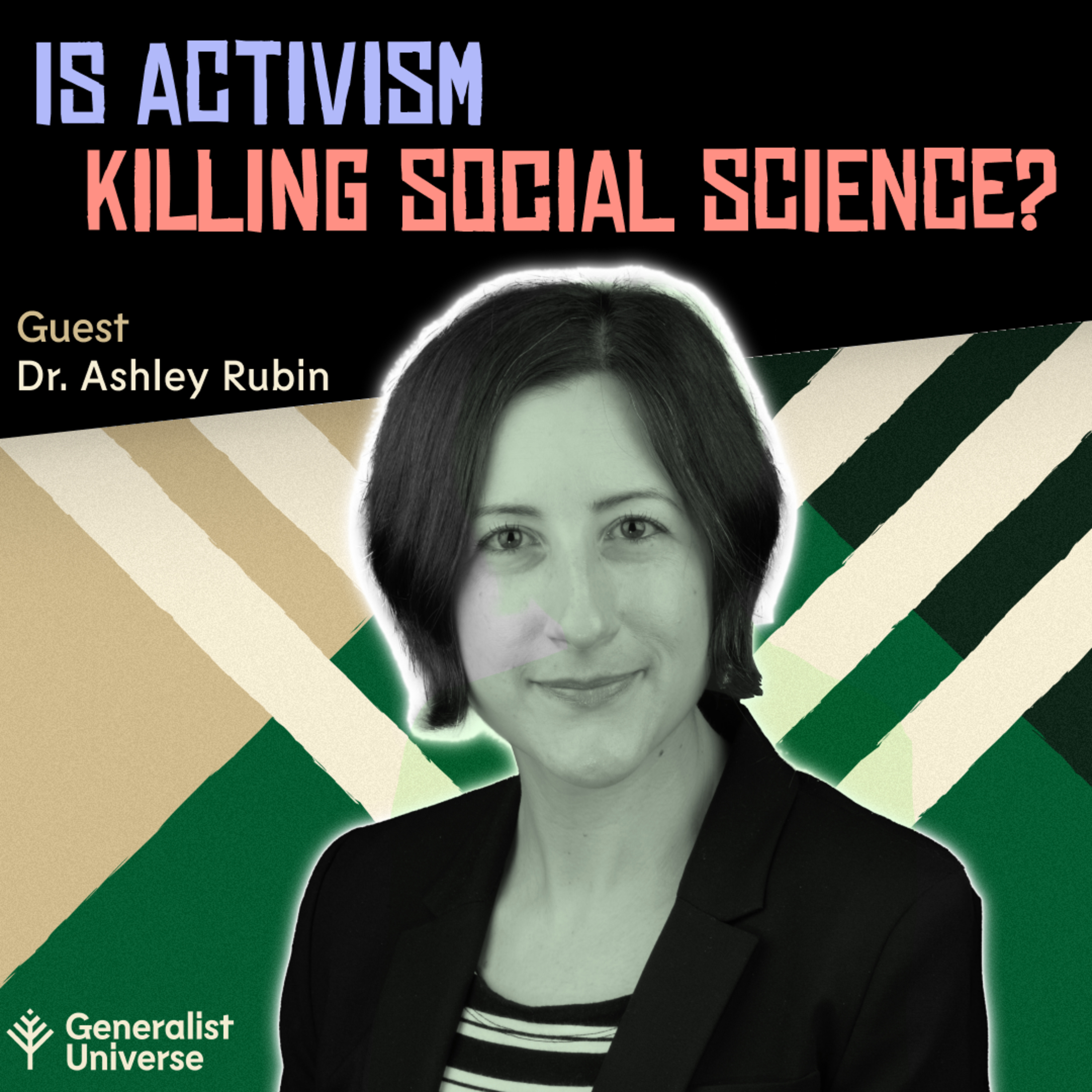
In this compelling interview, Dr. Ashley T. Rubin explains why normativity is not a replacement for theory, addressing how activism is increasingly shaping academic research in the social sciences. Rubin identifies critical issues such as the misuse of jargon, the blurred line between scholarship and advocacy, and the erosion of scientific standards due to ideological pressures. By examining terms like ”carceral state,” ”prison-industrial complex,” and ”decolonization,” she highlights how ambiguous language can distort academic research and mislead policy-making. Rubin calls for a renewed emphasis on methodological rigor and theoretical clarity, cautioning against letting political activism dictate scientific inquiry. If you're concerned about the integrity of academic research, activism's role in scholarship, or the future of social sciences, this conversation provides vital insights.Article – Normativity is Not a Replacement for Theoryhttps://link.springer.com/article/10.1007/s11186-025-09633-3Dr. Ashley Rubin's website:http://ashleytrubin.com/*** Support the Channel ***PayPal Donation: https://www.paypal.com/donate/?hosted_button_id=HFTDRKY9532F2
Disclaimer
This podcast’s information is provided for general reference and was obtained from publicly accessible sources. The Podcast Collaborative neither produces nor verifies the content, accuracy, or suitability of this podcast. Views and opinions belong solely to the podcast creators and guests.
For a complete disclaimer, please see our Full Disclaimer on the archive page. The Podcast Collaborative bears no responsibility for the podcast’s themes, language, or overall content. Listener discretion is advised. Read our Terms of Use and Privacy Policy for more details.