Three Questions
Three Questions
Podcast Description
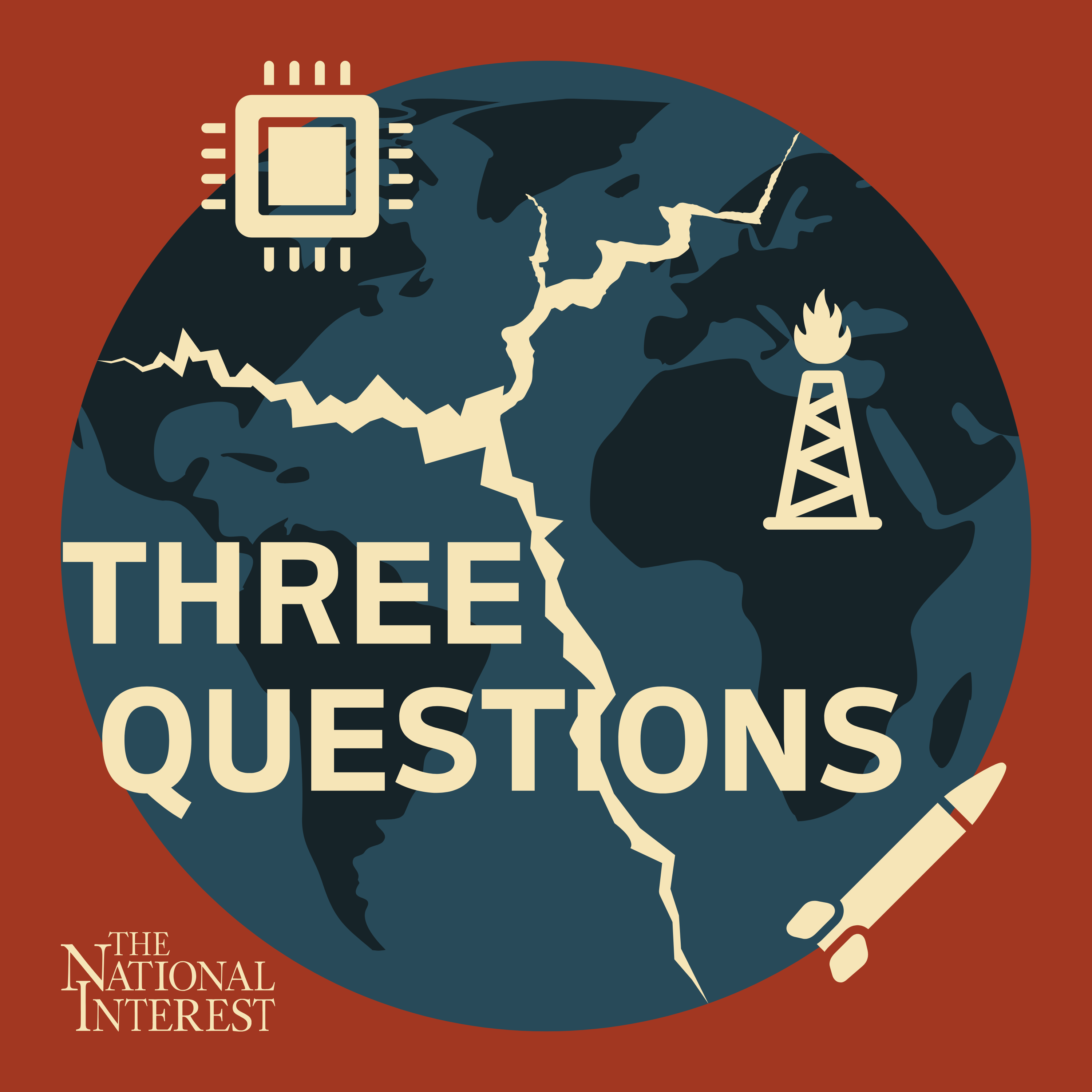
Welcome to Three Questions—a podcast for a new era of global complexity and uncertainty. Three Questions breaks down key security, trade, energy, and technology challenges in an era of escalating competition among the world’s leading powers and rapid change in America’s approach to the world. Every two weeks, host Paul Saunders, President of the Center for the National Interest and Publisher of The National Interest, sits down with leading American and international experts to ask three focused questions that yield short and accessible perspectives on these critical issues. Three Questions cuts through the chaos to bring clarity on timely topics.
Podcast Insights
Content Themes
The podcast emphasizes critical themes such as energy, security, trade, and technology amidst rising global competition, with episodes like 'Is America's Nuclear Renaissance in Trouble?' highlighting concerns about the U.S. nuclear energy sector's future and its implications for international standing.
Welcome to Three Questions—a podcast for a new era of global complexity and uncertainty. Three Questions breaks down key security, trade, energy, and technology challenges in an era of escalating competition among the world’s leading powers and rapid change in America’s approach to the world. Every two weeks, host Paul Saunders, President of the Center for the National Interest and Publisher of The National Interest, sits down with leading American and international experts to ask three focused questions that yield short and accessible perspectives on these critical issues. Three Questions cuts through the chaos to bring clarity on timely topics.
Nine months after the US seizure of Nicolás Maduro, Venezuela has largely slipped from the headlines. Oil production in the country is steadily rising, however, and talks over a political transition are inching forward under the government of Delcy Rodríguez. The stakes could hardly be higher: Venezuela holds the world’s largest proven oil reserves. But is this oil-driven recovery actually reaching ordinary Venezuelans? Can the country’s politics hold together if a true democratic transition remains on a distant horizon? And can Washington use its leverage to build a lasting partnership, or will it miscalculate, pressing for terms that Venezuelans find unacceptable?
In this episode, Paul Saunders speaks with Richard Sanders, Senior Fellow for the Western Hemisphere at the Center for the National Interest. Sanders is a former member of the Senior Foreign Service. He served as Foreign Policy Advisor to the Chief of Staff of the U.S. Army, General Mark A. Milley from 2016-18. Prior to that, he served as Chargé d’Affaires at the U.S. Embassy in Ottawa, Canada, from 2013-14 and as Deputy Chief of Mission from 2014-16. Earlier assignments include service in Venezuela, Colombia, Chile, Uruguay, and Spain.
Disclaimer
This podcast’s information is provided for general reference and was obtained from publicly accessible sources. The Podcast Collaborative neither produces nor verifies the content, accuracy, or suitability of this podcast. Views and opinions belong solely to the podcast creators and guests.
For a complete disclaimer, please see our Full Disclaimer on the archive page. The Podcast Collaborative bears no responsibility for the podcast’s themes, language, or overall content. Listener discretion is advised. Read our Terms of Use and Privacy Policy for more details.