CAPOLAVORO!
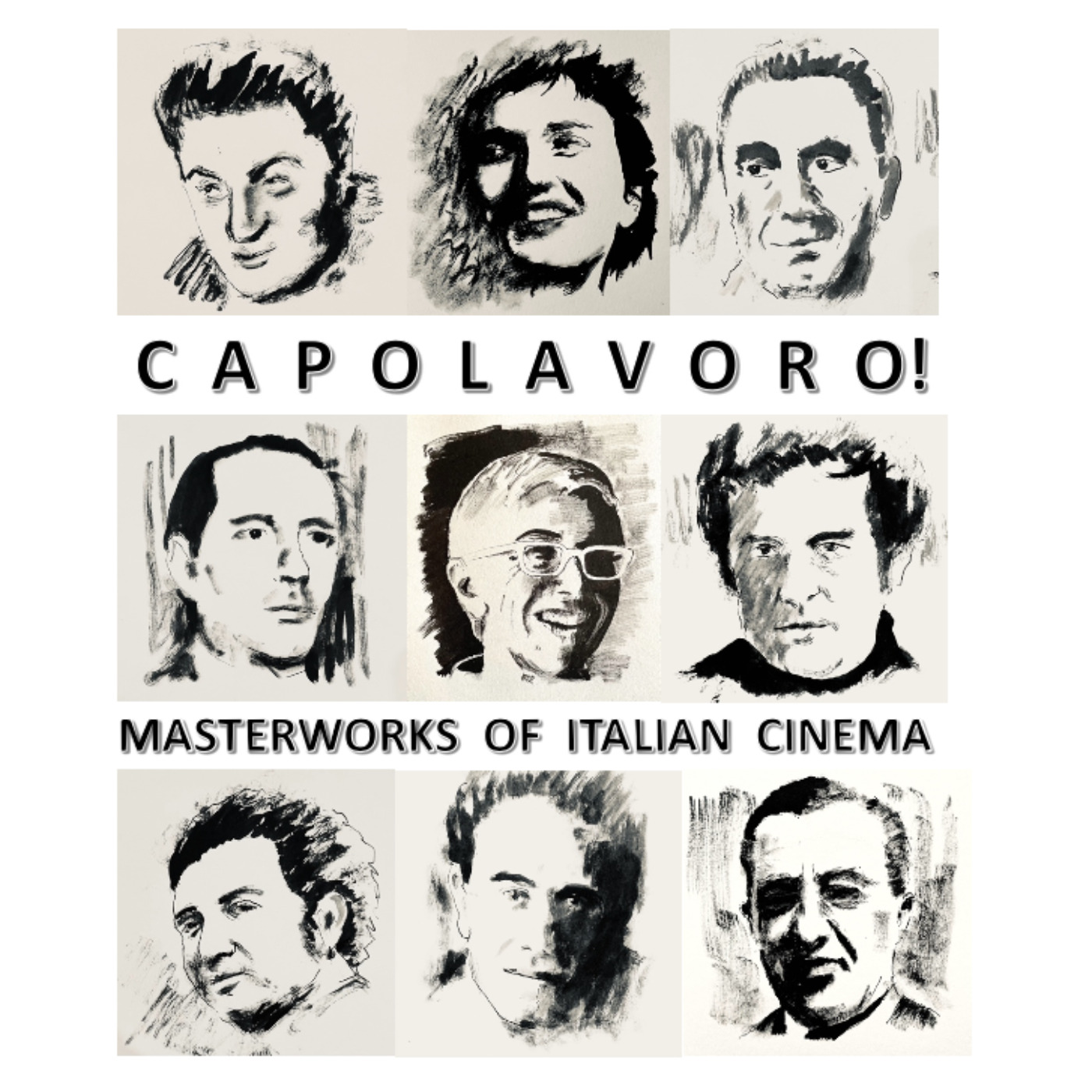
CAPOLAVORO!
Podcast Description
In this podcast Russell Kilbourn, Professor of Literature and Film at Wilfrid Laurier University, Ontario discusses classic Italian movies, old and new with Ken Barrett, host of the Brainland podcast, visual artist and former neuropsychaitrist. Each episode focuses on one film. Hosted on Acast. See acast.com/privacy for more information.
Podcast Insights
Content Themes
The podcast delves into a range of topics, primarily focusing on classic and contemporary Italian cinema with episodes discussing themes such as the mafia influence in Gomorrah, Pasolini's unique storytelling in The Gospel According to Matthew, and the exploration of mythological references in La Chimera, while highlighting the historical and social context of each film.
In this podcast Russell Kilbourn, Professor of Literature and Film at Wilfrid Laurier University, Ontario discusses classic Italian movies, old and new with Ken Barrett, host of the Brainland podcast, visual artist and former neuropsychiatrist. Each episode focuses on one film and lasts about 30 minutes.
Hosted on Acast. See acast.com/privacy for more information.
In this episode Russ and Ken discuss three of the earliest films made by director Vittorio de Sica, Sciusia (Shoeshine, 1946), Ladri di Biciclette (The bicycle thieves,1948) and Umberto D (1952), all films made in and around Rome, mainly with non-professional actors. We talk about De Sica’s extraordinary career as actor, comedian, theatre then film director as well as his commitment to leftist politics and social justice, alongside his catholic faith and unusual, double, family life. Russ talks about the main elements of neorealism in cinema as evidenced in these films, and its parallel in the literature of the time, before outlining the plot of each film, each co-scripted by the director. We talk about the interesting use of locations and camera, capturing less-known areas of Rome and, the successful and affective impact of the music, composed by composed by Alessandro Cicognini in each case. Great conversation on an important director and movement.
Participants:
Russ Kilbourn, Professor of English and Film Studies, Wilfrid Laurier University, Waterloo, Ontario (Canada) http://rjakilbourn.com/
Ken Barrett, UK based visual artist, writer, podcaster and short film producer http://www.kenbarrettstudio.co.uk/
The movies:
Sciuscia (1946): https://www.imdb.com/title/tt0040522/
Ladri di Biciclette (1948): https://www.imdb.com/title/tt0040522/?ref_=fn_i_1
Umberto D (1952): https://www.imdb.com/title/tt0045274/?ref_=fn_t_1
More on De Sica: https://en.wikipedia.org/wiki/Vittorio_De_Sica
More on Neorealism: https://en.wikipedia.org/wiki/Italian_neorealism
Theme music: Tarantella composed by Stephen Brown.
Artwork by KB
Hosted on Acast. See acast.com/privacy for more information.

Disclaimer
This podcast’s information is provided for general reference and was obtained from publicly accessible sources. The Podcast Collaborative neither produces nor verifies the content, accuracy, or suitability of this podcast. Views and opinions belong solely to the podcast creators and guests.
For a complete disclaimer, please see our Full Disclaimer on the archive page. The Podcast Collaborative bears no responsibility for the podcast’s themes, language, or overall content. Listener discretion is advised. Read our Terms of Use and Privacy Policy for more details.