UpShift Podcast

UpShift Podcast
Podcast Description
“Upshift” is a community where change-makers gather, ideas are exchanged, and real talk happens. Host Angel Howard brings her own perspective as a corporate executive-turned-movement therapist to discuss everything from innovation to self-discovery. Her guests are pioneering leaders who share how they gain traction, sustain momentum, and propel their visions forward. This is an upshift for your mindset. Let’s see how far you can go.
Podcast Insights
Content Themes
The podcast focuses on themes of personal growth, entrepreneurship, community impact, and self-discovery. Episodes explore topics like the challenges of caregiving with Heather Hiscox, holistic healing practices from Dr. Meg Haworth, and the emotional connections to physical health as discussed by Angel Howard. Each episode emphasizes actionable advice and inner reflection.
“Upshift” is a community where change-makers gather, ideas are exchanged, and real talk happens. Host Angel Howard brings her own perspective as a corporate executive-turned-movement therapist to discuss everything from innovation to self-discovery. Her guests are pioneering leaders who share how they gain traction, sustain momentum, and propel their visions forward. This is an upshift for your mindset. Let’s see how far you can go.
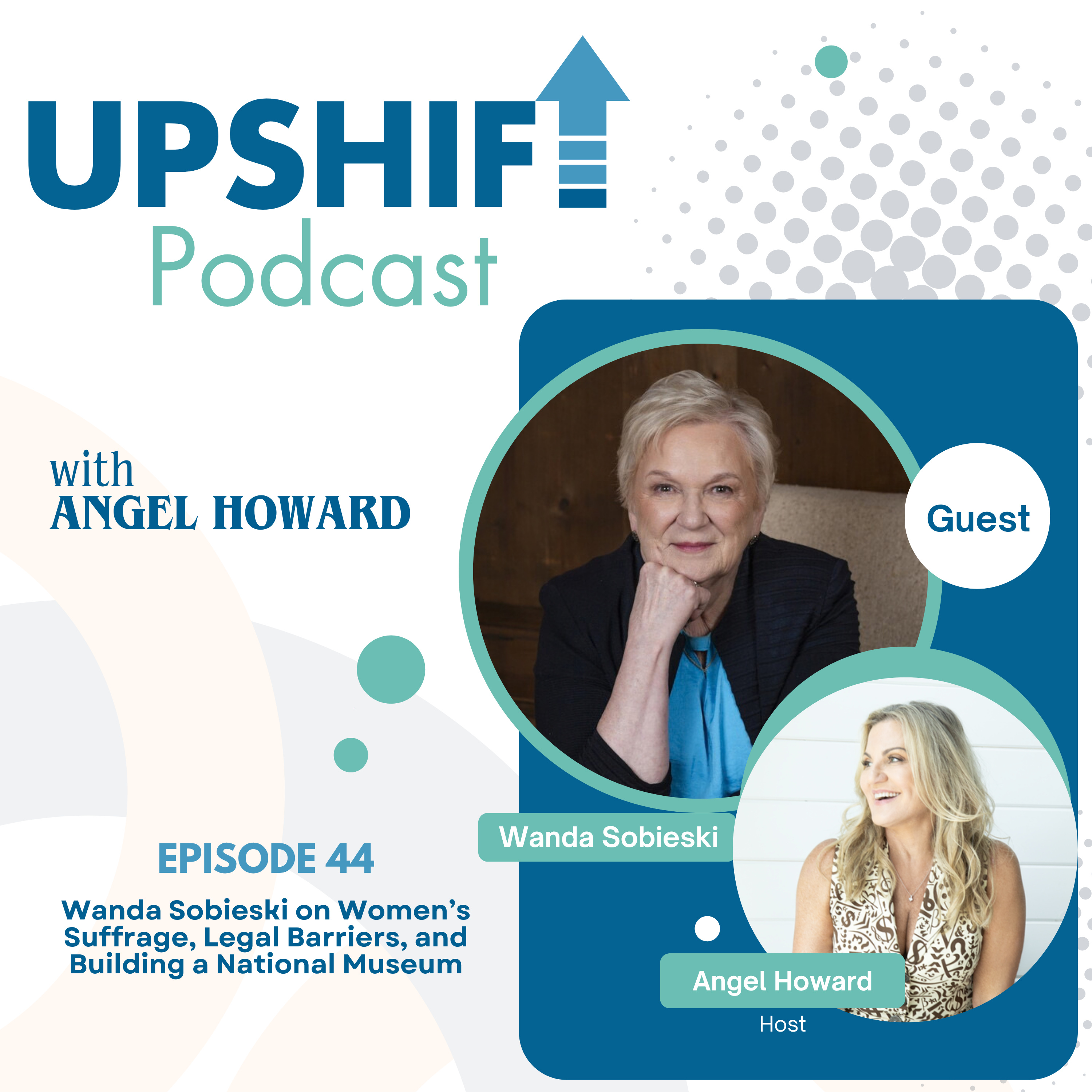
In this episode, Angel Howard talks with retired attorney Wanda Sobieski about a life shaped by curiosity, persistence, and a drive to understand how laws and social expectations affect women. Wanda shares her path from growing up in a conservative Ozarks family to becoming an attorney and advocate for women’s rights. She also explores the long fight for women’s suffrage, Tennessee’s pivotal role in ratifying the 19th Amendment, and the sacrifices made by generations of women seeking the right to vote. The conversation concludes with Wanda’s work to create the Women’s Suffrage Museum in Knoxville, an interactive museum designed to preserve these stories and help future generations understand the history behind rights that can be easy to take for granted.
Takeaways
- Wanda developed a habit of questioning social expectations from an early age.
- Education became possible for her because of scholarships, work, persistence, and support from teachers who saw her potential.
- Her experiences with discrimination helped shape her interest in law and equal rights.
- Wanda entered law school in the 1970s and built a long legal career that included construction litigation and family law.
- Her involvement with the Equal Rights Amendment led her to study the history of the women’s suffrage movement.
- The fight for women’s suffrage lasted decades and involved organizing, protest, imprisonment, and personal sacrifice.
- Tennessee played a critical role in the final ratification of the 19th Amendment in 1920.
- Harry Burn’s deciding vote, influenced by a letter from his mother, Febb Burn, became a defining moment in the Tennessee suffrage story.
- Wanda believes much of women’s history has not been taught with enough depth or context.
- Her work on the Women’s Suffrage Museum aims to preserve that history through artifacts, interactive exhibits, education, and storytelling.
Today's guest, Wanda Sobieski, can be found at:
Website: https://womenssuffragemuseum.org/
LinkedIn: https://www.linkedin.com/in/wanda-sobieski-894a9b13/
Your host, Angel Howard, can be found online at:
Website: https://angelhoward.co/
LinkedIn: https://www.linkedin.com/in/howard-angel/
Youtube: https://www.youtube.com/@angelhowardissuescoach
Instagram: https://www.instagram.com/angelhowardofficial/
Get Angel's book: https://amzn.to/4o4UcEi
Keywords
Women’s Suffrage, Women’s Rights, 19th Amendment, Equal Rights Amendment, Voting Rights, Women’s History, Suffrage Movement, Tennessee History, Women’s Suffrage Museum, Harry Burn, Febb Burn, Alice Paul, Susan B. Anthony, Gender Equality, American History
Disclaimer
This podcast’s information is provided for general reference and was obtained from publicly accessible sources. The Podcast Collaborative neither produces nor verifies the content, accuracy, or suitability of this podcast. Views and opinions belong solely to the podcast creators and guests.
For a complete disclaimer, please see our Full Disclaimer on the archive page. The Podcast Collaborative bears no responsibility for the podcast’s themes, language, or overall content. Listener discretion is advised. Read our Terms of Use and Privacy Policy for more details.