The Queer Love Podcast
The Queer Love Podcast
Podcast Description
What do we know about love? Find, accept and explore love and commitment among gay, lesbian and trans people in queer relationships through storytelling and interviews with LGBTQ+ folx. queerloveproject.substack.com
Podcast Insights
Content Themes
The podcast explores themes of love and identity in queer relationships with episodes highlighting personal experiences, such as Charley Soderbergh's discussion about his screenplay narrative on family and relationships and Michael Narkunski's reflections on a high school crush. Focus areas include the impact of parental relationships on romantic dynamics and the intersection of personal storytelling and creative collaboration.
What do we know about love? Find, accept and explore love and commitment among gay, lesbian and trans people in queer relationships through storytelling and interviews with LGBTQ+ folx.
I don’t remember how I first stumbled upon the Substack for La | queer, non-binary author and began reading the “Queer Old Me” series. It’s one of those serendipitous realities of Substack that I’ve come to cherish. I soon learned that La lives in Madrid, has a tumor they’ve named Bruno and is an incredible writer who is hurtling through life with joy and passion.
I recently shared an essay on my Mostly Fans personal Substack in which I explained how impressed I am by those who create in a language other than their “mother tongue” and how author Jhumpa Lahiri called English her “hairy, sweaty teenager” that she’s had to wrestle with (before she embraced Italian as her baby language). Most English speakers (and writers) rarely master another language well enough to be able to write elegantly in it, so maybe that’s why I’m so gobsmacked when I encounter others who appear to navigate the linguistic terrain with such ease.
La fascinates me, and I’m so glad I had the opportunity to have this conversation about their writing, their journey around the globe, and their experience with the realities of healthcare during this transformative moment of their incredible life.
I knew we were going to have an interesting time; I did not predict I’d be so enthralled by La that I’d want to schedule a follow up as soon as possible!
If you haven’t read La’s work, you should start here.
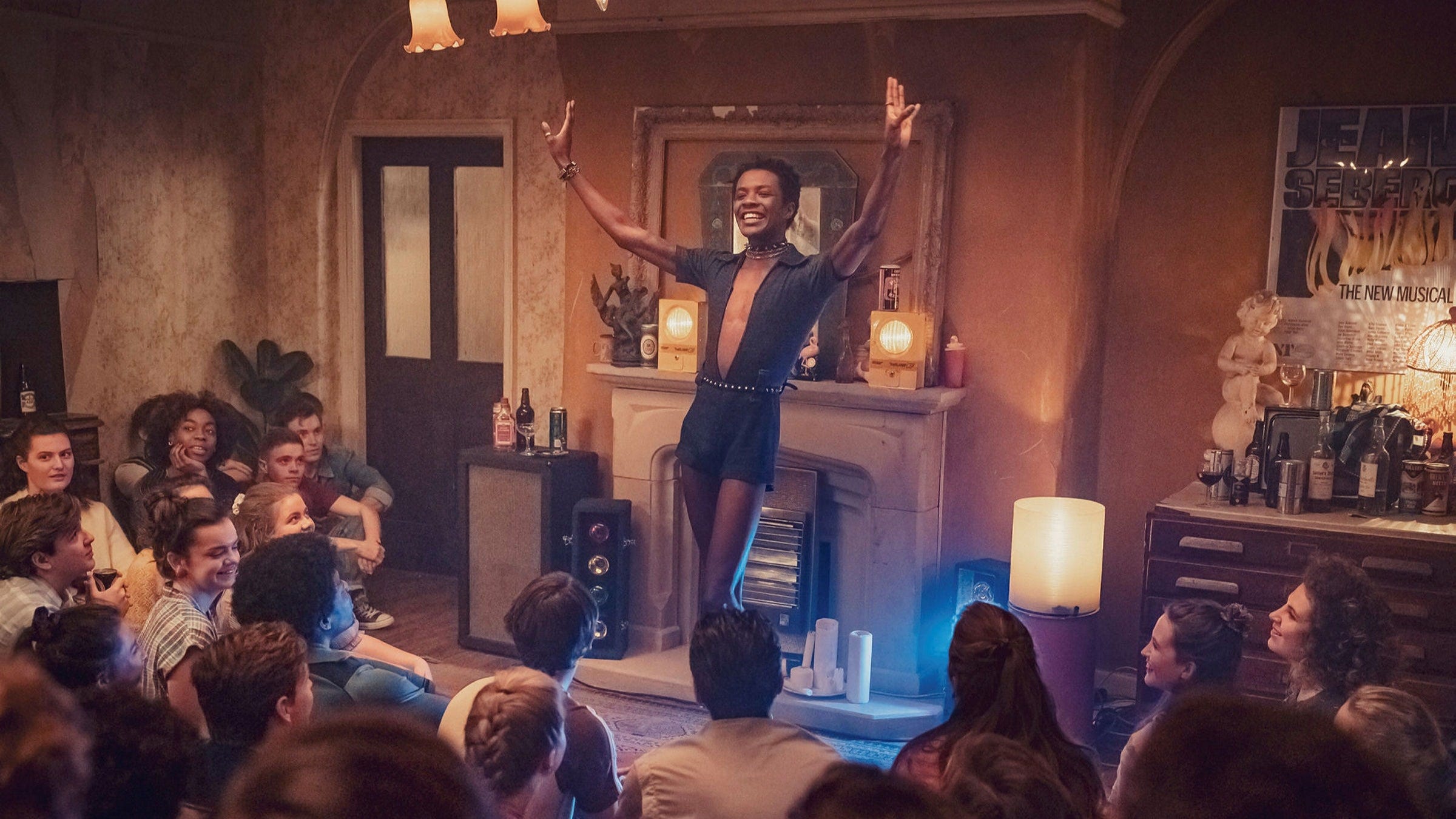
And if you’re curious where the moniker comes from, yes it was inspired by Russell T. Davies’ phenomenal television series It’s a Sin. I’ve written about it, calling it the “most important show about queer love that you (probably) haven’t watched),” so perhaps that’s why La found me? I figured we would talk about that a bit more, but La had other stories that needed to be shared first. I was just strapped in and enjoying the ride!
In a nutshell, La was born and raised in France, moved to London and experienced the gay frivolities of that city before realizing they didn’t want to get stuck in a rut. So what did they do? Move to Ecuador, of course! They began teaching English in Cuenca, Ecuador’s third largest city, which they described as perfect, perpetual spring weather. While there, they not only learned Spanish, but they embedded themself in the community and helped organize the first Miss International Trans Ecuador pageant.
So what does one do after having all this fun? Why, move to Moscow of course!
“Who convinced you to move to Moscow?” I asked La.
“Nobody did. The plan was I was young. I had hair,” La replied. “The plan was: I didn’t want to be a tourist. I don’t enjoy being a tourist. I thought, I’m going to go to places. I’m going to live there for a year or two, fully embed myself in the culture and the people and what they’re doing, and then help by teaching English while I’m there. … I went, why not? They pay really well. I knew nothing about what it was like to be there. I learned a lot, and I regretted every decision I made while I was there.”
Turns out, Russia is NOT a great place for a vivacious queer person to live, so when giving the chance, La moved to Madrid and took up residence in Cheuca, the vibrant gayborhood in Spain’s capital city. If you’ve never been, Madrid is one of the most dynamic cities in the world, has a huge LGBTQ+ population and amazing nightlife and culture. You’ll have fun even if you don’t speak much Spanish (but it will help if you do), so what are you waiting for?
I asked La what their trick was to be able to move to foreign cultures where they don’t speak the language and manage to thrive despite the odds.
“I think you have to let go,” La explained. “You really have to let go.You have to let go of all the mistakes you’re going to make. The mistakes are going to help.”
“People are not going to understand you. I mean, there’s a time that I remember where I mimed a chicken laying an egg in the middle of a shop because they could not understand that I wanted an egg. So I’m like, ‘OK, I’m going to…’ You have to find a way.”
Facing mortality
Because all of us who’ve been following La’s story are curious how they’re doing, I asked how things are going with their health. La was blunt and honest as always (this begins around the 15:12-minute mark):
“I’m doing great, actually. I’m doing really, really well. This has been… I have gone through s**t in my life. My life is just… Aside from the traveling, I’ve got loads of trouble in my childhood. I’ve gone through all of it. And then this has probably been the most transformative experience of my life.
“I’m a completely different person than I was when I started writing. Just me six months ago is a different person, completely different person. …
“I guess, I mean, you know, in episodes to come, spoilers ahead, I’m kind of faced with death. Like I have, I’m in a hospital bed, 40 fever. I just had another surgery. I’m alone. There’s a heat wave, and I have a doctor who looks at me and goes, oh, this is not good. And I’m just— It’s 3 o’clock in the morning, and you don’t see a doctor, like when you’re in a hospital. You don’t see a doctor at 3 o’clock in the morning. They’re not there. You see a nurse.
“So when you see a doctor, you go, ‘Oh, there’s a doctor.’ And then the doctor goes [makes face and bad sound], and then I’m sweating and I’m shaking and I’m in pain. I’m in pain from the surgery. I’m in pain from the fever. I have an infection. I’m like, this s**t has hit the fan. You know what I mean?
“And I’m like, ‘Oh, god. That’s it. I’m done. Okay. I mean, I’ve had a really great life. Don’t get me wrong. Like, I’m not afraid to die, per se. But I’m afraid to suffer. I don’t want the pain. I’m okay with dying. I’ve had an incredible life. I’ve made the best out of my circumstances. But pain, I was like, ‘I don’t want pain. Not fun.’
“Then, yes, I spent a couple of days like that, and it felt like facing death. And then I was like, ‘OK.’ But like, properly—I don’t know how to explain it. I felt like I’ve been in life-threatening situations before, but not to that degree. Like it felt concrete. It felt like it was the end. And that kind of, I made peace somehow. I made peace with everything. And then I made it through.”
Gender Expression: Finding They/Them
I had questions about discovering what gender non-binary is and the birth of La as an identity, and the following explanation was quite beautiful to hear (it begins around the 31-minute mark).
“I think for me, the Me Too movement was the first, was something that impacted me significantly. Like it opened my eyes to things I was kind of aware of, but not to the degree of it, because I do not date women and I’m not in the straight world. And then I started having conversations with my girlfriends about being harassed in the street. I’m like, ‘You’re getting harassed in the street? Where you live? What?” And it’s just like, and it impacted me, and I kind of had to look back within as well. I’m like, ‘Oh, is there a moment where I said yes, but I meant no? And have I gone through situations where—within our community—there’s a lot of times, at least in my case, when I found myself in the situation, I’m like, ‘I’m going through the motion here. And I’m just waiting for this to end.’ Or I’m doing this against my will. There’s been a lot of those. So the Me Too really opened something that; it unlocked something.
“Then a few years later, I’m lucky enough that I’ve been able to go to therapy. And I have an incredible therapist who’s helped me change my life several times. And then I realized that I came to a point where I realized I had a lot of internalized homophobia still, even though I was a person in their forties who’s always been really loud about being a f****t. I’m like, ‘I’m a f****t! And I want to show the world that I am!’
“Once I kind of started to deal with the internalized homophobia and then kind of deconstruct it, I was able to look at my gender expression and where I sat on the gender binary. And finding non-binariness just was, I don’t know, it felt like an evidence. Like it just, of course, of course, that’s what it is! Of course, this is where you sit exactly!
“I remember doing all that work in my head, and I was sitting on my sofa that I talk about a lot—because I love my sofa so much—and I’m right in the middle of the two cushions. I’m going like this, and I’m there, and I’m like, ‘Oh, it feels like non-binariness. It feels like I’m exactly in that little kind of nook that is not this. It’s not that. I’m just there.”
…
“So once I found like that little nook in my sofa, and I’m like, “OK, this is where I’m at. I came out as non-binary. I told people that I was non-binary, but that’s kind of where I left it. I was like, I don’t need you to validate me or anything. I’m OK. And then the tumor is the one I went, ‘No, no, no, no, no. OK. They, them. That’s what I want. If you’re not happy, I don’t care. F**k off.”
The Artist’s Way and Praying to La, Their Higher Self
La mentioned that they have been doing The Artist’s Way. Julia Cameron’s book keeps coming up in various ways in my life. I first encountered it when I was a freshman in college back in the mid-1990s. The book was originally self-published in 1992 and later became a bestseller and has been in popular ever since and is an entire cottage industry (on top of the 30th anniversary edition, there are workbooks and workshops and a slew of other merchandise).
To be honest, I’ve never finished the full 12-week program. But two foundational tools at the heart of The Artist’s Way—Morning Pages and the Artist’s Date—have stayed with me. Together, they act as a hands-on way to help recover your inner creativity.
La also said they have issues with some of the more dogmatic and “religious” sides of the practice, but they also have incorporated parts of it into their lifestyle. (This section begins around the 49-minute mark.)
“In The Artist’s Way, at some point—the whole thing is a little bit too religious to my taste, and I’m very not religious at all—and then she said, ‘Oh, you should write an Artist’s Prayer. And I’m like, an artist’s prayer? What is she talking about? And I’m like, ‘Huh. What if I was to write a prayer to La, which I call the Great La?And I now pray to my higher self. II don’t know how to phrase it. But that’s what I do. I now pray to myself.
“And I give myself the tools and the strength to do the thing that I need to do. So it’s almost like a superhero costume that I put on. I’m like, ‘Hi, I’m La.’”
What’s Next?
I told La that I want to check in again soon for another live chat. In particular, we have a LOT of pop culture to talk about—especially La Bola Negra, the highly anticipated Spanish movie from directors Javier Ambrossi and Javier Calvo that will be in cinemas later in October and will eventually be streaming on Netflix (before it gets all the awards next year).
If you haven’t already watched the trailer, you should. Samantha Allen at Them recently called it “One of the Best LGBTQ+ Movies of the Century,” and I definitely agree—but probably not for the reasons that you might expect.
I feel like more people need to understand the Lorca poetry and plays at the heart of the movie. I own this wonderful Poet in New York, have seen several of the plays and read some of the poetry and have an appreciation, but I’m no expert. I may try to dig in and craft a piece that gives more background because there is a LOT to unpack in this omnibus (it’s really like three movies in one and is epic in scale, spanning nearly a century of history and multiple genres).
If you want to discuss Federico Garcia Lorca, please let me know!
Until then, my hour-long convo with La was such a balm, and I hope you enjoy it as well.
Thank you Thea. B. Price, Saba, Millie Jones-Cowles, Walter Dundervill, and many others for tuning into my live video with La | queer, non-binary author!
Thanks again for listening. If you enjoyed this or any of the essays, poetry, interviews available for free at QLP, please consider upgrading to pay to support our work.
We’re offering a 20% discount to become an annual subscriber, which means you’ll pay $24 for the entire year!
You can also like and follow the podcast on other platforms, including YouTube, Spotify, and Apple Podcasts (as well as other podcast platforms).
We also have an Etsy page where you can find some of our merch!
Get full access to The Queer Love Project at queerloveproject.substack.com/subscribe
Disclaimer
This podcast’s information is provided for general reference and was obtained from publicly accessible sources. The Podcast Collaborative neither produces nor verifies the content, accuracy, or suitability of this podcast. Views and opinions belong solely to the podcast creators and guests.
For a complete disclaimer, please see our Full Disclaimer on the archive page. The Podcast Collaborative bears no responsibility for the podcast’s themes, language, or overall content. Listener discretion is advised. Read our Terms of Use and Privacy Policy for more details.