Tails of Hope India – Voices for the Voiceless, Hope for Every Paw 🐾

Tails of Hope India – Voices for the Voiceless, Hope for Every Paw 🐾
Podcast Description
Why are we doing this?
Because every wagging tail, every hopeful gaze, and every gentle purr deserves a second chance. Animals bring us unconditional love, emotional healing, and companionship—yet many suffer in silence. Through Tails of Hope India, we aim to:
✅ Raise awareness about responsible pet ownership and ethical adoption.
✅ Highlight the challenges faced by stray animals and the need for stronger welfare policies.
✅ Support animal shelters, rescues, and caregivers who dedicate their lives to saving them.
✅ Inspire individuals to take action—whether by adopting, fostering,
Podcast Insights
Content Themes
The podcast focuses on animal welfare, responsible pet ownership, and advocacy for stray animals, with episodes discussing the struggles of rescuers like Sarang Rajwade and legal challenges highlighted by Varnika Singh related to outdated laws governing animal protection.
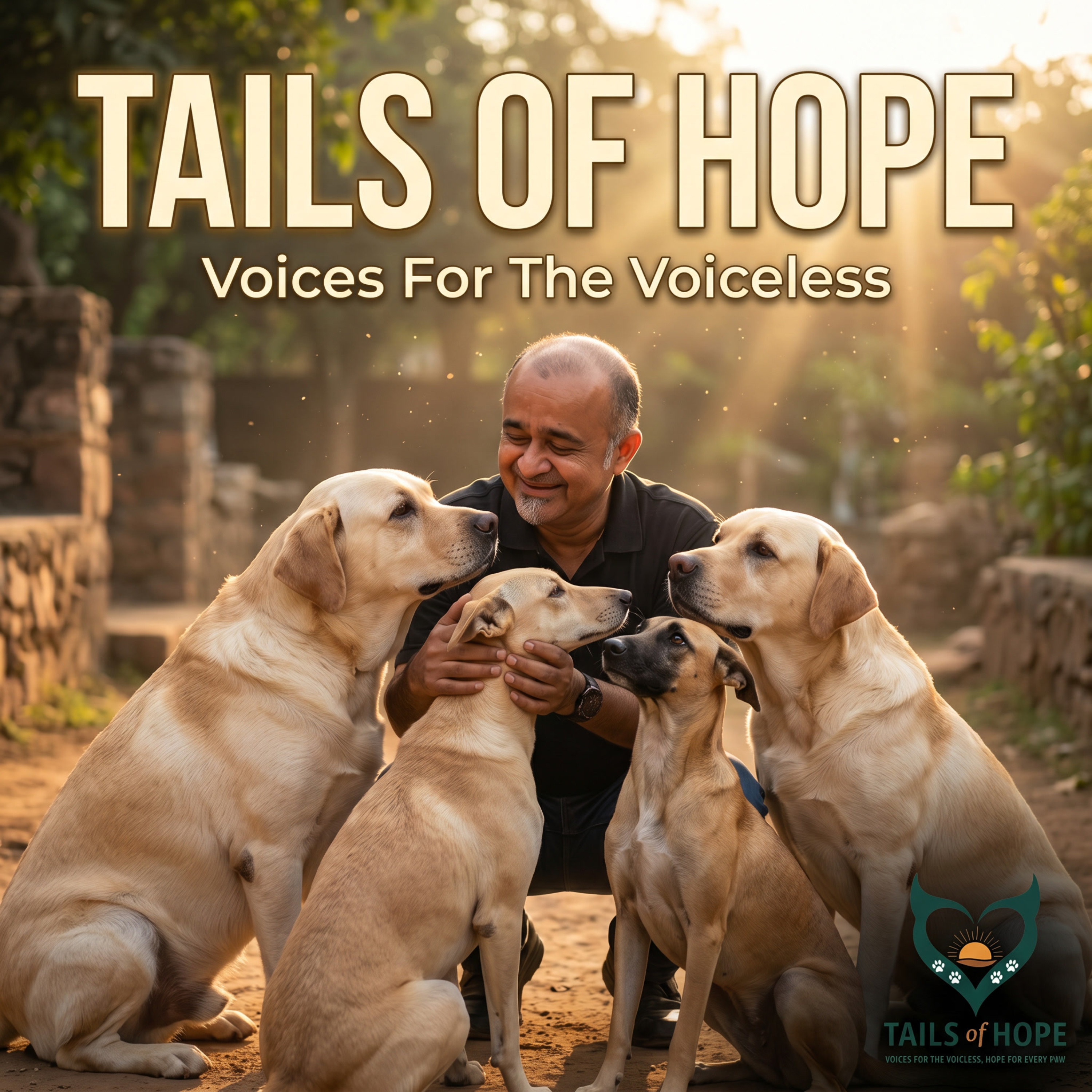
Tails of Hope is a global platform championing animal welfare and animal rights, serving as powerful voices for the voiceless. We spotlight rescue stories, ethical adoption, responsible guardianship, animal law advocacy, and urgent issues like factory farming. From supporting shelters and caregivers to amplifying animal lawyers and reform-driven leaders, we inspire compassionate action worldwide. Join us in building a kinder, more conscious world for every life that cannot speak for itself.
🐾 TAILS OF HOPE — SEASON 4, EPISODE 11
𝗪𝗵𝗮𝘁 𝗶𝗳 𝗵𝗲𝗮𝗹𝗶𝗻𝗴 𝗮 𝘄𝗶𝗹𝗱 𝗮𝗻𝗶𝗺𝗮𝗹 𝗶𝘀 𝗺𝗼𝗿𝗲 𝘁𝗵𝗮𝗻 𝘃𝗲𝘁𝗲𝗿𝗶𝗻𝗮𝗿𝘆 𝗺𝗲𝗱𝗶𝗰𝗶𝗻𝗲? 𝗪𝗵𝗮𝘁 𝗶𝗳 𝗶𝘁 𝗶𝘀 𝗮𝗹𝘀𝗼 𝗼𝘂𝗿 𝗮𝗽𝗼𝗹𝗼𝗴𝘆 𝘁𝗼 𝗻𝗮𝘁𝘂𝗿𝗲?
On this episode of Tails of Hope – Voices for the Voiceless, Hope for Every Paw, we welcome Colonel Dr. Navaz Shariff, Former DIG of Police, Ministry of Home Affairs, MVSc (Veterinary Medicine), NDEHMS (IVRI), Chief Wildlife Veterinarian and General Manager.
After 32 years of service in the Indian Army, Dr. Shariff continues to serve—not only animals, but the larger relationship between humans and the natural world.
Why choose wildlife when companion animals have families to care for them?
For Dr. Shariff, the answer is simple: wildlife has no owner.
In Bengaluru's urban landscape, his team has rescued tens of thousands of animals across hundreds of species—from snakes and birds to monkeys, civets, tortoises, vultures and leopards.
But behind those rescues lies a troubling reality.
Rapid urbanisation, vehicular movement, pollution, bright lights, glass buildings and the destruction of natural habitats are creating new dangers for wildlife.
Animals that once lived within their ecosystems increasingly find themselves navigating ours.
And when that encounter goes wrong, wildlife hospitals become the bridge between injury and survival.
Dr. Shariff takes us inside that world, explaining why physical healing is only half the journey. An animal may recover from a fracture or wound, but still need to regain the natural behaviours and confidence required to survive independently.
The ultimate goal isn't captivity. It is return.
Few moments, Dr. Shariff says, compare with opening a cage and watching a bird fly away, seeing a monkey disappear into the forest, or releasing a snake back into its natural environment.
That moment of release becomes a reminder of why the work continues.
We also explore one of the most misunderstood creatures in urban India—the snake.
Dr. Shariff explains why snakes generally do not seek conflict with humans, why fear often comes from misunderstanding, and why education may be one of the most powerful tools in wildlife conservation.
But this conversation goes beyond individual species.
He speaks about urban expansion, changing rescue patterns, climate pressures and the need to design cities where wildlife has space to move.
Cities need wildlife too.
And coexistence cannot happen by accident. It requires planning, understanding, education and a willingness to recognise that humans are not separate from nature.
Perhaps the deepest message of this conversation comes towards the end.
Dr. Shariff hopes future generations will inherit a world where people and wildlife coexist with respect and compassion.
He believes wildlife hospitals should become essential community infrastructure, with more rescue centres, greater public participation and more opportunities for people to volunteer and learn.
Because conservation cannot remain the responsibility of a handful of dedicated organisations.
It must become a shared responsibility.
And then comes his most powerful reflection:
“Humans are not separate from nature. We are a part of it.”
When we heal a wild animal, we are not simply treating a patient.
We are acknowledging the habitat we have taken away.
We are trying to restore something we have damaged.
And perhaps, in doing so, we are also protecting ourselves.
🎙️ 𝗧𝗮𝗶𝗹𝘀 𝗼𝗳 𝗛𝗼𝗽𝗲 – 𝗩𝗼𝗶𝗰𝗲𝘀 𝗳𝗼𝗿 𝘁𝗵𝗲 𝗩𝗼𝗶𝗰𝗲𝗹𝗲𝘀𝘀, 𝗛𝗼𝗽𝗲 𝗳𝗼𝗿 𝗘𝘃𝗲𝗿𝘆 𝗣𝗮𝘄
𝗦𝗲𝗮𝘀𝗼𝗻 𝟰, 𝗘𝗽𝗶𝘀𝗼𝗱𝗲 𝟭𝟭 — 𝗖𝗼𝗹𝗼𝗻𝗲𝗹 𝗗𝗿. 𝗡𝗮𝘃𝗮𝘇 𝗦𝗵𝗮𝗿𝗶𝗳𝗳
🐾 A conversation about wildlife medicine, rescue, rehabilitation, urbanisation, education, conservation—and the responsibility we carry to ensure that the wild still has a place in our world.
Disclaimer
This podcast’s information is provided for general reference and was obtained from publicly accessible sources. The Podcast Collaborative neither produces nor verifies the content, accuracy, or suitability of this podcast. Views and opinions belong solely to the podcast creators and guests.
For a complete disclaimer, please see our Full Disclaimer on the archive page. The Podcast Collaborative bears no responsibility for the podcast’s themes, language, or overall content. Listener discretion is advised. Read our Terms of Use and Privacy Policy for more details.