How I AI

How I AI
Podcast Description
How I AI, hosted by Claire Vo, is for anyone struggling to keep up with the latest AI news, and wondering how to actually use these magical new tools to improve the quality and efficiency of their work. In each episode, guests will demonstrate a specific, practical, and impactful way they’ve learned to use AI in their life. Expect 30-minute episodes, live demos, and tips/tricks/workflows you can implement immediately. If you want to demystify AI and learn the skills you need to thrive in this new world, this podcast is for you.
Podcast Insights
Content Themes
This podcast focuses on practical applications of AI across various domains with specific episode themes such as increasing team productivity, utilizing AI in product design, and enhancing workflows with automation. An example includes the episode featuring Sahil Lavingia, CEO of Gumroad, discussing how his team uses AI agents to significantly boost coding efficiency.
How I AI, hosted by Claire Vo, is for anyone wondering how to actually use these magical new tools to improve the quality and efficiency of their work. In each episode, guests will share a specific, practical, and impactful way they’ve learned to use AI in their work or life. Expect 30-minute episodes, live screen sharing, and tips/tricks/workflows you can copy immediately. If you want to demystify AI and learn the skills you need to thrive in this new world, this podcast is for you.
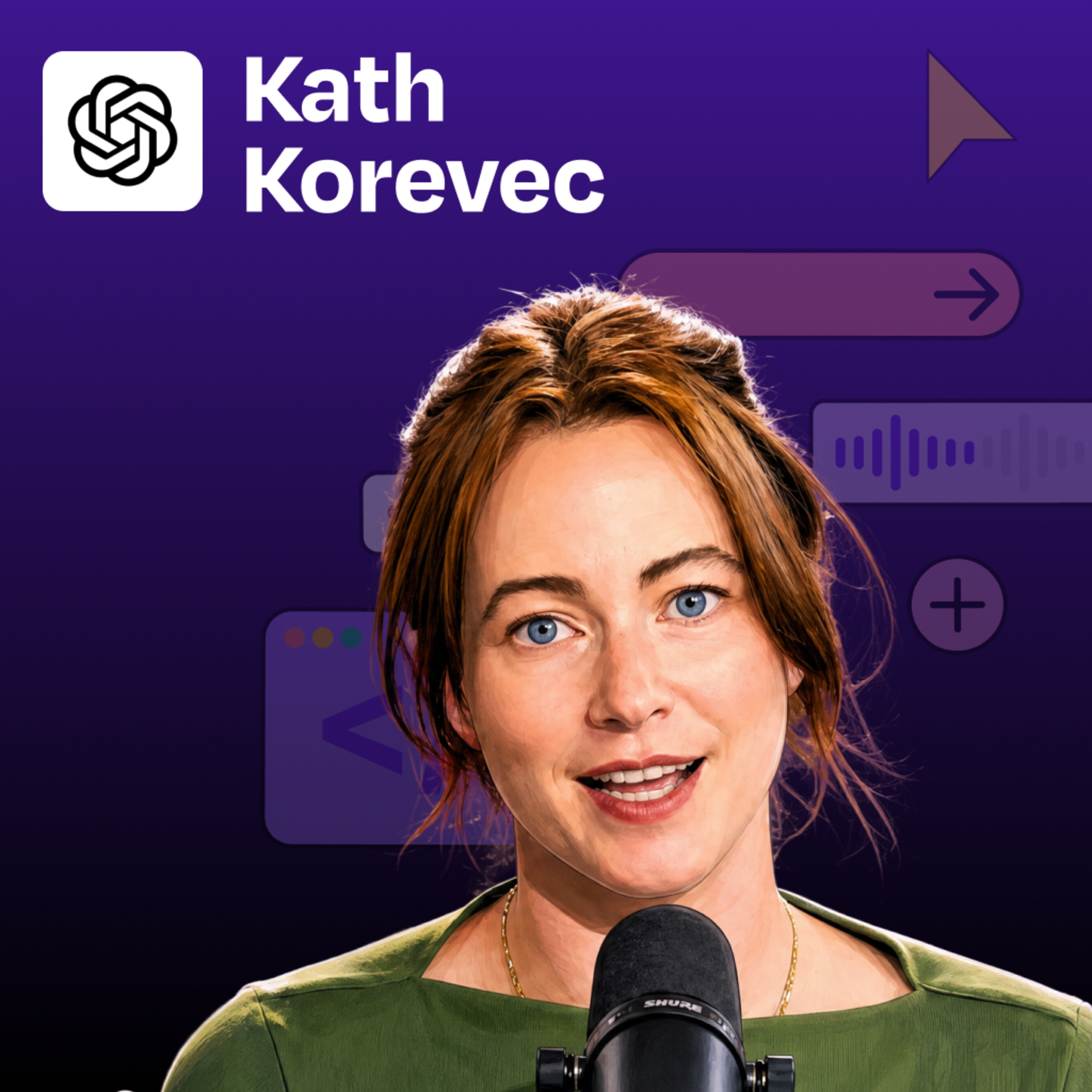
Kath Korevec is a member of the Product staff at OpenAI working on Codex, and she spent over a year building and using ChatGPT Sites internally before its public launch. She’s been on the front lines of shipping Plugin Insights, MCP plugin hosting, and the connector ecosystem, which now includes around 60 integrations.
What you’ll learn:
- What Plugin Insights actually does, and why it changes who can use a site
- The incident command site Kath built for her OpenAI team, and how it uses live Slack and Notion connectors
- The one phrase that tells Codex to wire up connectors for you
- The infrastructure layer inside Sites that most people haven’t touched yet
- How Kath fixed her Spotify after her kids wrecked it, using Reddit and computer use
- The skill distribution model behind her community dungeon crawler, and why it’s a new way to think about collaboration
- Why model speed is what actually determines how creative you get
- Where Kath draws a hard line on AI acting in her name
—
Brought to you by:
Merge—Connective infrastructure for production AI
Vanta—Automate compliance and simplify security
—
In this episode, we cover:
(00:00) Welcome and intro
(01:00) Sites: internal testing and use cases
(05:53) Sites infrastructure
(09:00) Kath’s favorite connectors
(11:10) Unique ways to use Sites
(12:28) Curating a custom Spotify playlist
(15:50) Game design and development
(25:42) Bringing inference into Sites: the widget experiment
(30:00) Awesome Sites gallery
(31:57) Kath’s prompting strategy
(34:20) Wrap-up and how to find Kath
—
Tools referenced:
• ChatGPT Sites: https://chatgpt.com/sites
• OpenAI Codex: https://openai.com/codex
—
Other references:
• OpenAI DevDay: https://openai.com/devday
• Awesome Sites: https://awesomesites.ai
—
Where to find Kath Korevec:
LinkedIn: https://www.linkedin.com/in/kathleensimpson/?isSelfProfile=false
—
Where to find Claire Vo:
ChatPRD: https://www.chatprd.ai/
Website: https://clairevo.com/
LinkedIn: https://www.linkedin.com/in/clairevo/
—
Production and marketing by https://penname.co/. For inquiries about sponsoring the podcast, email [email protected].
Disclaimer
This podcast’s information is provided for general reference and was obtained from publicly accessible sources. The Podcast Collaborative neither produces nor verifies the content, accuracy, or suitability of this podcast. Views and opinions belong solely to the podcast creators and guests.
For a complete disclaimer, please see our Full Disclaimer on the archive page. The Podcast Collaborative bears no responsibility for the podcast’s themes, language, or overall content. Listener discretion is advised. Read our Terms of Use and Privacy Policy for more details.