The Wild Rose Podcast

The Wild Rose Podcast
Podcast Description
The world grows herbalists.
Join Wild Rose College for grounded conversations on herbalism, holistic wellness, education, and community care. With personal stories, plant wisdom, and practical tips, we explore what it means to walk the herbal path today. Whether you're an herbalist or just plant-curious, this podcast offers insight and inspiration for your journey.
Podcast Insights
Content Themes
The podcast focuses on various themes including herbalism, holistic wellness, education, and community care, with episodes that explore personal stories, plant wisdom, and practical tips like seasonal living and simple remedies. Specific episodes include discussions about inclusive men's health in herbalism, the evolution of herbal practices through personal experiences, and wellness strategies for women's health, all inviting listeners to deepen their connection with nature and the plants.
The world grows herbalists.
Join Wild Rose College for grounded conversations on herbalism, holistic wellness, education, and community care. With personal stories, plant wisdom, and practical tips, we explore what it means to walk the herbal path today. Whether you’re an herbalist or just plant-curious, this podcast offers insight and inspiration for your journey.
What if our relationship with nature isn't something we need to develop, but something we need to remember?
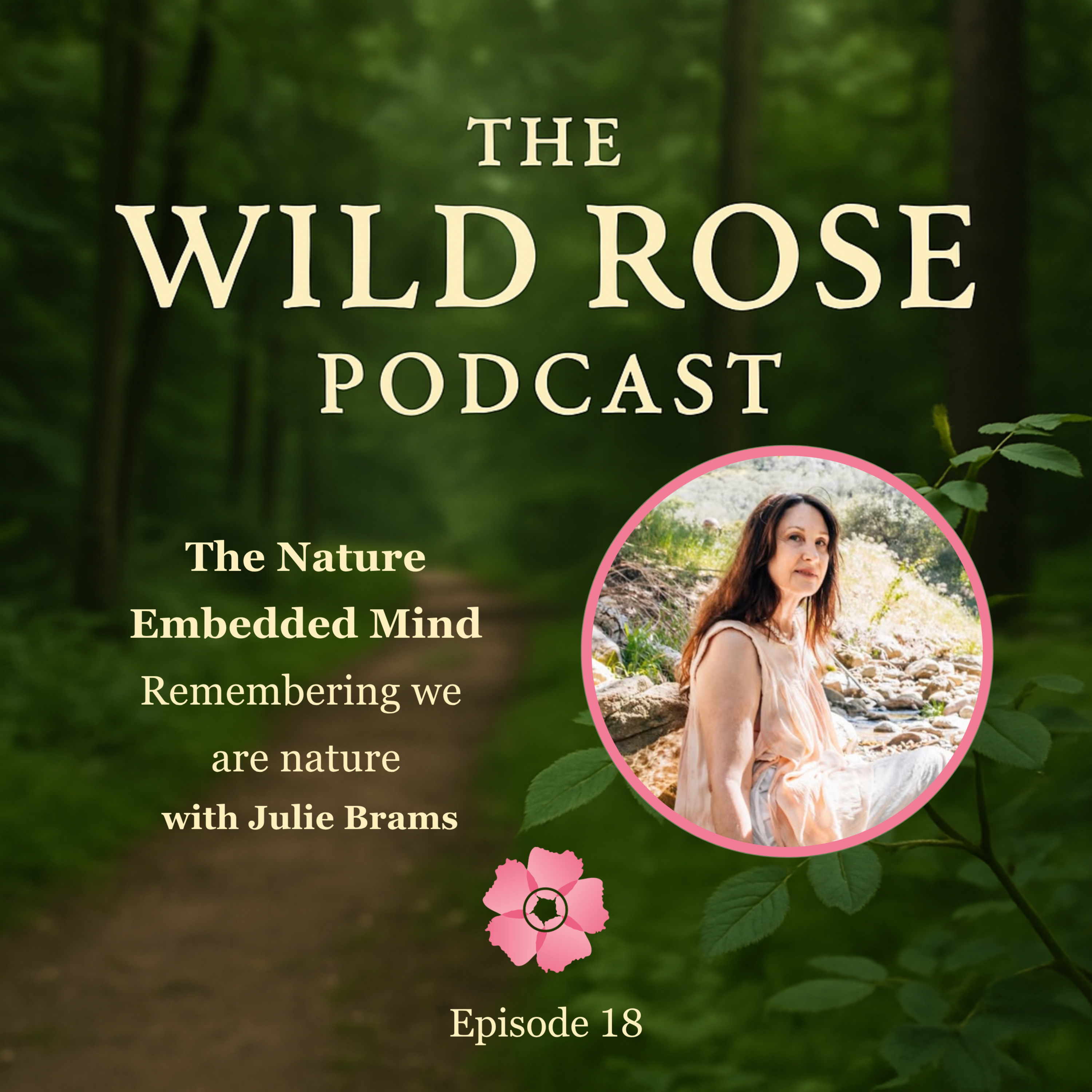
In this episode of The Wild Rose Podcast, we're joined by Julie Brams, Earth-centred psychotherapist, forest therapy guide, and award-winning author of The Nature Embedded Mind, to explore how our perceived separation from the natural world shapes our wellbeing, our relationships, and the way we understand ourselves.
Drawing on more than three decades of experience in mental health, Julie challenges the idea that the human mind can be understood independently of the living world. Together, we explore what it means to be embodied, how cultural conditioning can distance us from our senses, and why reconnecting with nature involves more than simply spending time outdoors.
From the subtle ways we communicate with plants and other living beings to the role of curiosity, pleasure, and sensory awareness in restoring connection, this conversation invites us to reconsider what it means to belong.
We also explore the grief that can arise as we become more aware of ecological destruction, and Julie offers a hopeful reminder that human beings are not separate from nature's capacity for regeneration. We, too, can participate in healing and restoring our relationships with the Earth.
In this episode, we explore:
How the belief that we're separate from nature influences mental health and wellbeing
What embodiment means and how we can reconnect with our senses
The cultural conditioning that shapes our relationship with the living world
Moving from seeing plants and other beings as objects to recognising them as living relationships
How forest therapy supports curiosity, sensory awareness, and personal experience
The importance of sensitivity, pleasure, wonder, and belonging
Navigating ecological grief without losing hope
Remembering our capacity to participate in regeneration and healing
About Julie Brams
Julie Brams, MA, LMFT, is an Earth-centred psychotherapist, forest therapy guide, speaker, and award-winning author of The Nature Embedded Mind: How the Way We Think Can Heal Our Planet and Ourselves. With more than thirty years of experience, her work brings together psychology, ecology, contemplative practice, and our relationship with the living world.
Julie is also Co-Founder and Lead Steward of elemental, an Earth-centred learning community exploring mental health and ecological belonging.
Connect with Julie:
Website:https://www.experienceelemental.com
Book: The Nature Embedded Mind: How the Way We Think Can Heal Our Planet and Ourselves
Instagram: @juliebramslmft
Continue the conversation
Explore herbal medicine, plant relationships, and holistic approaches to wellbeing through Wild Rose College and our Herbal Village community.
Visithttps://wildrosecollege.com to learn more.
Subscribe to The Wild Rose Podcast on Spotify, Apple Podcasts, and YouTube for more conversations at the crossroads of plant medicine, science, and spirit.
Disclaimer
This podcast’s information is provided for general reference and was obtained from publicly accessible sources. The Podcast Collaborative neither produces nor verifies the content, accuracy, or suitability of this podcast. Views and opinions belong solely to the podcast creators and guests.
For a complete disclaimer, please see our Full Disclaimer on the archive page. The Podcast Collaborative bears no responsibility for the podcast’s themes, language, or overall content. Listener discretion is advised. Read our Terms of Use and Privacy Policy for more details.