The Second Cold War Observatory

The Second Cold War Observatory
Podcast Description
Welcome to The Second Cold War Observatory, where we explore the histories and grounded realities of geopolitical rivalry from the Cold War to the present. We host conversations with academics, policymakers, and activists about how competition affects places, people, and politics around the world to foster more nuanced and open debate on contemporary rivalry. We cover diverse themes from the environment to digital connectivity and finance. Our guests present in-depth research from the institutions and places that become flashpoints of great power rivalry.
This podcast is part of the Second Cold War Observatory, a global collective of scholars committed to understanding how geopolitical and geoeconomic competition influences and is influenced by societies, economies, and ecologies worldwide.
This original podcast series is available on Spotify, Apple, and Buzzsprout.
www.secondcoldwarobservatory.com
Podcast Insights
Content Themes
Explores a range of themes such as geopolitical rivalry, economic competition, environment, digital connectivity, and infrastructure, with episode examples including discussions on India's role in the Second Cold War and China's Belt and Road Initiative's impact on global infrastructure.

Welcome to The Second Cold War Observatory, where we explore the histories and grounded realities of geopolitical rivalry from the Cold War to the present. We host conversations with academics, policymakers, and activists about how competition affects places, people, and politics around the world to foster more nuanced and open debate on contemporary rivalry. We cover diverse themes from the environment to digital connectivity and finance. Our guests present in-depth research from the institutions and places that become flashpoints of great power rivalry.
This podcast is part of the Second Cold War Observatory, a global collective of scholars committed to understanding how geopolitical and geoeconomic competition influences and is influenced by societies, economies, and ecologies worldwide.
This original podcast series is available on Spotify, Apple, and Buzzsprout.
www.secondcoldwarobservatory.com
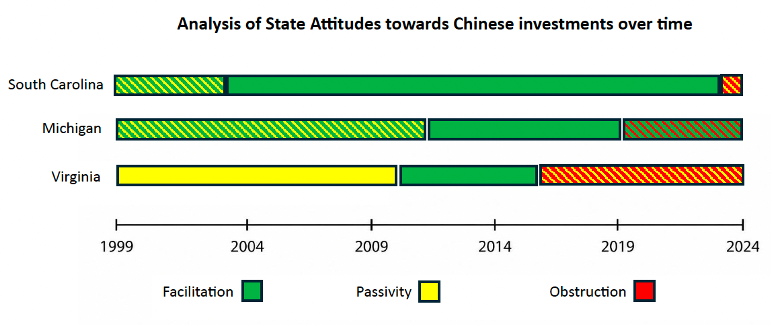
Chinese investment in the United States has become an increasingly contentious issue that is much more complicated than headlines suggest. In this episode, we reflect on recent debates in Michigan’s democratic primary and use it as a jumping-off point to examine more than 25 years of Chinese investment in the US and subnational relationships with Chinese business. We’re joined by Emily Conrad, whose research examines Chinese manufacturing investment in the US. We discuss where investment is concentrated and how local governments interact with investments, with attitudes ranging from facilitation to passivity to obstruction. We also discuss how Chinese companies navigate the present environment and varied contexts across the US. As federal scrutiny has intensified and states have introduced new restrictions on foreign land ownership and investment, Chinese firms face mounting political and regulatory headwinds. Yet, investments have not disappeared, and companies are adapting, raising questions about how geopolitics is reshaping investment, manufacturing and subnational policies and politics in the US.
Sign up for Emily’s Substack
Emily’s book The Faithless?: The Untold Story of the Electoral College
Analysis of State Attitudes towards Chinese investments over time from Conrad’s research here
Other resources from the episode:
- Rhodium Group’s China cross-border monitor
- YouTube podcast with Abdul al-Sayed that mentions some about China: here
- Wall Street Journal article about the State Armor organization: here
- NPR podcast with one of the best overviews on Gotion:here
- More on Gotion:
- ‘No CCP in USA!’: Inside a Michigan town’s unhinged war over a Chinese battery plant
- A Chinese battery company bet on a small Michigan town for its U.S. expansion
- Michigan Democratic U.S. Senate primary debate audio used in this episode
- Tweet on the CCP by Sen. Elissa Slotkin
- Financial Times article, China’s assault on Europe’s car market has barely begun
Hosted by Simplecast, an AdsWizz company. See pcm.adswizz.com for information about our collection and use of personal data for advertising.
Disclaimer
This podcast’s information is provided for general reference and was obtained from publicly accessible sources. The Podcast Collaborative neither produces nor verifies the content, accuracy, or suitability of this podcast. Views and opinions belong solely to the podcast creators and guests.
For a complete disclaimer, please see our Full Disclaimer on the archive page. The Podcast Collaborative bears no responsibility for the podcast’s themes, language, or overall content. Listener discretion is advised. Read our Terms of Use and Privacy Policy for more details.