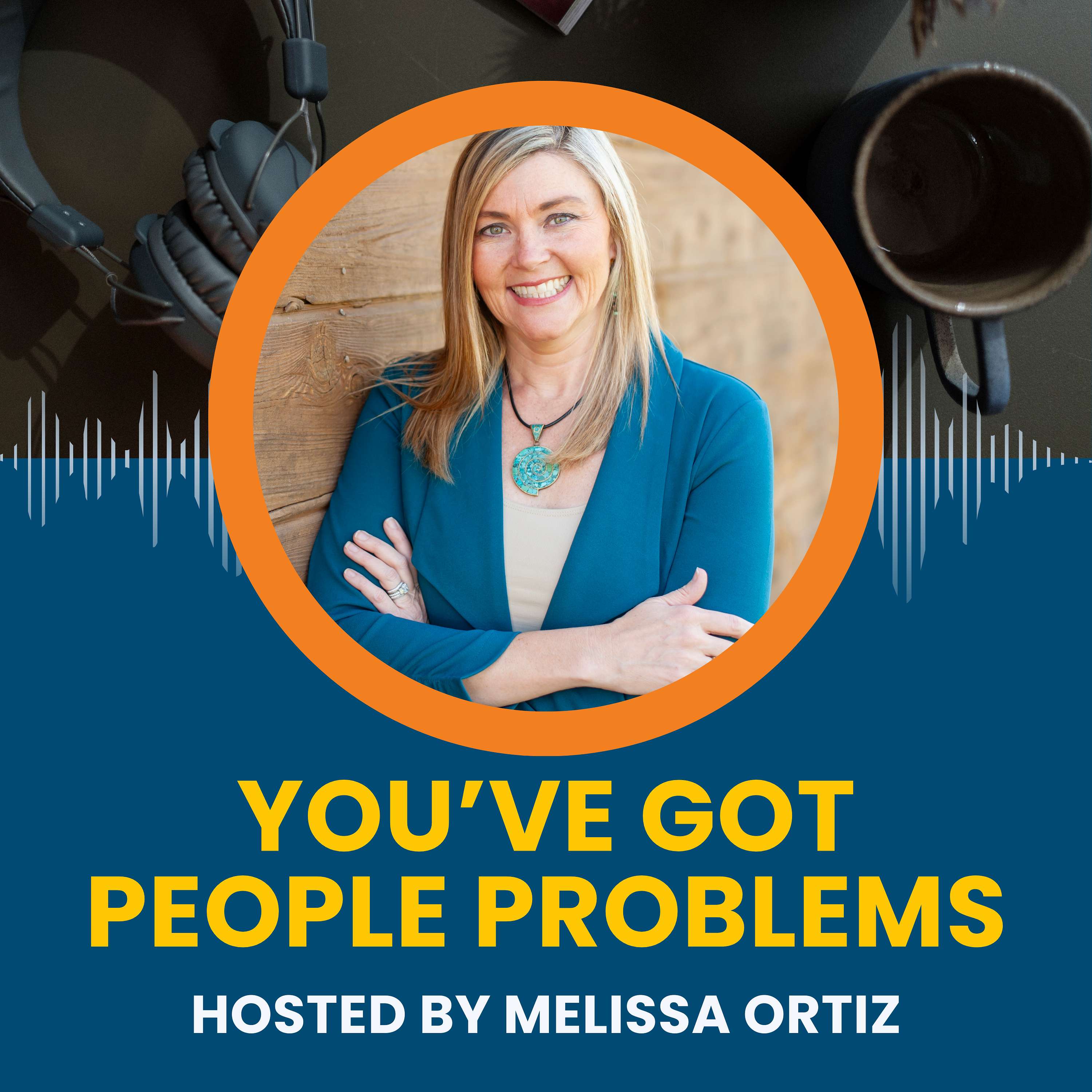
You've Got People Problems

You've Got People Problems
Podcast Description
Let’s be honest—people problems aren’t just HR problems. They’re business problems.They show up as missed goals, poor accountability, hiring headaches, and culture drift. And the fix isn’t another policy—it’s better leadership.Business would be easy… if it weren’t for people.That’s why I’m launching You’ve Got People Problems—a podcast where we talk about the real impact of leadership, hiring, accountability, and team dynamics. Because let’s be honest: HR isn’t going to save you, and avoiding people issues won’t make them go away.We’re bringing in business leaders, EOS Implementers, and hiring experts to break down the people problems that are costing companies time, money, and sanity—and more importantly, how to fix them.If you’re leading a team, hiring people, or just trying to make your business run without constant headaches, this podcast is for you. 🔊 Subscribe, listen, and let’s talk about your people problems.
Podcast Insights
Content Themes
The podcast focuses on topics essential to effective leadership and team dynamics, including accountability, hiring strategies, and organizational culture, with specific episodes like How to Build a Business That Thrives Without You, which emphasizes the importance of exit planning for entrepreneurs, and Accountability Without Shame, which explores fostering a positive accountability culture within teams.
Let’s be honest. People problems aren’t just HR problems. They’re business problems.
They show up as missed goals, unclear accountability, hiring mistakes, disengaged teams, and leaders carrying more than they should. Over time, they slow growth, create frustration, and make running a business feel harder than it needs to be. And they aren’t solved by another policy, personality test, or quick fix.
Business would be simple… if it weren’t for people.
That’s the reality behind You’ve Got People Problems, a podcast focused on the human side of running a business. Each episode explores how leadership behavior, hiring decisions, role clarity, engagement, and organizational structure directly impact performance, culture, and results.
Through honest conversations with business owners, operators, HR leaders, EOS Implementers, and consultants, the show tackles real issues leaders face every day: why the “right hire” still isn’t working, how teams outgrow roles, when full-time isn’t the answer, why accountability breaks down, and what actually drives engagement beyond perks and pay.
This isn’t about HR checking a box or leadership theory. It’s about helping leaders slow down, recognize patterns earlier, and make more intentional people decisions that support both the business and the people inside it.
If you’re leading a team, building an organization, or trying to get out of the day-to-day firefighting that comes with people problems, this podcast is for you.
Subscribe, listen, and start making sense of the people side of your business.
What happens when a visionary leader’s biggest strengths—creativity, urgency, risk tolerance, and constant innovation—start creating people problems?
In this episode of You’ve Got People Problems, Mel Ortiz sits down with Stephanie Day, fractional COO and integrator, to unpack the “Elon Musk archetype” of visionary leadership. They explore how creative, risk-tolerant leaders can drive growth while also unintentionally creating chaos, turnover, and frustration within their teams.
Mel and Stephanie discuss:
- Why visionary leaders and their teams approach urgency and problem-solving differently
- How the “why didn’t you just…” mindset can create resentment
- Why integrators serve as translators between vision and execution
- The difference between a people problem, role clarity problem, and resource problem
- How slowing down can help a company move faster
- Why accountability should focus on solving issues rather than blaming people
- How the right person in the wrong seat can thrive with clearer responsibilities
- The pros and cons of rapid pivots, risk-taking, and first-principles thinking
- Why work-life balance matters, especially for younger generations
Stephanie shares real examples where leaders thought they had a “wrong person” problem, only to discover that unclear roles, unrealistic expectations, or overloaded responsibilities were the real issue.
The conversation is ultimately about balancing a visionary leader’s ability to see what others don’t with creating a workplace where the team can actually execute that vision.
Timestamps
00:00 – Why boys get to pee outside
01:09 – Stephanie’s background and the fractional COO model
03:54 – The “Elon Musk archetype” of visionary leaders
05:35 – Risk tolerance vs. risk mitigation
07:39 – When visionary strengths become people problems
09:00 – Urgency, creativity, and different ways of thinking
10:42 – Why teams need people who think differently
12:38 – The integrator as translator and buffer
15:12 – Slowing down to create sustainable execution
17:03 – When visionaries don’t let their teams work
18:21 – The hidden cost of turnover and training
19:57 – Why “slow down to speed up” matters
21:01 – Building trust in the process
22:46 – How to handle repeated accountability issues
25:33 – Getting curious instead of blaming
27:29 – When a “wrong person” is actually overloaded
28:30 – Role clarity can change everything
30:13 – Accountability without shame
31:34 – When the right person is in the wrong seat
33:34 – Finding the role where someone can actually thrive
35:35 – Are you setting your people up to fail?
36:30 – The pros and cons of the visionary mindset
38:13 – When creativity turns into unnecessary pivots
39:35 – The problem with glorifying the grind
40:12 – Gen Z, work-life balance, and the three Fs
41:48 – Non-negotiables beyond core values
42:21 – Closing thoughts
Follow Mel on LinkedIn: / melissa-ortiz-talent-optimization-expert
Visit Activate Human Capital Group’s Website: https://www.activatehcg.com/
Learn more about Louisiana SPCA: https://www.laspca.org/
Want to learn more? Email [email protected]
Disclaimer
This podcast’s information is provided for general reference and was obtained from publicly accessible sources. The Podcast Collaborative neither produces nor verifies the content, accuracy, or suitability of this podcast. Views and opinions belong solely to the podcast creators and guests.
For a complete disclaimer, please see our Full Disclaimer on the archive page. The Podcast Collaborative bears no responsibility for the podcast’s themes, language, or overall content. Listener discretion is advised. Read our Terms of Use and Privacy Policy for more details.