Clear Haze Exchange
Clear Haze Exchange
Podcast Description
Have you ever wondered about climate action and decarbonization initiatives? Curious about building optimization or energy-efficient practices?
Whether you are a homeowner, engineer, architect, work in the energy or building maintenance fields, HVAC technician, a facilities or maintenance employee, commercial or residential home builder, electrician, or home project DIY-er who loves home projects, the Clear Haze Exchange podcast was created for you.
Clear Haze Exchange is an interview-led podcast created to simplify the often tricky concepts of sustainability and energy efficiency, clearing the haze, so to speak, making these ideas relatable, feasible, and easy to grasp for everyone. Host Marcus Hazelwood, an energy engineer with 15+ years of sustainability and energy efficiency consultancy experience, will explore practical solutions and share success stories, making sustainable practices more understandable.
Subscribe to Clear Haze Exchange to enjoy engaging and thought-provoking conversations with leading experts about innovative solutions, success stories, and practical advice. If you have questions or want to be a guest, contact [email protected].
Podcast Insights
Content Themes
The podcast covers a range of topics including building optimization, energy-efficient practices, sustainability initiatives, and success stories in energy modeling. Specific episodes, such as the one featuring Mohamed El-Sayed, discuss leadership in engineering, retro-commissioning, and the transformative nature of energy work, providing listeners with actionable insights and real-world examples.
Clear Haze Exchange is an interview-led podcast focused on simplifying sustainability while uncovering the hidden systems, decisions, and long-term impacts shaping our built environment and energy future.
Hosted by Marcus Hazelwood, an energy engineer with 15+ years of experience in sustainability and energy efficiency consulting, the podcast has evolved across two seasons:
Season 1 focused on breaking down the fundamentals—making energy efficiency, building systems, and sustainability concepts more accessible and practical for a wide range of listeners.
Season 2 builds on that foundation, diving deeper into the systems-level thinking behind sustainability—exploring how decisions in design, operations, policy, and business strategy create long-term outcomes.
Each episode features thoughtful conversations with industry leaders, engineers, architects, researchers, and decision-makers who are actively shaping the future of sustainability. From building performance and infrastructure to sustainable chemistry and organizational mindset, Clear Haze Exchange connects ideas across disciplines to provide real-world insight.
This podcast is for professionals and curious minds alike, those who want to better understand not just what sustainability is, but how it actually works in practice.
If you’re interested in smarter investments, better systems, and meaningful progress, you’re in the right place.
Subscribe to Clear Haze Exchange on your favorite platform and join the conversation.
For inquiries or guest opportunities: [email protected]
What happens after you collect the data?
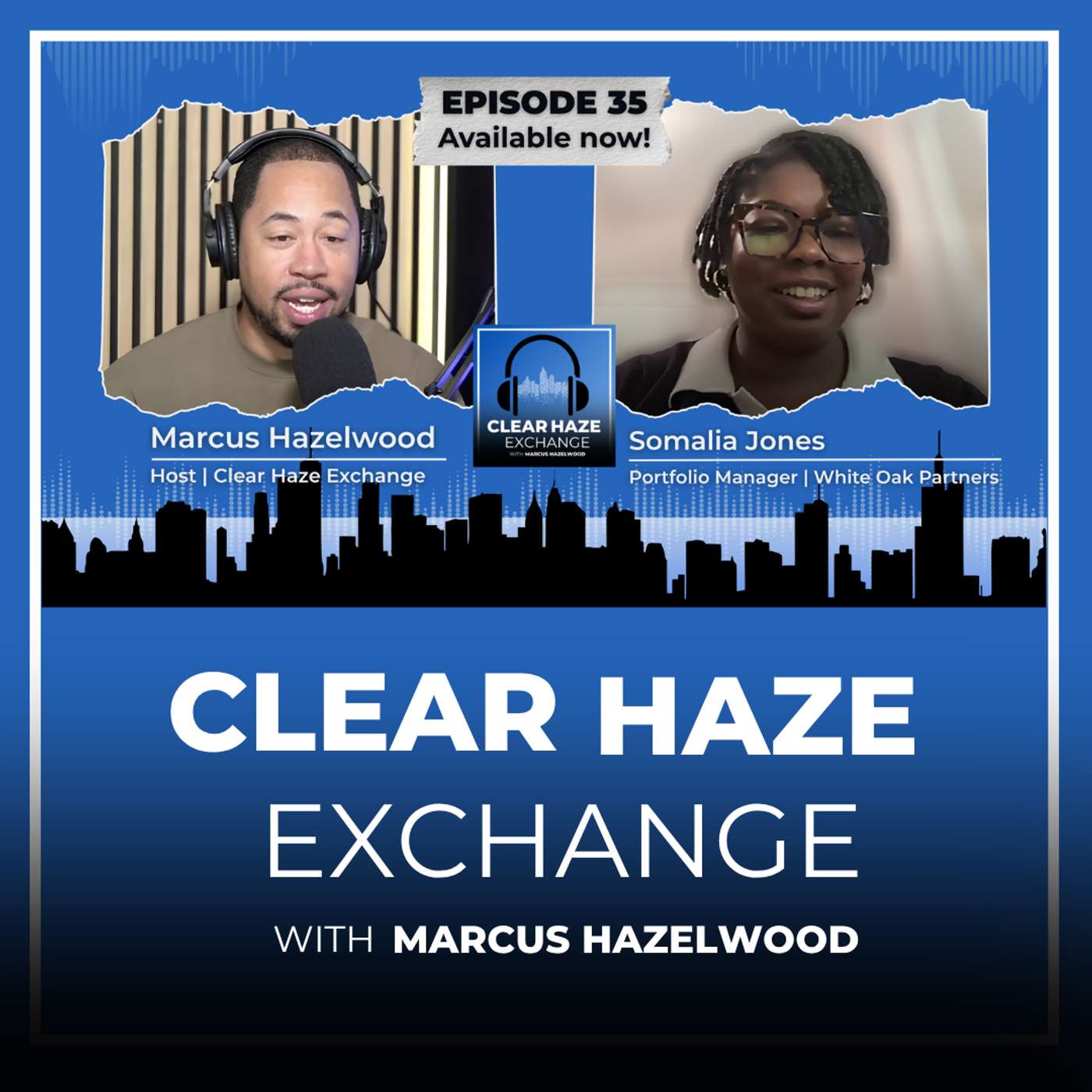
In this episode of Clear Haze Exchange, Marcus Hazelwood sits down with Somalia Jones, MBA, Manager of Responsible Investment Policy & Practices at White Oak Partners, to explore how building owners can move from collecting information to actually using it to make better operational and investment decisions.
Across a real estate portfolio, utility bills, meter data, financial information, benchmarking requirements, sustainability reporting, and operational data can quickly become overwhelming.
The challenge isn’t simply collecting more.
It’s understanding which information matters, translating it across departments, and connecting it to action.
Somalia shares how she works across sustainability, finance, accounting, operations, and other teams to create a more complete picture of building performance — and how that information can ultimately influence everything from reporting and budgeting to CapEx decisions.
Key Takeaways
• More data isn’t necessarily better — start with the information needed to answer a specific question.
• Utility invoices can reveal much more than cost, including consumption trends, anomalies, operational changes, and potential savings opportunities.
• Sustainability professionals can play an important role translating information between finance, accounting, operations, and investment teams.
• Reporting shouldn’t end with the report. The information can be used to identify future operational improvements and capital projects.
• Low-cost, high-impact opportunities can provide a logical starting point when prioritizing CapEx investments.
• Software and AI can help organizations process information, but human judgment remains critical for understanding anomalies, context, and organizational priorities.
• As experienced building professionals retire, documenting not only processes but also the reasoning behind them is increasingly important.
• Establishing a reliable baseline is one of the most important first steps toward improving building performance.
About the Guest
Somalia Jones, MBA — Manager, Responsible Investment Policy & Practices, White Oak Partners
Somalia works at the intersection of real estate, sustainability, reporting, compliance, and business operations. Her work includes gathering and organizing utility and asset information, supporting reporting requirements such as GRESB, identifying performance trends, and connecting building information with operational and financial priorities.
In this conversation, she provides a practical look at what it takes to turn portfolio-level building information into something organizations can actually use.
If you’re interested in smarter investments, better systems, and meaningful progress, you’re in the right place.
Subscribe to Clear Haze Exchange on your favorite platform and join the conversation.
For inquiries or guest opportunities: [email protected]
Disclaimer
This podcast’s information is provided for general reference and was obtained from publicly accessible sources. The Podcast Collaborative neither produces nor verifies the content, accuracy, or suitability of this podcast. Views and opinions belong solely to the podcast creators and guests.
For a complete disclaimer, please see our Full Disclaimer on the archive page. The Podcast Collaborative bears no responsibility for the podcast’s themes, language, or overall content. Listener discretion is advised. Read our Terms of Use and Privacy Policy for more details.