Saving the World From Bad Ideas

Saving the World From Bad Ideas
Podcast Description
a WePlanet podcast.
The world is shaped by ideas—some good, some bad, and some that seemed good at the time.
This is a podcast about rethinking the things we take for granted, challenging sacred cows, and admitting when we’ve been wrong.
With your host, awarded environmental author and activist Mark Lynas, we take a deep dive into the environmental, political, and social debates shaping our future—without the outrage, tribalism, or easy answers.
Help us save the world from bad ideas. Because the future depends on us getting it right.
Podcast Insights
Content Themes
The podcast delves into various themes including environmental science, political discourse, and societal progress. Notable episodes feature discussions on geoengineering technologies, the myth of global decline as articulated by guests like Steven Pinker and Hannah Ritchie, and the importance of optimistic narratives amidst climate challenges. Topics such as solar geoengineering, media biases on progress, and eco-modernism form the focal points of its exploratory conversations.
The world is shaped by ideas—some good, some bad, and some that seemed good at the time.
This is a podcast about rethinking the things we take for granted, challenging sacred cows, and admitting when we’ve been wrong.
With your host, awarded environmental author and activist Mark Lynas, we take a deep dive into the environmental, political, and social debates shaping our future—without the outrage, tribalism, or easy answers.
Help us save the world from bad ideas. Because the future depends on us getting it right.
Episode summary
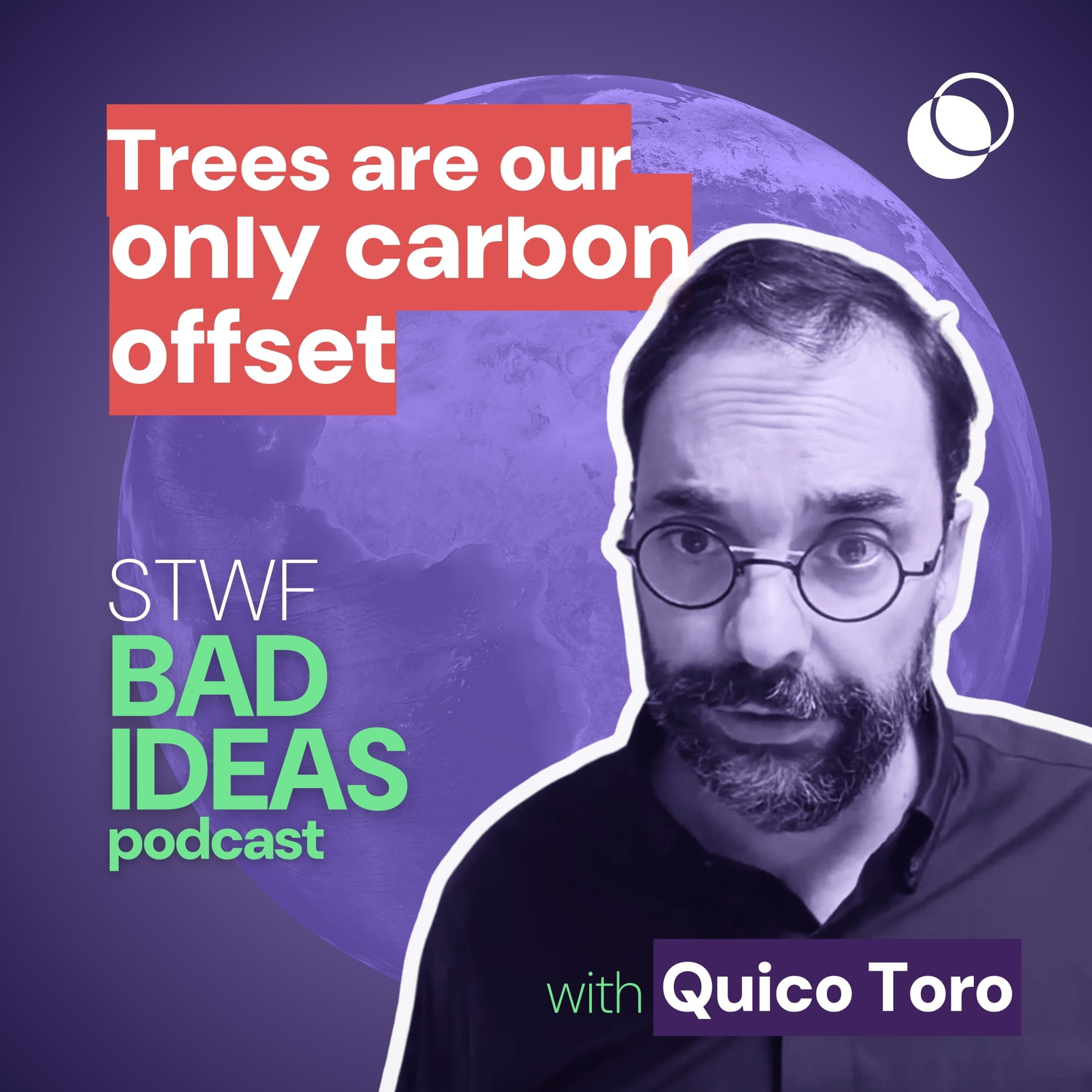
In this episode of Saving the World from Bad Ideas, host Mark Lynas is joined by Quico Toro, Director of Climate Repair at the Anthropocene Institute, to discuss his research on ocean-based carbon dioxide removal via phytoplankton. Quico challenges the idea that photosynthesis must only occur on land via reforestation, when 70% of our planet is ocean. He also discusses working with stakeholders in the South Pacific, like the Kingdom of Tonga, in collaborating with knowledge keepers and local ocean ecosystem experts to address concerns about carbon removal and approach the practice thoughtfully, scientifically and responsibly.
“To me, the obvious answer to carbon removal is photosynthesis. The forestry people had it right in the first place: photosynthesis is great. It's had a billion and a half years to develop through research and development and evolution. Oceanographers have been thinking for many years that a logical way to approach this problem would be to increase carbon dioxide removal by increasing phytoplankton concentrations in the center of the ocean.”
About WePlanet
WePlanet is an international movement campaigning for science-based solutions to the climate, nature and development crises. Through conversations like this one, we challenge bad ideas, spotlight better ones, and make the case for a more abundant, resilient and hopeful future.
Join the Conversation
[email protected] | https://weplanet.org/podcast
Instagram: @weplanetinternational
LinkedIn: WePlanet
Disclaimer
This podcast’s information is provided for general reference and was obtained from publicly accessible sources. The Podcast Collaborative neither produces nor verifies the content, accuracy, or suitability of this podcast. Views and opinions belong solely to the podcast creators and guests.
For a complete disclaimer, please see our Full Disclaimer on the archive page. The Podcast Collaborative bears no responsibility for the podcast’s themes, language, or overall content. Listener discretion is advised. Read our Terms of Use and Privacy Policy for more details.