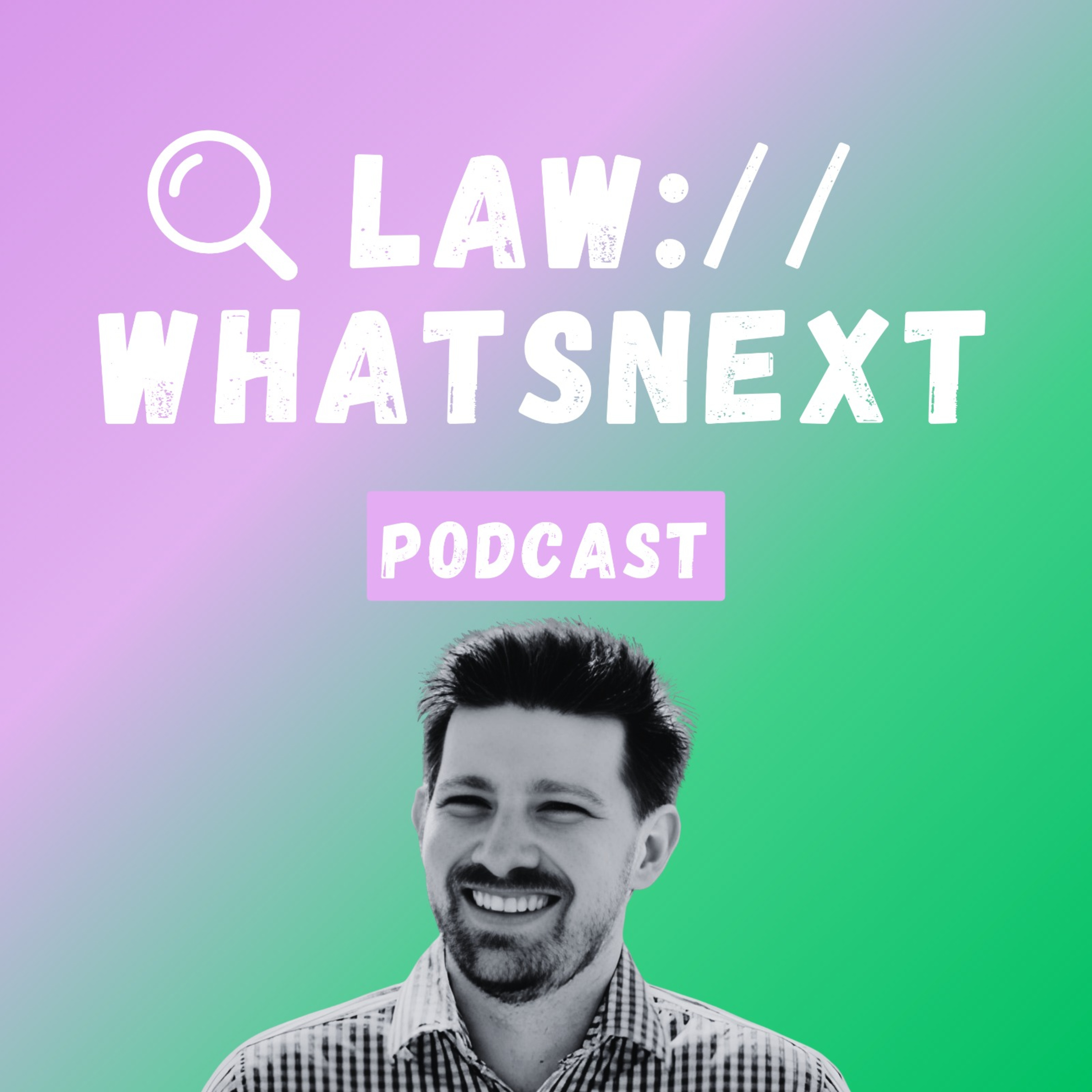
Law://WhatsNext

Law://WhatsNext
Podcast Description
How are leading practitioners leveraging emerging technologies and ways of working to pursue their passion and objectives, and as a by product what are the implications for the future of legal practice? Let’s explore this together. What to expect:
- Focused conversations with leading practitioners; technologists and educators
- Deep dives into the intersection of law, technology, and organisational behaviour
- Practical analysis and visualisation of how AI is augmenting our potential- Insights from adjacent industries that might inform our own
Podcast Insights
Content Themes
The podcast explores themes such as responsible AI governance, geopolitical risk, access to justice, and innovative legal technology. Episodes include in-depth discussions on AI ethics with experts like Hadassah Drukarch and AI applications in the justice system with guests such as Steph Needleman, showcasing practical analysis on how AI can augment legal practices.

How are leading practitioners leveraging emerging technologies and ways of working to pursue their passion and objectives, and as a by product what are the implications for the future of legal practice? Let’s explore this together. What to expect:
– Focused conversations with leading practitioners; technologists and educators
– Deep dives into the intersection of law, technology, and organisational behaviour
– Practical analysis and visualisation of how AI is augmenting our potential
– Insights from adjacent industries that might inform our own
Welcome to the first episode of Season 3 of Law://WhatsNext!
This month, TypeSafe released Jev – the first of what it calls ”System One” models.
🎤 To help us make sense of Jev (What it is? How to access and utilise it? And to better understand its potential implications for Legal) we invited a friend (and returning guest) of the pod Chris Bridges, Partner and COO at Tacit Legal, an AI-native law firm, and the driving force behind its supervised AI contract review service, Tilder.
We hope you enjoy it!
—
A quick reminder: Law://WhatsNext is our vehicle to explore through dialogue (or occasional reflection) how leading lawyers, educators and technologists are using emerging tech to evolve how we practice and administer legal services.
We're excited to be back, and to bring you a run of interesting conversations this autumn (or fall, depending on which side of the Atlantic you're on).
—
Listen if: You want a hype-free informative conversation about Jev and its potential relevance to legal products and services.
Rate, subscribe, comment, and share if you enjoyed this chat with Chris!
—
For more conversations and critical reflection at the intersection of law and technology, head to https://lawwhatsnext.substack.com/.
Disclaimer
This podcast’s information is provided for general reference and was obtained from publicly accessible sources. The Podcast Collaborative neither produces nor verifies the content, accuracy, or suitability of this podcast. Views and opinions belong solely to the podcast creators and guests.
For a complete disclaimer, please see our Full Disclaimer on the archive page. The Podcast Collaborative bears no responsibility for the podcast’s themes, language, or overall content. Listener discretion is advised. Read our Terms of Use and Privacy Policy for more details.