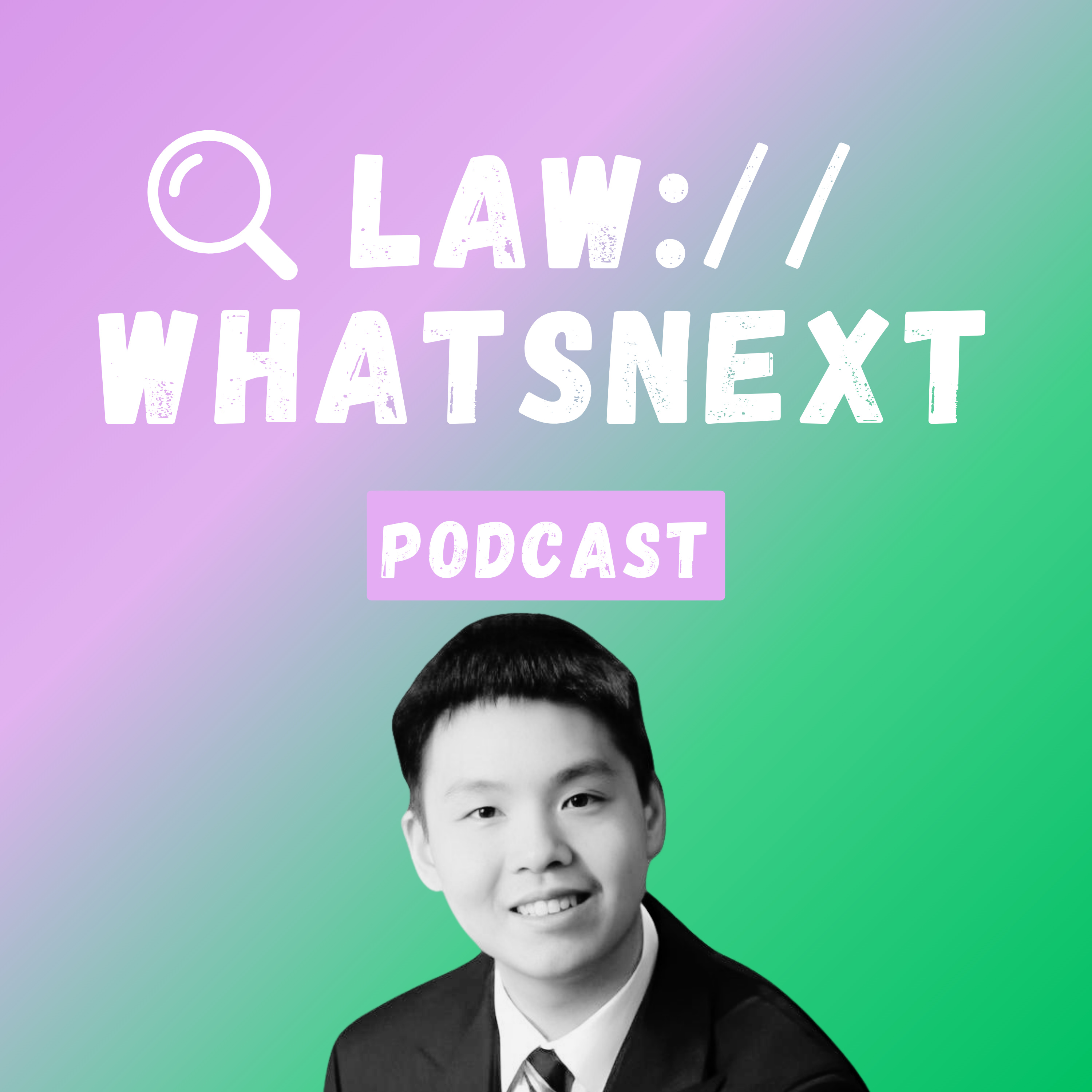
Law://WhatsNext

Law://WhatsNext
Podcast Description
How are leading practitioners leveraging emerging technologies and ways of working to pursue their passion and objectives, and as a by product what are the implications for the future of legal practice? Let’s explore this together. What to expect:
- Focused conversations with leading practitioners; technologists and educators
- Deep dives into the intersection of law, technology, and organisational behaviour
- Practical analysis and visualisation of how AI is augmenting our potential- Insights from adjacent industries that might inform our own
Podcast Insights
Content Themes
The podcast explores themes such as responsible AI governance, geopolitical risk, access to justice, and innovative legal technology. Episodes include in-depth discussions on AI ethics with experts like Hadassah Drukarch and AI applications in the justice system with guests such as Steph Needleman, showcasing practical analysis on how AI can augment legal practices.

How are leading practitioners leveraging emerging technologies and ways of working to pursue their passion and objectives, and as a by product what are the implications for the future of legal practice? Let’s explore this together. What to expect:
– Focused conversations with leading practitioners; technologists and educators
– Deep dives into the intersection of law, technology, and organisational behaviour
– Practical analysis and visualisation of how AI is augmenting our potential
– Insights from adjacent industries that might inform our own
Season 2 is here.
In our opener, we sit down withAnson Lai — commercial counsel by day, relentless tinkerer by night — who walks us through how he built and published a document review tool as a Microsoft Word add-in that rivals offerings from legal AI startups raising hundreds of millions.
The kicker? He did it in weeks. And he's giving it away.
This isn't theoretical. Anson shares his screen, shows us the tool live, and opens the hood on what makes it work. No mystique. No black box. Just a lawyer who got tired of copy-pasting contracts into ChatGPT tabs and decided to do something about it.
What You'll Learn:
- ”Vibe Coding” — How conversing with AI tools (not just instructing them) shaped better technical decisions
- ”Bring Your Own Key” Architecture — Why your documents going straight to Google's API (with no middleman) actually matters
- Where the Real Moat Lives — If building software now takes hours not months, differentiation lies in the refinements — the nested lists, tables, and edge cases where most AI tools quietly fall apart
Connect with Anson:LinkedIn |GitHub (Open Source Project)
If you found this episode interesting, please like, subscribe, comment, and share! For more, head to lawwhatsnext.substack.com for:
- Focused conversations with leading practitioners, technologists, and educators
- Deep dives into the intersection of law, technology, and organisational behaviour
- Practical analysis of how AI is augmenting our potential
Disclaimer
This podcast’s information is provided for general reference and was obtained from publicly accessible sources. The Podcast Collaborative neither produces nor verifies the content, accuracy, or suitability of this podcast. Views and opinions belong solely to the podcast creators and guests.
For a complete disclaimer, please see our Full Disclaimer on the archive page. The Podcast Collaborative bears no responsibility for the podcast’s themes, language, or overall content. Listener discretion is advised. Read our Terms of Use and Privacy Policy for more details.