Chalk Dust

Chalk Dust
Podcast Description
Welcome to Chalk Dust, the podcast that gives you a front row seat into some of the best classrooms in the world. There are lots of great conversations about teaching and education happening around the world right now. There are already so many fantastic podcasts out there about evidence based practice, and we're so excited to bring you one more, but this one has a distinctive difference.
Each episode, Rebecca Birch and Nathaniel Swain break down real classroom footage to illuminate the moments that make great teaching great. Teaching is both a science and an art. There are proven techniques that we know to work, but applying them in real classrooms is where the complexity lies.
Our goal? To help you develop the eye of an expert observer, so you can see what makes lessons effective and apply those insights into your own teaching or coaching practice. chalkdust.media
Podcast Insights
Content Themes
The podcast centers around teaching techniques, educational strategies, and classroom management, featuring episodes that dissect moments from actual classrooms, demonstrating how educators effectively implement research-backed methods and enhance student learning experiences.
Welcome to Chalk Dust, the podcast that gives you a front row seat into some of the best classrooms in the world. There are lots of great conversations about teaching and education happening around the world right now. There are already so many fantastic podcasts out there about evidence based practice, and we’re so excited to bring you one more, but this one has a distinctive difference.
Each episode, Rebecca Birch and Nathaniel Swain break down real classroom footage to illuminate the moments that make great teaching great. Teaching is both a science and an art. There are proven techniques that we know to work, but applying them in real classrooms is where the complexity lies.
Our goal? To help you develop the eye of an expert observer, so you can see what makes lessons effective and apply those insights into your own teaching or coaching practice.
Summary
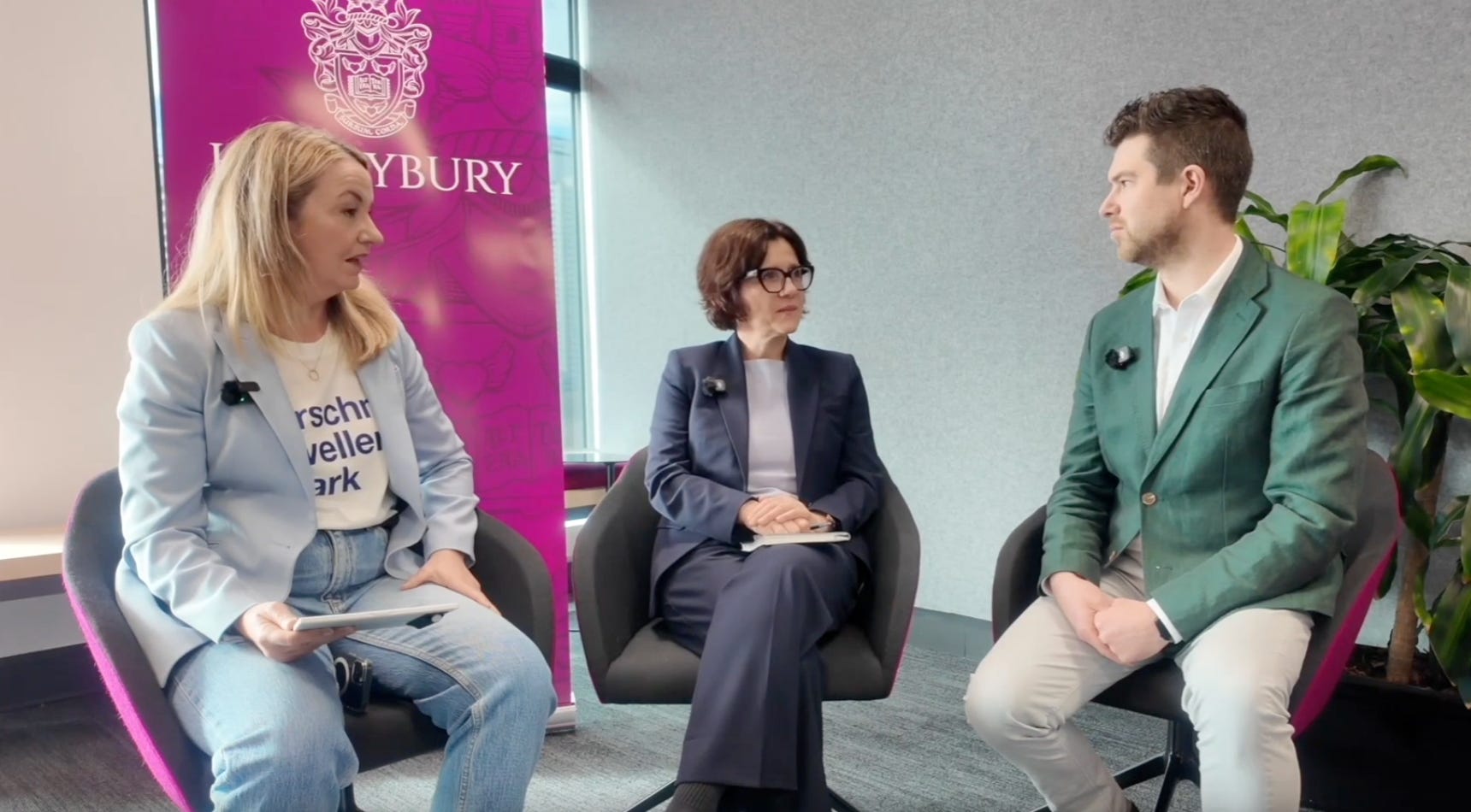
In this special in-person episode of Chalk Dust, recorded at researchEd Melbourne at Haileybury, Rebecca Birch and Nathaniel Swain are joined by Professor Anna Stokke, mathematician, educator and host of the Chalk & Talk podcast. Together they analyse classroom footage from Australian mathematics lessons, exploring how carefully sequenced instruction, explicit teaching and strong classroom routines support successful mathematics learning.
Across examples including number bonds, subtraction algorithms, number lines and percentages, Anna explains why mathematics should be taught through deliberate sequencing, clear modelling and extensive guided practice. The discussion examines pair-share routines, scripted mathematics programs, mastery of mathematical symbols, the role of automaticity, and why concrete materials should be viewed as temporary scaffolds rather than permanent learning tools.
Throughout the episode, Rebecca, Nathaniel and Professor Stokke discuss mathematics-specific pedagogy, instructional coaching, pedagogical content knowledge and the importance of ensuring every student has access to effective mathematics instruction. The conversation argues that explicit mathematics teaching is not passive or robotic, but highly interactive, intellectually demanding and built around giving students repeated experiences of success.
Special thanks to Pat Sanders, Ollie Lovell and Brendan Lee for their help with this episode.
Mentioned resources and explainers
Professor Anna Stokke
Anna Stokke is Professor of Mathematics and Statistics at the University of Winnipeg, adjunct professor and honorary co-director of the Science of Mathematics Lab at La Trobe University, and host of the Chalk & Talk podcast. Her work focuses on evidence-informed mathematics education and improving mathematics instruction.
Anna Stokke’s podcast exploring evidence-informed mathematics education, instructional practice and educational research.
Explicit Mathematics Program (EMP)
A structured primary mathematics program developed by Toni Hatton-Roberts and Ollie Lovell. The program emphasises carefully sequenced instruction, explicit modelling, guided practice and cumulative review.
An Australian special-assistance school network implementing explicit, carefully sequenced mathematics instruction.
Number Bonds
An early mathematics concept helping students understand part-whole relationships between numbers, providing foundations for later arithmetic and algebraic reasoning.
Standard Algorithms
Traditional written methods for operations such as subtraction. Anna argues that carefully sequenced instruction in standard algorithms develops procedural fluency while reinforcing place value understanding.
Automaticity
The ability to retrieve basic number facts rapidly and effortlessly. Automatic recall reduces cognitive load, allowing students to focus on more complex mathematical thinking.
Concrete Materials
Physical manipulatives used to introduce mathematical concepts. Anna argues they should be temporary instructional scaffolds rather than ongoing computational tools.
Pedagogical Content Knowledge (PCK)
The specialised knowledge teachers need to teach a particular subject effectively, including understanding misconceptions, sequencing and representations. Rebecca reflects on whether mathematics-specific instructional coaching deserves greater attention.
Scripted Instruction
Instructional programs that carefully sequence explanations, examples and practice opportunities. The discussion explores how well-designed scripts can support teacher expertise while still allowing individual teaching style to emerge.
Listen or view, and support our work
🍏🎧 Apple Podcasts — like, review and follow
🎵💚 Spotify — follow and rate
📺🔔 YouTube — subscribe and like
✍️ Rebecca’s Substack — read more
✍️ Nathaniel’s Substack — read more
Takeaways
* Success is one of the strongest drivers of student motivation in mathematics.
* Explicit mathematics instruction is highly interactive rather than teacher-centred monologue.
* Carefully sequenced examples help students focus on learning new procedures rather than becoming distracted by unnecessary complexity.
* Automatic recall of basic number facts frees cognitive resources for more sophisticated mathematical thinking.
* Concrete materials should introduce concepts but should not replace mastery of mathematical symbols.
* Standard algorithms reinforce important mathematical ideas such as place value when taught explicitly.
* Pair-share activities work best when they are tightly structured, purposeful and carefully monitored.
* Guided practice should include frequent checking for understanding and immediate correction of misconceptions.
* Well-designed scripted programs can improve consistency while still allowing teachers to bring their own personality and classroom presence.
* Primary mathematics teachers benefit from high-quality curriculum materials because careful sequencing requires deep mathematical expertise.
* Effective mathematics instruction balances conceptual understanding with procedural fluency rather than treating them as competing goals.
* Students should not remain dependent on visual or concrete supports once symbolic understanding has developed.
* Instructional time belongs to students and should be used with precision and purpose.
* System leaders have an important responsibility to support instructional approaches that are backed by strong evidence.
* Mathematics may require subject-specific instructional coaching alongside more general approaches to teaching improvement.
Keywords
Anna Stokke, mathematics education, explicit instruction, Explicit Mathematics Program, Mastery Schools Australia, scripted instruction, number bonds, subtraction, percentages, automaticity, standard algorithms, pedagogical content knowledge, mathematics pedagogy, instructional coaching, guided practice, concrete materials, cognitive load, mathematics teaching, evidence-informed education, Chalk Dust podcast
This is a public episode. If you would like to discuss this with other subscribers or get access to bonus episodes, visit chalkdust.media
Disclaimer
This podcast’s information is provided for general reference and was obtained from publicly accessible sources. The Podcast Collaborative neither produces nor verifies the content, accuracy, or suitability of this podcast. Views and opinions belong solely to the podcast creators and guests.
For a complete disclaimer, please see our Full Disclaimer on the archive page. The Podcast Collaborative bears no responsibility for the podcast’s themes, language, or overall content. Listener discretion is advised. Read our Terms of Use and Privacy Policy for more details.