Gross Domestic Problem

Gross Domestic Problem
Podcast Description
Welcome to Gross Domestic Problem — the podcast that unveils America’s biggest financial crisis. Every episode, we break down how we got here, what happens if we don’t act, and the least painful way forward.
There’s no do-nothing solution. And every solution requires sacrifice. Ignoring it means handing the burden to the next generation. If that’s unacceptable to you, you’re in the right place.
Subscribe now at grossdomesticproblem.com and join the conversation.
Podcast Insights
Content Themes
The podcast explores critical topics related to America's financial crisis, including the historical context of fiscal policy, health care spending reforms, political perspectives on budget management, and the implications of national debt, featuring episodes like 'Twinkies and Taxes' focusing on fiscal irresponsibility and 'Budgeting on Autopilot' which addresses budgeting processes.
Welcome to Gross Domestic Problem — the podcast that unveils America’s biggest financial crisis. Every episode, we break down how we got here, what happens if we don’t act, and the least painful way forward.
There’s no do-nothing solution. And every solution requires sacrifice. Ignoring it means handing the burden to the next generation. If that’s unacceptable to you, you’re in the right place.
Subscribe now at grossdomesticproblem.com and join the conversation.
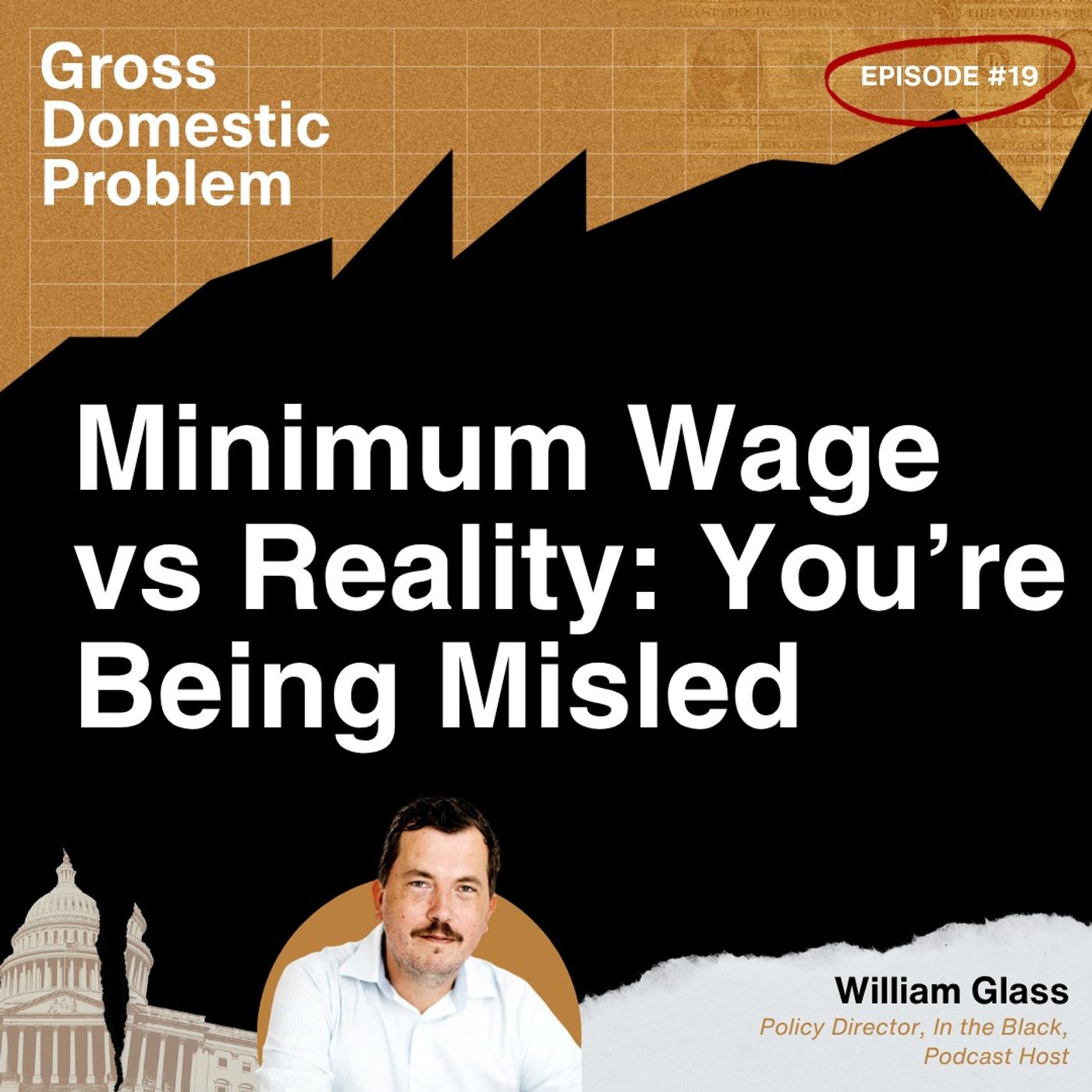
In this episode of Gross Domestic Problem, William Glass breaks down popular claims that the federal minimum wage should be $24 an hour by arguing that such comparisons misuse history, productivity data, and demographics. He explains that while today’s $7.25 minimum wage has clearly lost purchasing power, very few workers actually earn it now compared to 1968. Many low-wage roles are held by young, untrained workers whose labor markets and productivity look very different from high-tech sectors. William also emphasizes the trade-offs of blanket federal wage floors, suggesting that issues like housing policy, inflation, and national debt are bigger drivers of affordability problems than simple “greedy rich vs poor workers” narratives. He calls for more nuanced, evidence-based debate, stronger but well-designed safety nets, and a recognition that complex economic challenges cannot be solved with simplistic, emotionally charged rhetoric.
Key topics in today’s conversation include:
- Viral Minimum Wage Video and $24 an Hour Claim (0:46)
- Why 1968 vs Today Is Not an Apples-to-Apples Minimum Wage Comparison (2:12)
- How Few Workers Actually Earn Federal Minimum Wage Today (3:47)
- Minimum Wage, Teen Workers, and Training vs Living Wages (5:28)
- Comparing Wage Percentiles and What Workers Really Earn Now (7:03)
- Productivity Growth in Different Sectors and Why Averages Mislead (8:51)
- Wage Floors, Economic Distortions, and Alternatives like Housing Policy (10:36)
- Middle Class Squeeze and Who Feels the Most Economic Pain (12:11)
- Inflation, Money Printing, and the Asset vs Wage Earner Divide (13:44)
- National Debt, Interest Rates, and the Housing Affordability Crisis (15:27)
- Limits of Government Prediction, AI Shocks, and Need for Safety Nets (17:07)
- Moral Case for Supporting Essential Low-Productivity Jobs (18:41)
- Rejecting “Greedy Billionaires” Rhetoric and Demanding Nuance (20:12)
- Closing Call to Think Beyond Algorithms and Engage in Hard Trade-Offs (21:46)
Gross Domestic Problem is a podcast from Millennial Debt Foundation focusing on America’s biggest financial crisis. Each episode, we break down how we got here, what happens if we don’t act, and the least painful way forward. There’s no do-nothing solution. Subscribe now at grossdomesticproblem.com and join the conversation.
Hosted by Simplecast, an AdsWizz company. See pcm.adswizz.com for information about our collection and use of personal data for advertising.
Disclaimer
This podcast’s information is provided for general reference and was obtained from publicly accessible sources. The Podcast Collaborative neither produces nor verifies the content, accuracy, or suitability of this podcast. Views and opinions belong solely to the podcast creators and guests.
For a complete disclaimer, please see our Full Disclaimer on the archive page. The Podcast Collaborative bears no responsibility for the podcast’s themes, language, or overall content. Listener discretion is advised. Read our Terms of Use and Privacy Policy for more details.