Pathology News

Pathology News
Podcast Description
Pathology News is your go-to podcast for the latest insights and innovations in pathology. We explore digital pathology, molecular diagnostics, and more, featuring conversations with industry experts and leaders. Whether you're a pathologist or simply interested in the future of diagnostics, this podcast keeps you informed on the trends shaping the field. Tune in for expert perspectives and practical knowledge to enhance workflows and advance patient care.
Podcast Insights
Content Themes
The podcast covers a wide range of topics within pathology, with specific episodes focusing on digital pathology, molecular diagnostics, and AI technologies in healthcare. Examples include interviews discussing revolutionary systems like TWOD for optimizing workflows and exclusive insights from industry leaders like aetherAI's Joe Yeh on the role of AI in diagnostics.
Pathology News is your go-to podcast for the latest insights and innovations in pathology. We explore digital pathology, molecular diagnostics, and more, featuring conversations with industry experts and leaders. Whether you’re a pathologist or simply interested in the future of diagnostics, this podcast keeps you informed on the trends shaping the field. Tune in for expert perspectives and practical knowledge to enhance workflows and advance patient care.
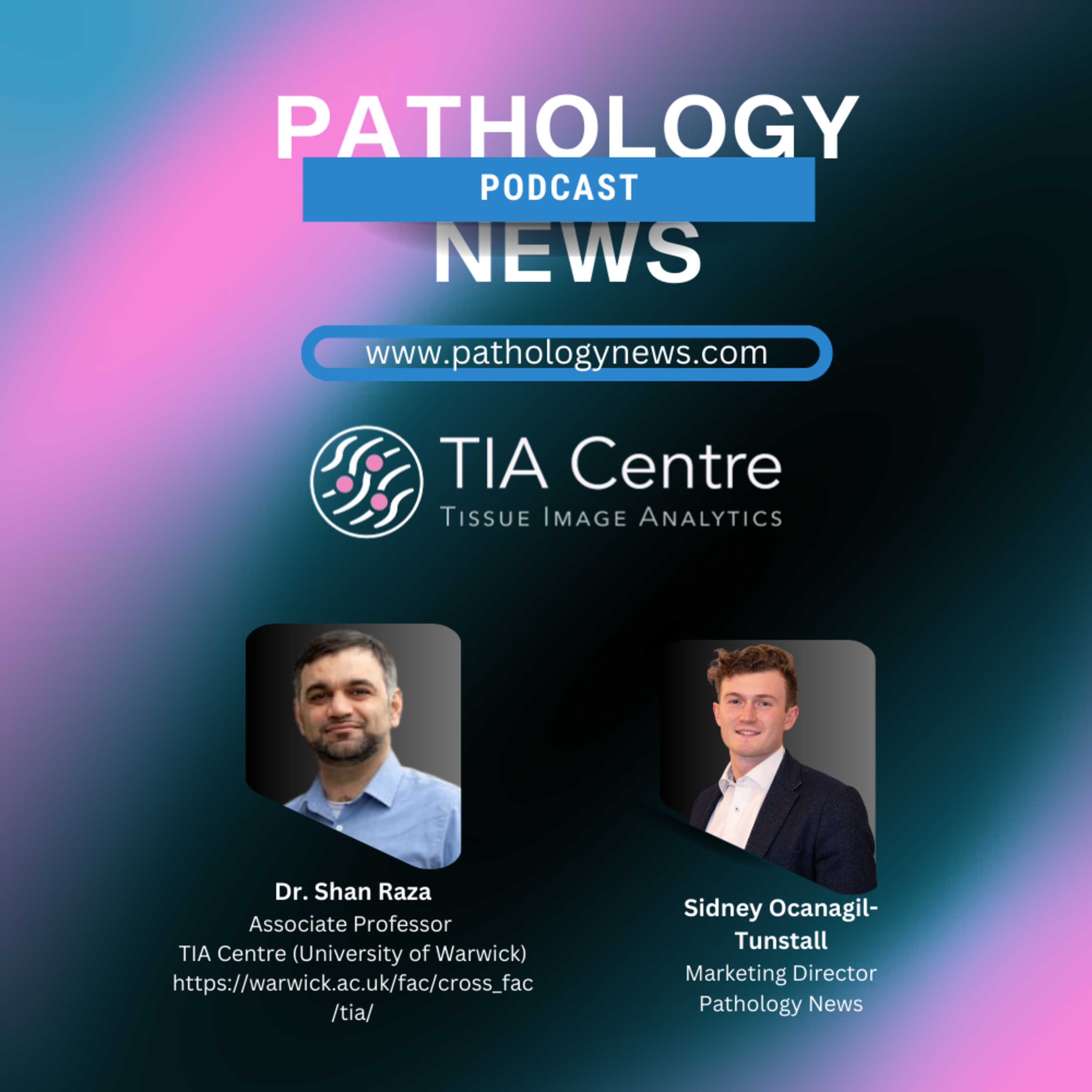
Join us for this Thought Leaders episode as Dr Shan Raza, Associate Professor at the TIA Centre, University of Warwick, shares his journey from electrical engineering into computational pathology and AI-driven cancer research.
Hosted by Sidney Ocanagil-Tunstall, Marketing Director of Pathology News, this conversation explores how Shan’s combined expertise in image analysis, wet lab workflows, and AI gives him a unique perspective on building robust algorithms for pathology.
We discuss the growth and mission of the TIA Centre, the move toward multimodal analysis across pathology, radiology and genomics, and how international collaborations and grand challenges like CHIMERA are shaping the future of AI in medicine.
A major focus of the episode is the TIA Toolbox, an open-source suite for running AI on pathology images, covering its motivation, core features, recent additions, and how it has supported multiple challenge wins across diverse tissue types.
We also reflect on the realities of clinical AI deployment, trust, regulation, and why a human-in-the-loop approach will remain essential as digital pathology continues to evolve.
This episode offers a practical and forward-looking view of how open tools, collaboration and multimodal data are driving the next phase of computational pathology.
Disclaimer
This podcast’s information is provided for general reference and was obtained from publicly accessible sources. The Podcast Collaborative neither produces nor verifies the content, accuracy, or suitability of this podcast. Views and opinions belong solely to the podcast creators and guests.
For a complete disclaimer, please see our Full Disclaimer on the archive page. The Podcast Collaborative bears no responsibility for the podcast’s themes, language, or overall content. Listener discretion is advised. Read our Terms of Use and Privacy Policy for more details.