Inside the Spec

Inside the Spec
Podcast Description
A podcast for manufacturers looking to understand what truly influences an architect’s material choices. Because understanding how architects think is the first step to becoming their standard choice.
Podcast Insights
Content Themes
The podcast delves into various themes including communication strategies for manufacturers, evolving specification needs, architectural product performance, and the impact of digital tools. Episodes feature insights on topics like capturing architects' attention in a crowded market, sustainability requirements in specifications, and the importance of authentic relationship building.
A podcast for manufacturers looking to understand what truly influences an architect’s material choices. Because understanding how architects think is the first step to becoming their standard choice.
Summary
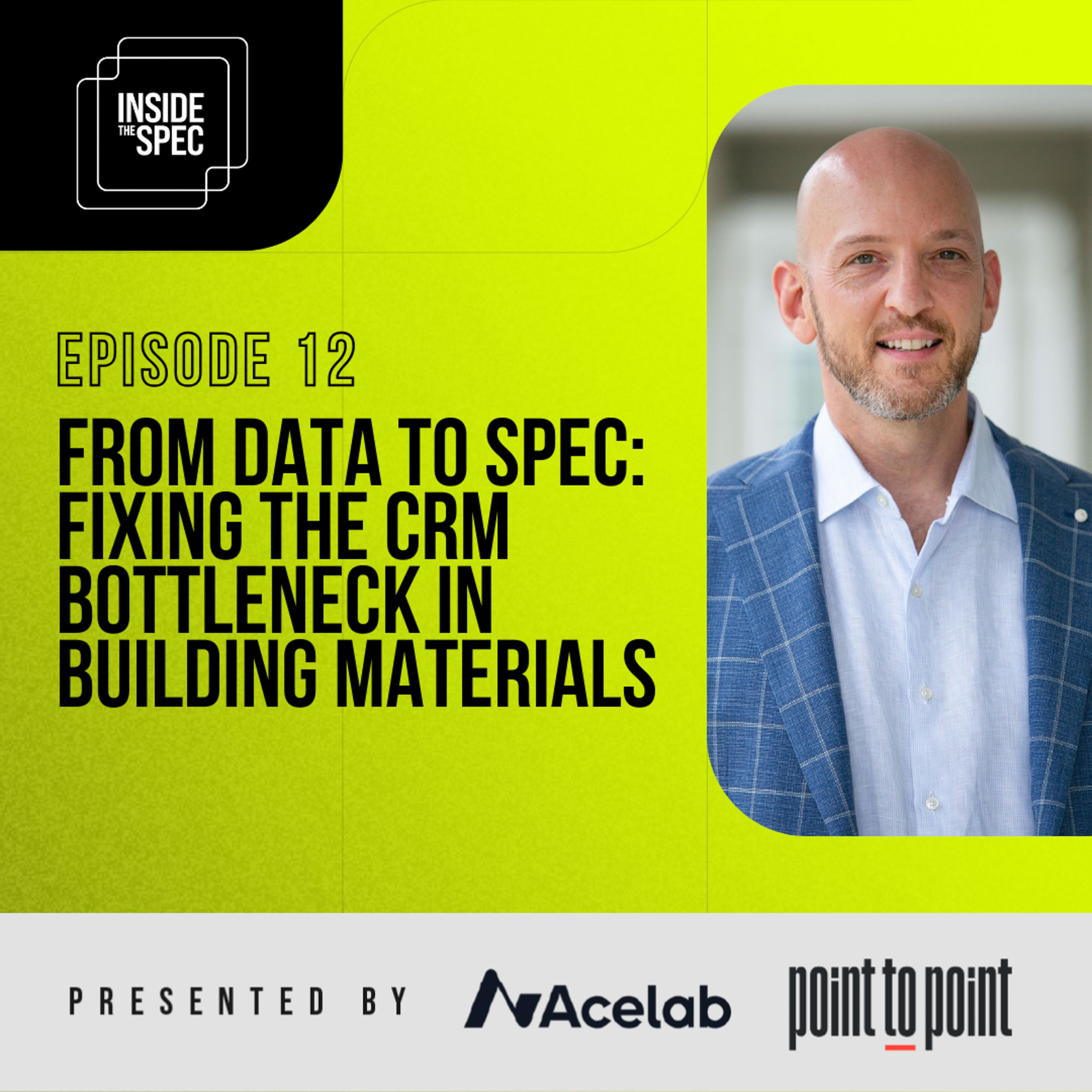
In this episode of Inside the Spec, hosts Megan Kacvinsky (CEO of Point To Point) and Vardhan Mehta (CEO of Acelab) are joined by Aaron Ayer, founder of Hunley, a Salesforce consultancy specializing in building materials and construction. Aaron shares the origin of Hunley, insights on the role of CRM systems in the industry, and how data integrity drives success in sales and marketing. The discussion explores how tools like Hunley’s SpecSuccess AI empower manufacturers to make data actionable—using automation and AI to turn project data into sales intelligence. Together, they unpack the evolving relationship between CRM systems, artificial intelligence, and the building products ecosystem.
Key Insights
- The biggest CRM challenge for manufacturers isn’t implementation—it’s adoption and industry-specific logic.
- Data quality is foundational to CRM and AI success; bad data produces bad results.
- AI’s power depends on clean, comprehensive, and well-structured datasets.
- Understanding specifiers’ workflows helps manufacturers engage architects more effectively.
- SpecSuccess AI, Hunley’s Salesforce add-on, automates the process of reading specs and qualifying projects—doubling sales rep productivity.
- AI tools can level the playing field by giving newer or multitasking reps access to best-practice insights.
- Manufacturers often suffer from data overload; organizing and targeting the right data is more valuable than having more of it.
Practical Takeaways for Manufacturers
- Treat CRM as a strategic sales tool, not just a database.
- Start AI transformation by cleaning your data—accurate, current, and non-duplicative.
- Integrate project data sources (like Acelab, Dodge, and ConstructConnect) directly into CRM to unify sales visibility.
- Focus marketing efforts through ruthless exclusion—target the right architects, not every potential specifier.
- Use AI-driven tools like SpecSuccess AI to automate data processing and free up reps for high-value engagement.
- Make CRM insights actionable—help sales teams know what to do and when to do it.
- Track specifications actively; being in the spec isn’t enough—you need to monitor through to bid and substitution stages.
About the Guest: Aaron Ayer
Aaron Ayer is the founder of Hunley, a Salesforce consultancy serving hundreds of building materials and construction clients. With over 30 years of experience, Aaron’s expertise bridges CRM strategy, sales operations, and marketing for manufacturers. He’s also the creator of SpecSuccess AI, a Salesforce-integrated platform that automates project qualification and specification tracking using artificial intelligence. Aaron’s career reflects a passion for helping manufacturers turn technology into measurable growth.
Next Steps for Manufacturers
- Audit your CRM for data health—look for duplicates, inaccuracies, and gaps.
- Define your ideal customer and project types to focus CRM and marketing efforts.
- Explore AI integrations that enhance—not replace—human sales strategy.
- Consider tools like SpecSuccess AI to make spec tracking scalable and repeatable.
- Invest in team training to ensure CRM and AI tools are adopted and utilized effectively.
- Partner with data platforms like Acelab to gain earlier visibility in the design process.
Disclaimer
This podcast’s information is provided for general reference and was obtained from publicly accessible sources. The Podcast Collaborative neither produces nor verifies the content, accuracy, or suitability of this podcast. Views and opinions belong solely to the podcast creators and guests.
For a complete disclaimer, please see our Full Disclaimer on the archive page. The Podcast Collaborative bears no responsibility for the podcast’s themes, language, or overall content. Listener discretion is advised. Read our Terms of Use and Privacy Policy for more details.