Trauma, Tea, and Tangents
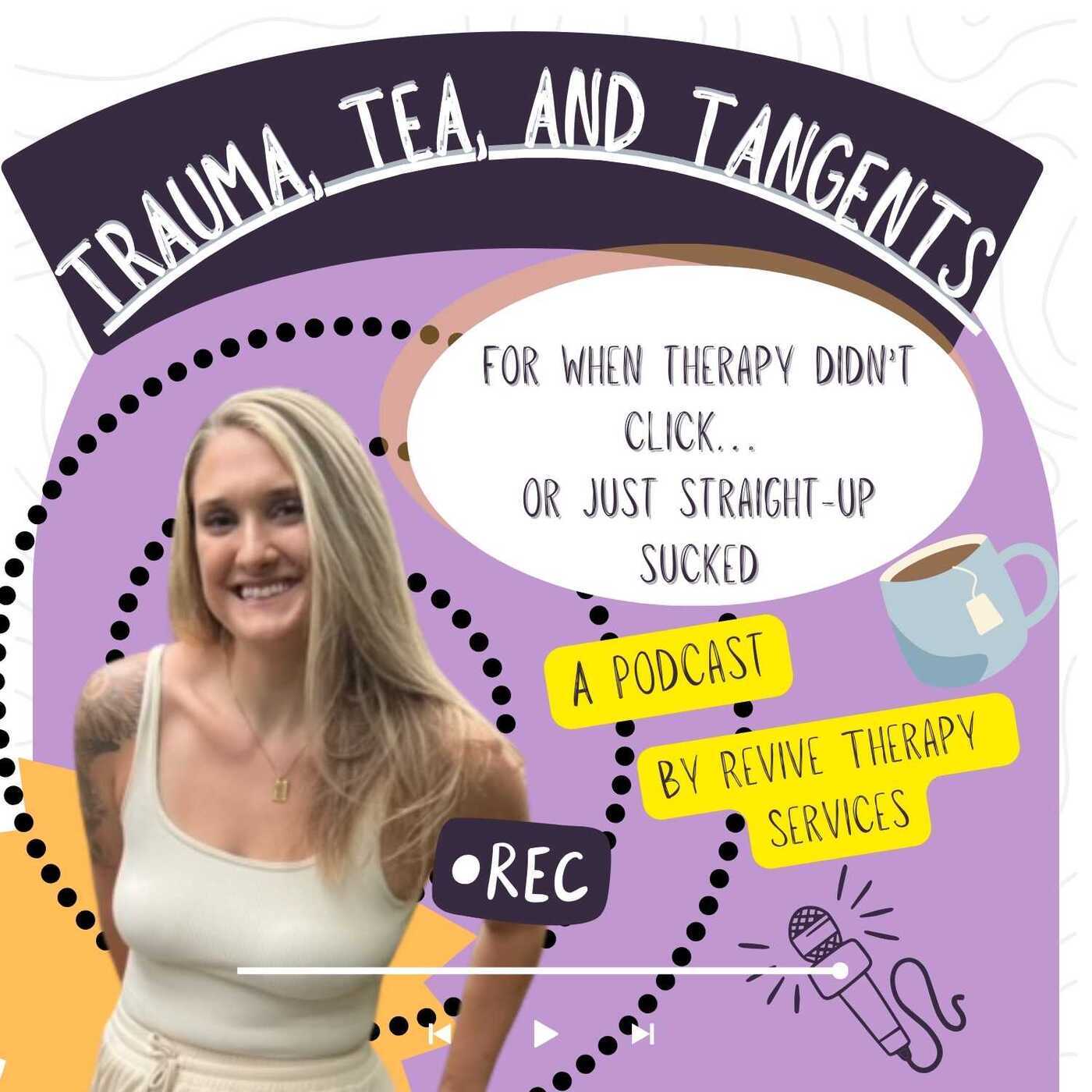
Trauma, Tea, and Tangents
Podcast Description
For when therapy didn’t click...or just straight-up sucked.
Trauma, Tea, & Tangents is your weekly dose of unfiltered, unapologetic, and unexpectedly healing conversation. Hosted by Hannah Guy, LCSW—a trauma therapist who knows firsthand that healing isn’t linear, self-growth is messy, and sometimes you just need to laugh at the chaos—this podcast dives into all things trauma, nervous system, and the wild ride of being human.
Expect a blend of real talk, solid science, and compassionate hot takes, sprinkled with plenty of tangents (because who actually stays on track when they’re talking about trauma?). So grab your tea, get comfy, and let’s spill, sip, and sort through it all—one tangent at a time.
Podcast Insights
Content Themes
The podcast explores themes surrounding trauma, nervous systems, and human experiences with a focus on topics such as dating challenges, relationship dynamics, and self-growth, featuring episodes like 'Dating Without Losing Your Mind' that unpack loneliness, reframing relationship experiences, and managing anxiety in dating scenarios.

For when therapy didn’t click…or just straight-up sucked.
Trauma, Tea, & Tangents is your weekly dose of unfiltered, unapologetic, and unexpectedly healing conversation. Hosted by Hannah Guy, LCSW—a trauma therapist who knows firsthand that healing isn’t linear, self-growth is messy, and sometimes you just need to laugh at the chaos—this podcast dives into all things trauma, nervous system, and the wild ride of being human.
Expect a blend of real talk, solid science, and compassionate hot takes, sprinkled with plenty of tangents (because who actually stays on track when they’re talking about trauma?). So grab your tea, get comfy, and let’s spill, sip, and sort through it all—one tangent at a time.
If you’ve been in therapy for months—or even years—and still find yourself wondering, “Why am I still like this?”, this episode is for you.
In this solo episode of Trauma, Tea & Tangents, Hannah breaks down five reasons healing might feel slower than you expected. And no, the answer isn’t that you’re broken, bad at therapy, or “too complicated.”
Sometimes you can understand your trauma intellectually, know your attachment style, recognize your triggers, and have read every self-help book out there—but still find yourself completely activated when something hits a familiar wound. That’s because understanding your trauma and changing the way your nervous system responds are not always the same thing.
Hannah explores what happens when your thinking brain knows you’re safe but your body is responding as if you’re in danger, and why approaches that involve the body—such as EMDR, somatic work, and Internal Family Systems—can be helpful for some people alongside traditional talk therapy.
She also talks about what happens outside the therapy hour, why practicing nervous system skills when you’re not triggered matters, and how small moments of present-moment awareness can help your body become more familiar with what safety feels like.
Another major theme is how we measure progress. Healing doesn’t mean never getting triggered again. Instead, Hannah encourages looking at things like intensity, duration, frequency, and your ability to pause or respond differently when something difficult happens.
Finally, Hannah talks about unrealistic healing timelines, the pressure created by social media “before and after” stories, and why expecting your nervous system to completely change after a few months of therapy isn’t necessarily a realistic expectation.
In this episode, we discuss:
- Why understanding your trauma isn’t always the same as processing it
- The difference between intellectual insight and nervous system responses
- Why your body can react to a trigger even when you logically know you’re safe
- Top-down vs. bottom-up approaches to therapy
- EMDR, somatic work, and Internal Family Systems
- Why healing doesn’t only happen during your therapy session
- Simple ways to practice present-moment awareness throughout your day
- Why you should practice regulation skills before you’re at a 10/10
- How to recognize progress even when you’re still getting triggered
- Measuring healing through intensity, duration, and frequency
- When a different type of therapy may be worth exploring
- Why healing timelines are often much less linear than social media makes them look
- How unrealistic expectations can make you feel like you’re failing
- Finding realistic milestones that show you’re actually making progress
- A simple nervous-system practice Hannah challenges listeners to try this week
Chapters
00:57 – Welcome to Trauma, Tea & Tangents
01:08 – Why Does Healing Feel So Slow?
02:08 – Knowing Your Trauma vs. Actually Processing It
03:12 – What Happens in Your Brain When You’re Triggered
04:16 – Why Your Body Doesn’t Always Believe You’re Safe
05:42 – Why Healing Requires More Than Talking About It
06:18 – Reason #2: Therapy Is One Hour of Your Week
07:26 – What You Can Do Outside of Therapy
08:42 – Using Your Five Senses to Practice Safety
09:35 – Why You Should Practice Before You’re Triggered
10:48 – Reason #3: Triggers Don’t Mean Therapy Isn’t Working
11:58 – Measuring Progress Differently
13:03 – A Personal Example of Healing Progress
14:25 – Intensity, Duration & Frequency
15:18 – Reason #4: Are You Doing the Right Type of Therapy?
16:12 – Top-Down vs. Bottom-Up Therapy
17:22 – How Bottom-Up Approaches Work
18:03 – Finding the Right Approach for Your Nervous System
18:20 – Reason #5: Your Healing Timeline May Be Unrealistic
19:10 – Why Healing Doesn’t Always Look Like Social Media
20:05 – Trauma Takes Time to Rewire
20:45 – What You Can Actually Control
21:05 – Hannah’s Nervous System Challenge
22:04 – Revive Therapy Services & Current Openings
22:25 – Nervous System Worksheets & Resources
23:10 – Final Thoughts
Healing isn’t about never being triggered again. It’s about learning to respond differently, building your capacity for safety, and recognizing progress that you might otherwise overlook.
✨Looking for trauma therapy in Pennsylvania or Colorado?
Revive Therapy Services specializes in trauma therapy, EMDR therapy, eating disorder treatment, body image concerns, PTSD, complex trauma, and Ketamine Assisted Psychotherapy (KAP). We offer virtual and in person therapy throughout Pennsylvania and Colorado.
Learn more: https://www.revivetherapyservices.com/?utm_source=Bio&utm_medium=Pod
Instagram & TikTok: @revivetherapyservices
Worksheets: https://www.revivetherapyservices.com/store
Disclaimer
This podcast’s information is provided for general reference and was obtained from publicly accessible sources. The Podcast Collaborative neither produces nor verifies the content, accuracy, or suitability of this podcast. Views and opinions belong solely to the podcast creators and guests.
For a complete disclaimer, please see our Full Disclaimer on the archive page. The Podcast Collaborative bears no responsibility for the podcast’s themes, language, or overall content. Listener discretion is advised. Read our Terms of Use and Privacy Policy for more details.