The Great Guns Podcast
The Great Guns Podcast
Podcast Description
The Great Guns Podcast is the no-BS voice for veterans and their partners who need to rediscover their purpose and reignite their fire. Through raw stories and real solutions, we tackle resilience, connection, and getting back on mission. Whether you’re finding your tribe or just need a push, this is where strength meets action.
Podcast Insights
Content Themes
Key themes include military transition, personal growth, resilience, and entrepreneurship. Episodes feature discussions on topics such as transitioning from military to business, dealing with PTSD, and embracing adventure; for example, Tim Peakman's episode on planning military transitions and Adam Faulkner’s journey of cycling from London to Japan highlights life lessons from travel.
The Great Guns Podcast is the no-BS voice for veterans and their partners who need to rediscover their purpose and reignite their fire. Through raw stories and real solutions, we tackle resilience, connection, and getting back on mission. Whether you’re finding your tribe or just need a push, this is where strength meets action.
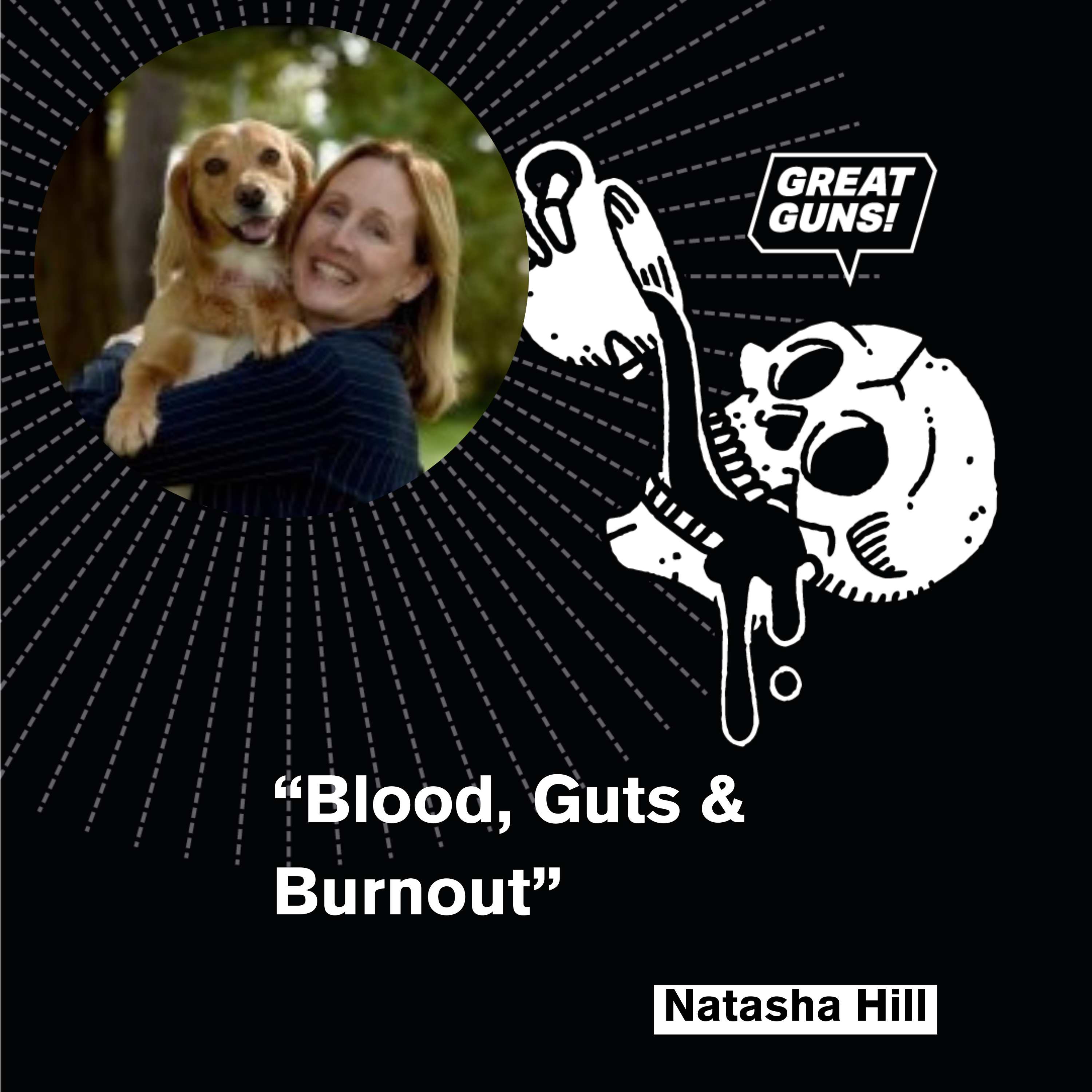
She’s been called a fairy, a fluffy dice distributor, and the woman with the dog—but what Natasha Hill actually is… is a force of nature. A 26-year veteran of the UK police service, Natasha’s lived through the frontlines of child protection, anti-terrorism, personal trauma, and full-on burnout. And she came back swinging—armed with compassion, EMDR, a cocker spaniel named Murphy, and a mission to rewrite the narrative on mental health in policing.
In this episode, host James Scott dives deep with Natasha about the sh*t that breaks you, the culture that buries it, and how she’s flipping the system—one wellbeing festival and gut-punching truth at a time. If you think mental health is still a fluffy topic, this episode will slap that smugness right out of you.
This is not just for cops. It’s for anyone who’s ever been crushed by their job, gaslit by the culture, or buried by their own silence.
Key Takeaways:
- Wellbeing is not woo-woo: If you think dogs, kindness, and mindfulness are “namby-pamby,” think again. Science says otherwise—and so does Natasha.
- Burnout doesn’t announce itself: It creeps, it whispers, then it bulldozes. Learn the signs before it’s too late.
- Trauma is cumulative: One trauma might shake you. 400+ (the average for a police officer)? That’s an internal war.
- Culture can kill: The “suck it up” mindset still thrives—and it’s costing lives.
- Recovery is possible, and damn it, it’s powerful: From cancer to career collapse, Natasha proves healing is real—and badass.
Soundbites:
- “I was told to just ‘get on with it’—right after I had a breakdown.”
- “They said I was just bringing my dog in. That I was handing out fluffy dice.”
- “I’ve had officers reach out after 43 years of never talking about wellbeing—until now.”
- “We’re trained to face bullets, but not our own brains.”
- “It’s not selfish to put yourself first. It’s survival.”
Connect with Natasha
#PoliceWellbeing #MentalHealthInUniform #MurphyTheWellbeingDog #FirstResponderSupport
Disclaimer
This podcast’s information is provided for general reference and was obtained from publicly accessible sources. The Podcast Collaborative neither produces nor verifies the content, accuracy, or suitability of this podcast. Views and opinions belong solely to the podcast creators and guests.
For a complete disclaimer, please see our Full Disclaimer on the archive page. The Podcast Collaborative bears no responsibility for the podcast’s themes, language, or overall content. Listener discretion is advised. Read our Terms of Use and Privacy Policy for more details.