Buried Bible Podcast

Buried Bible Podcast
Podcast Description
The Buried Bible Podcast looks to explore the Bible through the lens of the ancient world and its historical context. Co-hosted by Dr. Mark Chavalas, a seasoned scholar, archaeologist, and professor with decades of expertise in ancient Near Eastern history and Keagan Walz who brings the perspective of the everyday listener, we aim to enrich & deepen your understanding of the Bible.
Podcast Insights
Content Themes
The podcast focuses on themes such as biblical archaeology, ancient civilizations, cultural contexts, and interpretive strategies. For example, episodes explore the historical backdrop of the Old Testament, the significance of Mesopotamian civilizations, and common misconceptions about biblical texts. Specific episode highlight includes the exploration of the origins of writing among Sumerians and Egyptians, revealing how these aspects shape biblical narratives.
The Buried Bible Podcast uncovers the rich historical and cultural context behind the Bible, bringing ancient Scripture to life. Join Dr. Mark Chavalas, a renowned scholar, archaeologist and professor with expertise in ancient Near Eastern history, and Keagan Walz, who provides a fresh perspective from the modern listener’s point of view. Together, they explore the stories, cultures, and languages that shaped the biblical world and uncover insights that deepen your understanding of Scripture.
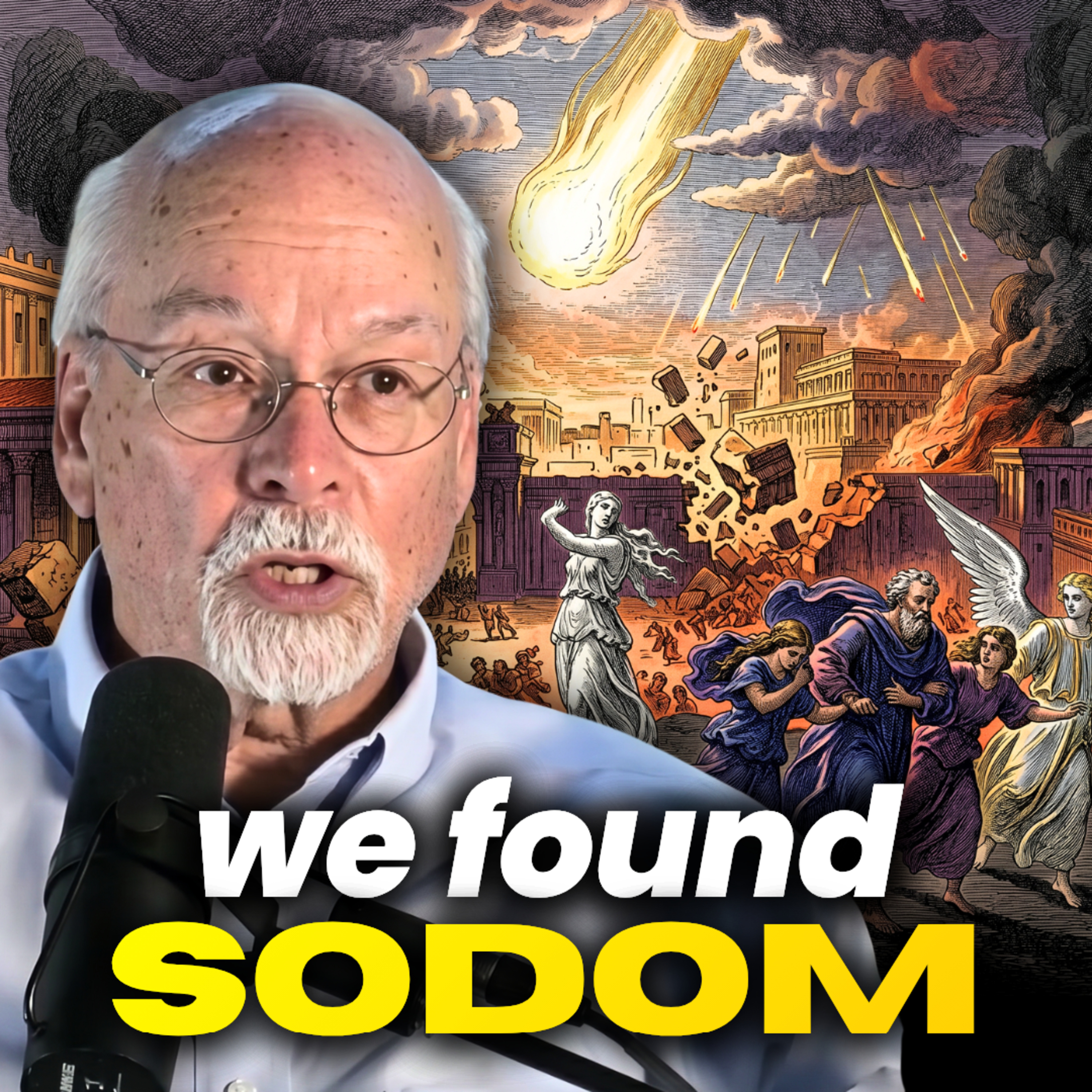
Did they actually find the real biblical city of Sodom?
In 1996, Dr. Steven Collins was leading a Bible study tour of Israel and Jordan. The next morning he was scheduled to take his group to the traditional sites of Sodom and Gomorrah in the south. That night he read Genesis 13 through 19 four times. By the end of it he had written two large question marks on his itinerary.Nothing in the text pointed south.
Everything pointed north and east of the Dead Sea.What followed was 16 seasons of excavation at Tal al-Hammam — the largest Bronze Age city in the entire southern Levant — and one of the most compelling and controversial cases in the history of biblical archaeology.
Dr. Mark Chavalas sits down with Dr. Steven Collins — Dean of the VIU School of Archaeology and the lead excavator at Tal al-Hammam — to walk through the full case. The biblical geography. The site itself. The destruction event. And what 21 scientific proxies found in a single destruction layer tell us about what actually happened to this city roughly 3,700 years ago.
In this episode:
– Why Genesis 13 places Sodom northeast of the Dead Sea — not south
– Why every city in the region survived the Intermediate Bronze Age except this one
– The gate system, the palace, the temple — what 16 seasons of excavation actually found
– The destruction layer — violently churned debris unlike anything else in the archaeological record
– The cosmic airburst argument
– The Egyptian execration texts and the name Shutu
– The chronology question — why the biblical patriarchal lifespans may not be literal numbers What it means for the rest of Scripture if the most doubted story in the Bible turns out to be historically grounded
The debate around the site's identification as Sodom remains active and contested in the scholarly community. This episode presents Dr. Collins' case as he makes it — a serious scholar's argument built on decades of fieldwork, not settled consensus.
📚 Sources & Scholars Mentioned
Stephen Collins & Latayne Scott — Discovering the City of Sodom (Howard Books, 2013)
Barry Beitzel — Lexham Geographic Commentary — articles on northern and southern Sodom
Anson Rainey — The Sacred Bridge — historical geography including the Shutu identification
Craig Olson — How Old Was Father Abraham?
Lane Ritmeyer — chief architect and architectural reconstruction specialist at Tal al-Hammam
Gary Byers — assistant director at Tal al-Hammam, now leads TSU College of Archaeology
Disclaimer
This podcast’s information is provided for general reference and was obtained from publicly accessible sources. The Podcast Collaborative neither produces nor verifies the content, accuracy, or suitability of this podcast. Views and opinions belong solely to the podcast creators and guests.
For a complete disclaimer, please see our Full Disclaimer on the archive page. The Podcast Collaborative bears no responsibility for the podcast’s themes, language, or overall content. Listener discretion is advised. Read our Terms of Use and Privacy Policy for more details.